For five straight months, from March through July, artificial intelligence was the number-one reason American companies gave when they announced job cuts. In August, that run ended. AI fell to the fourth-most cited reason, blamed for 3,462 cuts — its lowest monthly total since December 2025, when just 142 cuts were attributed to it, according to the latest report from outplacement firm Challenger, Gray & Christmas.
🔍 THE BOTTOM LINE: The AI-driven layoff wave that dominated the first half of 2026 is pausing, not necessarily passing. AI remains the leading cause of cuts year to date, but the newest data points to something the panic narrative keeps missing: employers are planning to hire, not just cut — and manufacturing is where most of that hiring is planned.
The August numbers, released on 2 September, are more nuanced than either the alarmists or the optimists tend to admit. US employers announced 52,881 job cuts, up 58 percent from July’s 33,429 — but down 38 percent from the 85,979 announced in the same month last year, and the lowest August total since 2022. Through eight months, announced cuts sit at 529,914, down 41 percent on the same period in 2025. “This is the quietest August since 2022,” Andy Challenger, the firm’s chief revenue officer, said in the report — while cautioning that low layoffs are only half of a healthy market.
The Hiring Plans Are the Under-Reported Half
The number getting far less attention: employers announced plans to hire 12,325 workers in August, up 725 percent from the 1,494 planned in August 2025 and the highest August total since 2022. Challenger’s data shows hiring plans up 37 percent compared with the same eight months of last year.
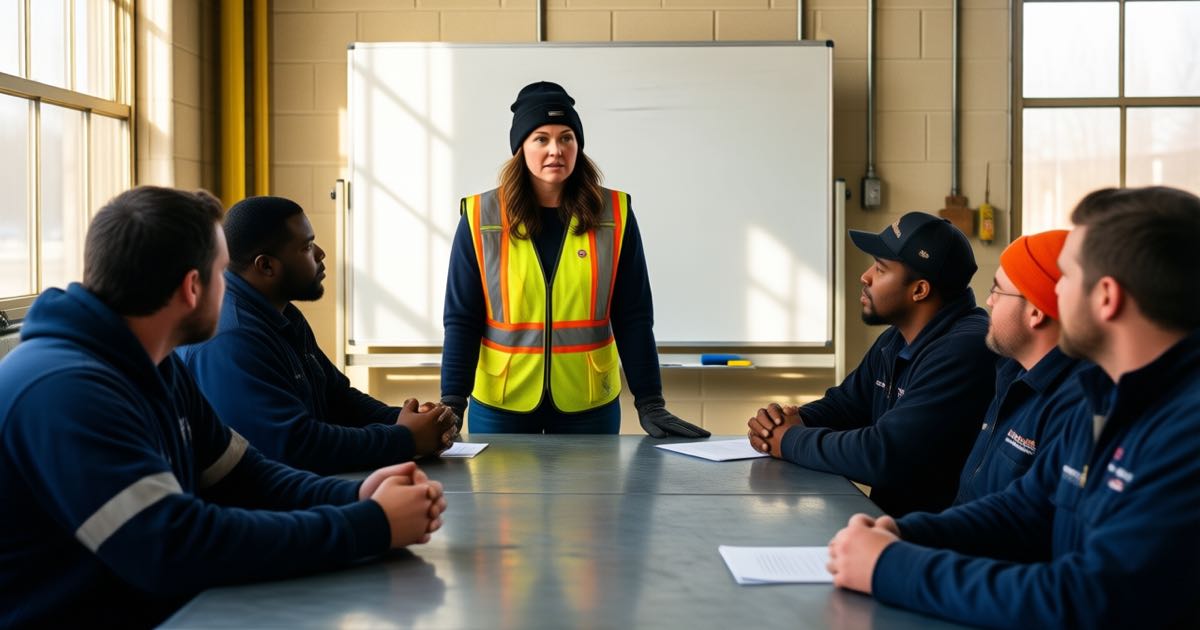
The detail matters for anyone planning a career. “Employers are making plans to add workers, with 46 percent of those plans coming from manufacturing industries,” Andy Challenger said. “The questions are how long will it take employers to actually fill these roles and will they find workers with the requisite skills.”
That second question is the one worth sitting with. The jobs being announced are not, for the most part, AI researcher roles. They are production, maintenance and quality roles in plants that are themselves adopting AI. A separate piece of August data points the same direction: the Federal Reserve Bank of New York’s regional business surveys, published on 1 September, found more than 60 percent of service firms and about half of manufacturers now using AI — and when they adjust their workforces, retraining existing staff is the most common response, not layoffs. Only 4 percent of service firms reported laying anyone off because of AI, and no manufacturers did.
Why the Panic Narrative Keeps Getting Ahead of the Data
None of this means AI displacement anxiety is manufactured. Year to date, AI has still been cited in 116,175 US job cuts — roughly 22 percent of all announced cuts, and the leading single reason for the year so far. The February-to-July stretch, when AI topped the monthly list, was real. What August suggests is that the wave is lumpy rather than relentless: a burst of AI-attributed restructuring early in the year, then a plateau as employers digest what the tools actually change.
The New York Fed’s three-year survey series lands on a similar reading from a different angle. Firms are investing in existing workers rather than replacing large numbers of them, and the training they are providing is mostly practical: AI literacy, tool-specific instruction, prompt skills, and — notably — how to verify AI output and avoid over-relying on it. The Fed researchers concluded that AI has been “more likely to augment workers than replace them,” while flagging, as this site covered earlier this month, that entry-level workers remain the group most exposed.
There is a caution for the optimists too. Andy Challenger’s own line is that positions are being planned but not filled quickly, and hiring a person takes longer than announcing one. New Zealand readers watching US data for signal should also keep the local context in mind: Stats NZ put unemployment at 5.6 percent in the June quarter, so a US hiring-plans rebound does not automatically translate into an easier market here. What travels better than the headline is the skill signal — employers, both American and local, consistently report the bottleneck is not jobs, it is people who can actually use the tools. SEEK’s NZ data has shown AI-skilled job ads more than doubling through winter, the demand side moving faster than the supply side.
FAQ
How many US job cuts were blamed on AI in August 2026? 3,462, according to Challenger, Gray & Christmas — the fourth-most cited reason and the lowest monthly total attributed to AI since December 2025.
Is AI still the leading cause of layoffs in 2026? Yes, year to date: about 116,175 cuts have cited AI, roughly 22 percent of all announced US job cuts. But it led the monthly list for only five months, March through July.
Are companies hiring as well as cutting? Announced hiring plans reached 12,325 in August, the highest August total since 2022, with 46 percent of plans in manufacturing. The caveat: filling those roles is proving slower than announcing them.
Related reading: The AI Code Surge Reshaping Developer Jobs, LinkedIn Counts 1.3 Million New AI Jobs. Most Don’t Need a Degree, and New Zealand’s AI Hiring Has More Than Doubled in a Year.
❓ FAQ
What does this mean for New Zealand workers? The most portable signal is the skills gap: employers in both countries report the constraint is finding people who can use AI tools, not finding work for them. NZ-focused reads are in our Career & Future section.
🔍 THE BOTTOM LINE
August’s data does not end the AI-and-jobs argument — 116,000 AI-cited cuts this year is not nothing. But it does complicate the one-directional story. In the same month AI fell to fourth place among layoff reasons, employers announced the most August hiring plans since 2022, led by manufacturing, and a Fed survey found retraining, not redundancy, is the most common workforce response to AI. The pattern in the data is transformation, not elimination — and the constraint on the upside is training capacity, not a shortage of work.