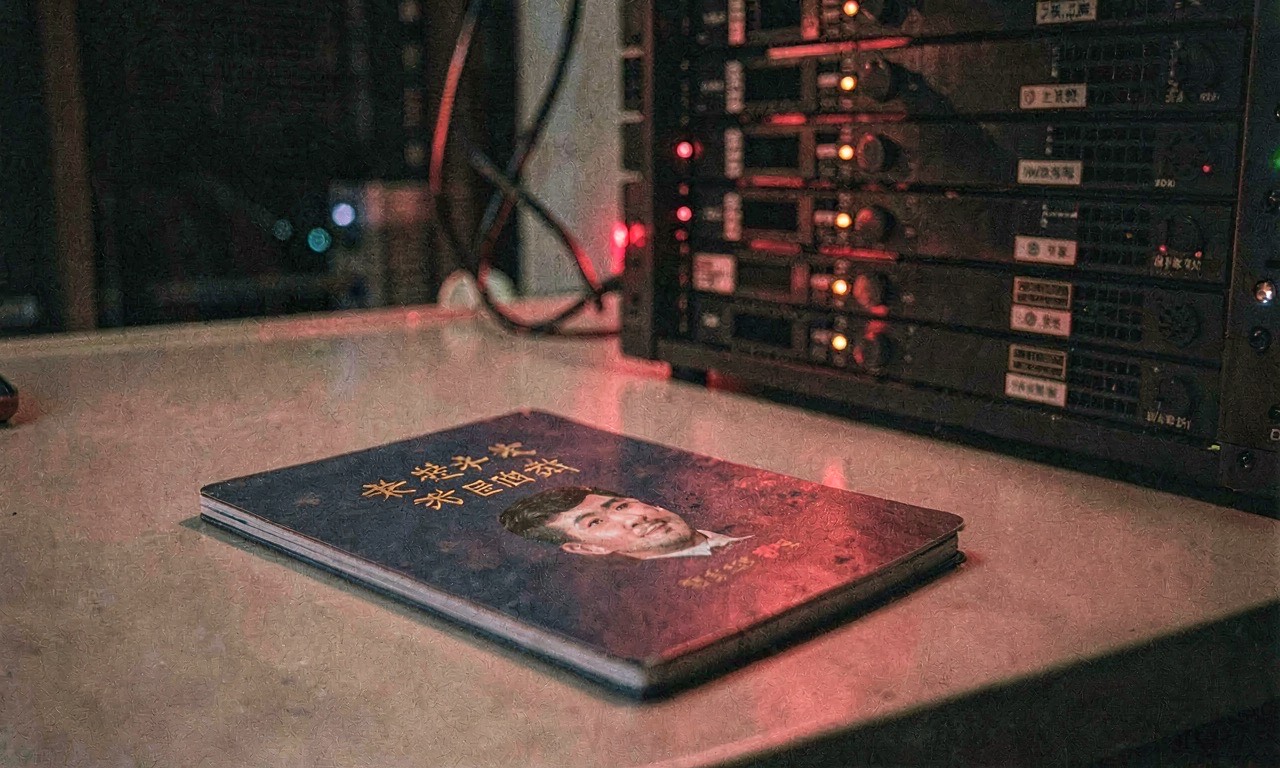
China is locking its AI talent in — and the locks are getting tighter.
Bloomberg reported this week that the Chinese government has expanded travel restrictions on senior AI researchers to include staff at Alibaba and other private-sector firms, requiring prior approval for overseas travel. Researchers are being asked to surrender their passports to their employers. The formal justification: their work gives them access to information that could be classified as state or commercial secrets.
This is the third expansion of these controls in less than a year, and it marks a significant escalation. What started as a targeted measure against DeepSeek’s leadership has become a blanket policy across China’s frontier AI ecosystem.
🔍 THE BOTTOM LINE
China is treating AI researchers the same way it treats nuclear scientists — as strategic assets too valuable to let leave. But talent controls have a terrible track record. The harder Beijing grips, the more researchers will find ways to slip through.
How We Got Here
The timeline tells the story:
| Date | Action |
|---|---|
| December 2025 | DeepSeek executives face travel restrictions after R1 model launch |
| March 2026 | DeepSeek staff begin surrendering passports; Manus AI co-founders barred from leaving China |
| March 2026 | WSJ reports Chinese authorities warning top AI entrepreneurs against US travel |
| April 2026 | NDRC orders leading AI firms (Moonshot AI, StepFun, ByteDance) to reject US-origin capital without prior clearance |
| May 2026 | Travel restrictions expand to Alibaba and broader private-sector AI firms |
Each escalation follows the same pattern: a quiet policy shift, leaked to foreign media, never officially confirmed. The Communist Party’s classification of frontier AI as a strategic national asset is driving all of it.
The Financial Squeeze
The travel curbs don’t exist in isolation. They’re part of a coordinated effort to pull capital, talent, and corporate domicile back inside Chinese borders:
- Capital controls: Leading AI firms must now reject US-origin investment unless they receive prior government clearance
- Corporate restructuring: Startups including Moonshot AI are considering reincorporating from overseas jurisdictions back into mainland China, after Beijing blocked Meta’s $2bn acquisition of Manus
- IPO pressure: Offshore-incorporated entities face harder domestic IPO approvals
- Talent lock: Researchers can’t leave; capital can’t come in from the wrong sources
The message is consistent across every lever: AI talent, IP, and money must stay inside China.
Why Beijing Is Worried
The technical case for urgency is real, even if the policy response is blunt. Stanford’s 2026 AI Index puts the capability gap between the best US and Chinese models at just 2.7% — down from 17.5 to 31.6 percentage points in mid-2023. China now files 69.7% of global AI patents and produces 23.2% of global AI publications.
But here’s the number that should worry Beijing more than any benchmark: AI-talent migration to the US has dropped 89% since 2017. The talent is already staying. The passport policy isn’t preventing a flood — it’s building a dam for a river that’s already dried up.
Or more precisely: it’s building a dam that may redirect the river underground.
The Brain Drain Paradox
The uncomfortable truth about talent controls is that they tend to produce the opposite of their intended effect. Every researcher who’s told to hand over their passport gets a very clear signal: the state considers you property, not a professional.
The researchers who can leave — those with skills most valued internationally — are exactly the ones most likely to find ways out. The researchers who can’t are the ones who’ll stay regardless. Travel restrictions don’t retain talent. They incentivise the most mobile talent to leave before the window closes further.
History is littered with examples. Soviet restrictions on Jewish emigration in the 1970s and 80s didn’t prevent brain drain — they created a thriving community of Soviet-born scientists in Israel and the US who went on to drive innovation abroad. China’s own experience with internet censorship has produced a generation of VPN-savvy engineers who route around restrictions by default.
The NZ Connection
For New Zealand, this story has two dimensions:
-
Recruitment opportunity: As Chinese researchers face increasing restrictions, countries with open research environments become more attractive. NZ universities and tech companies could position themselves as alternatives — though our relatively small AI sector limits the draw.
-
Supply chain risk: Many NZ businesses use AI tools with Chinese components or dependencies. As Beijing tightens control over its AI ecosystem, the risk profile of these dependencies shifts. Organisations should be mapping their AI supply chains now.
What Comes Next
The restrictions are easier to impose than to enforce, particularly as the affected population grows from a handful of DeepSeek staff to several thousand researchers across China’s AI ecosystem. Bloomberg notes that neither DeepSeek nor Moonshot AI had commented publicly by Tuesday evening Beijing time — which is itself a signal. In China’s AI sector, silence usually means the policy is real and non-negotiable.
The bigger question is whether the controls will still matter in 12 months. If open-source models continue their rapid capability gains, the strategic value of any individual researcher diminishes. The knowledge is becoming commodified. Beijing may be locking the barn door just as the horse is learning to clone itself.
❓ Frequently Asked Questions
Q: What does this mean for NZ? Two things: recruitment opportunity for NZ tech firms, and supply chain risk for businesses using Chinese AI tools. Neither is urgent yet, but both warrant monitoring. If you’re a NZ company relying on Chinese AI infrastructure, start mapping alternatives.
Q: Is this unusual for China? Travel restrictions on strategically important workers have a long history in China, particularly in defence and telecoms. What’s new is the extension to private-sector AI firms and the breadth of application. This is no longer a targeted measure — it’s an industry-wide policy.
Q: Will this actually prevent brain drain? Almost certainly not, and may accelerate it. The researchers most likely to leave are those with the most internationally competitive skills — exactly the people most incentivised to leave before restrictions tighten further. Talent controls have a terrible historical track record.
🔍 THE BOTTOM LINE
China is building walls around its AI talent. History says the talent will find doors — or make new ones. The question isn’t whether researchers will leave; it’s whether Beijing will notice that the policy meant to keep them is the thing pushing them out.
Sources
- Bloomberg — China expands AI travel restrictions to private firms
- The Next Web — China extends AI travel curbs from DeepSeek to private firms
- Straits Times — China expands travel curbs to top AI talent at private firms
- Wall Street Journal — Chinese authorities warn AI entrepreneurs against US travel
- Stanford 2026 AI Index — US-China capability gap narrowed to 2.7%