Answer-First Lead
China has quietly expanded travel restrictions on senior AI researchers beyond DeepSeek to a broader group of private-sector firms, requiring formal approval before international travel and in some cases surrendering passports to employers. The move, reported by Bloomberg on 27 May, escalates the AI talent cold war from a targeted measure against one company to a systemic policy covering China’s frontier AI ecosystem.
🔍 THE BOTTOM LINE
China is treating AI researchers the way nuclear states treat weapons scientists. The talent lock-in is no longer theoretical — and it’s accelerating at the exact moment the US-China AI performance gap has shrunk to 2.7%.
What Changed
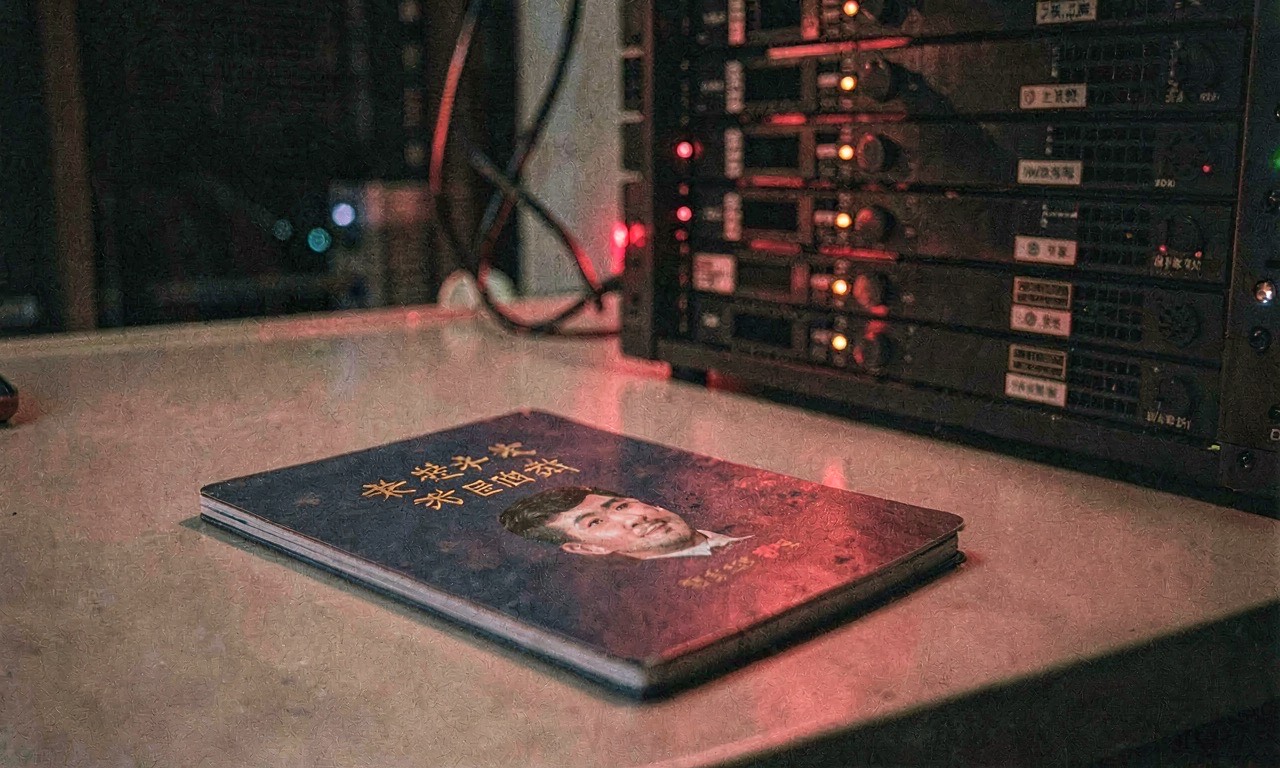
The first publicly reported case came in March 2026, when DeepSeek staff began surrendering passports shortly after the R1 model upended assumptions about Chinese frontier AI capabilities. At that point, it looked like a one-company security response.
The new Bloomberg reporting changes the picture entirely:
- Scope has widened — Restrictions now cover researchers at Alibaba, DeepSeek, and multiple other private-sector AI firms beyond the original DeepSeek circle
- Formal approval required — Previously, researchers only had to report travel plans. Now they need explicit approval before leaving the country
- Passport surrender — Top engineers are being asked to surrender passports to their employers, with the justification that their work involves information classified as state or commercial secrets
- Blurred lines — The restrictions are sometimes presented as corporate policy, sometimes as government guidance. In practice, the distinction no longer matters
The Wall Street Journal had previously reported that Chinese authorities warned top AI entrepreneurs against US travel, citing fears about IP leakage, acquisition by American companies, or detention as diplomatic leverage.
The Financial Squeeze Alongside
Travel restrictions aren’t happening in isolation. Beijing is simultaneously tightening the financial framework:
- Capital controls — In late April, China’s National Development and Reform Commission told leading AI firms including Moonshot AI, StepFun, and ByteDance to reject US-origin capital in funding rounds unless they receive prior clearance
- Corporate domicile — Several Chinese AI startups, including Moonshot, are considering reincorporating from overseas jurisdictions back into mainland China after Beijing blocked Meta’s $2bn acquisition of Manus
- IPO pressure — Offshore-incorporated entities face harder domestic IPO approvals
The pattern is clear: capital, talent, and corporate domicile are all being pulled back inside Chinese borders.
Why Beijing Feels Urgent
The technical case for Beijing’s urgency is in the public data:
| Metric | 2023 | 2026 | Change |
|---|---|---|---|
| US-China AI performance gap | 17.5–31.6pp | 2.7% | Narrowed dramatically |
| China’s share of global AI patents | ~50% | 69.7% | Dominant |
| AI talent migration to US | Baseline | Down 89% since 2017 | Near-zero |
| Industrial robot installation rate | ~5× US | 9× US | Widening |
Stanford’s 2026 AI Index puts the gap between the best US and Chinese models at just 2.7% — down from as much as 31.6 percentage points in mid-2023. China now files 69.7% of global AI patents, produces 23.2% of global AI publications, and installs industrial robots at nine times the US rate.
AI talent migration to the US has dropped 89% since 2017. A narrowing capability gap plus a steady inward concentration of talent is exactly the context in which passport restrictions make sense to Beijing — if your strategic asset can’t leave, you don’t have to worry about it leaving.
The Cost of Locking People In
The policy isn’t without downsides, and they’re significant:
- International collaboration suffers — Chinese academic AI has historically been strong partly because of international conference participation and cross-border research partnerships. Researchers who can’t travel can’t collaborate in person.
- Enforcement at scale — The restrictions are easier to impose on a handful of DeepSeek staff than on several thousand researchers across the wider ecosystem. As the affected population grows, enforcement becomes harder.
- Talent deterrence — The best researchers in the world have options. A country that restricts your movement is less attractive than one that doesn’t. The policy could push future talent toward Singapore, London, or Canada instead.
- Exit ban without due process — The passport requirement is, in practice, an exit ban applied informally and without judicial review. That’s a human rights concern that extends beyond AI policy.
Neither DeepSeek nor Moonshot AI had commented publicly on the expansion by Tuesday evening Beijing time.
NZ Lens
New Zealand’s AI sector is small but globally connected. Several NZ-based AI researchers collaborate with Chinese institutions, and NZ tech companies recruit from the same talent pool. If Chinese AI researchers can’t attend international conferences — including those in Australasia — it directly reduces the talent available for collaboration in our region.
The Aotearoa AI Summit in Wellington this September could be one casualty. If leading Chinese researchers can’t attend, the conversation narrows. For a small country that benefits from open knowledge flows, closed borders anywhere are a problem.
❓ Frequently Asked Questions
Q: Is this a ban or just restrictions? It’s not a blanket ban — researchers can apply for approval to travel. But requiring passport surrender and formal approval effectively creates an exit control that’s hard to distinguish from a ban in practice.
Q: Does this affect Chinese researchers working abroad already? The reported restrictions focus on researchers currently employed at Chinese firms. Those already working overseas aren’t directly affected, but the policy makes returning to China to work riskier — you might not be able to leave again.
Q: How is this different from US export controls? US export controls restrict what technology can be shipped to China. China’s travel restrictions restrict who can leave. Both are forms of technology control, but controlling people’s movement is a different — and more personal — category of restriction.
🔍 THE BOTTOM LINE
China is treating frontier AI talent as a strategic national asset on par with nuclear weapons scientists. The travel restrictions, capital controls, and corporate domicile pressure form a coordinated policy to keep AI capabilities inside Chinese borders. The technical justification — a narrowing US-China gap and declining talent outflow — is real. But locking people in has costs: reduced collaboration, enforcement challenges, and the long-term deterrent effect on the next generation of talent. The AI cold war was already about chips and models. Now it’s about people.
SOURCES
- Bloomberg — China AI travel restrictions expansion (27 May 2026, via Straits Times and The Next Web)
- The Next Web — “China extends AI travel curbs from DeepSeek to other private firms” (27 May 2026)
- The Straits Times — “China expands travel curbs to top AI talent at private firms” (27 May 2026)
- Stanford AI Index 2026 — US-China AI performance gap data
- The Decoder — “China’s DeepSeek reportedly restricts employee travel amid AI security concerns” (March 2026)