🎓 University of Surrey: AI in Every Degree from September 2026
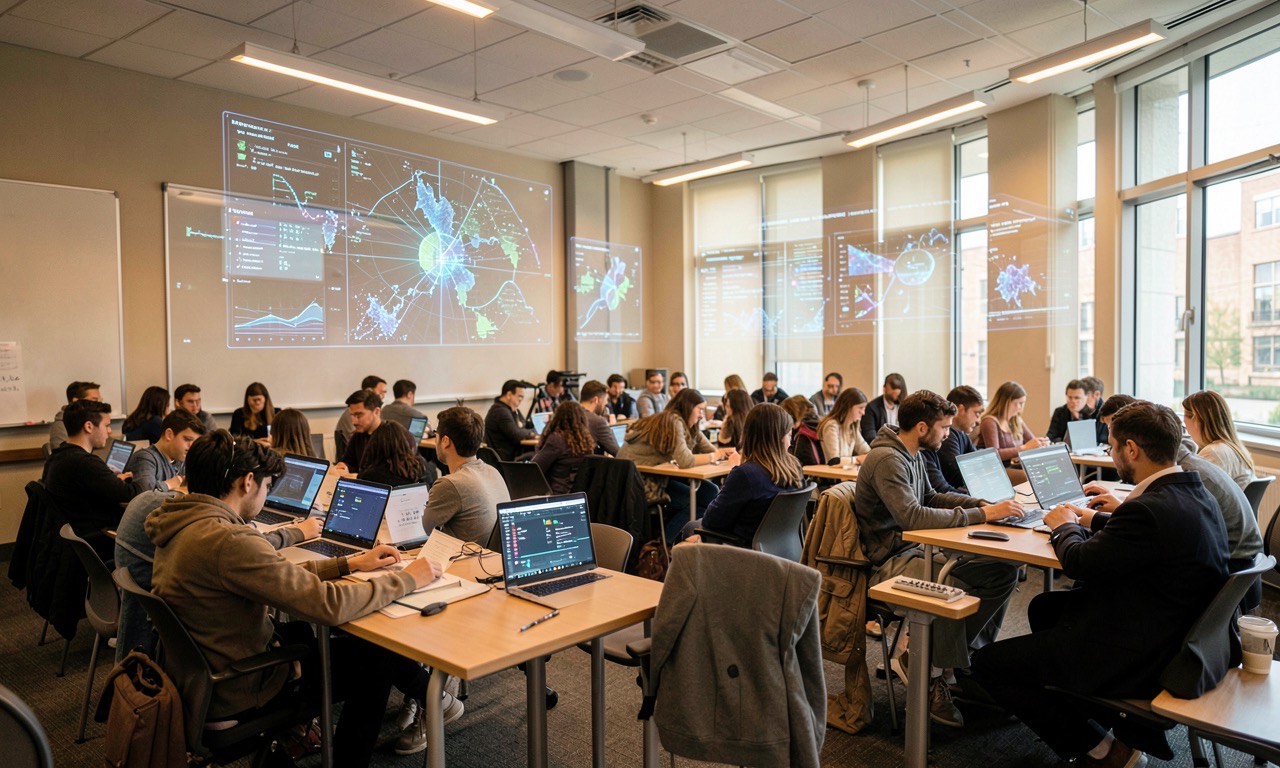
What happened: Every University of Surrey degree will include discipline-specific AI training starting September 2026. Not a generic “Intro to AI” course — AI embedded into each field. History students learn AI for archival research. Engineers learn AI for design. All graduates AI-literate.
The education angle: This is the first “AI across curriculum” mandate at a major university. Surrey isn’t creating AI specialists — it’s making AI literacy as fundamental as writing. Every graduate, regardless of major, understands AI’s power and limitations in their field.
Why it matters: The alternative is a workforce where only tech people understand the tools reshaping every industry. Surrey’s bet: AI fluency should be universal, not specialized. This is the “computer literacy” moment of the 2020s — compressed into a single academic year.
Our take: Finally, a university that gets it. AI isn’t a major — it’s a layer on every major. The question isn’t whether students should learn AI. It’s whether every other university will catch up before their graduates become unemployable.
Related: UNESCO AI Education Observatory Latin America
🔬 Stanford’s Virtual Lab: AI Scientists Discover Therapies
What happened: Stanford researchers built the “Virtual Lab” — AI scientists that autonomously conduct therapeutic discovery research. These AI agents design experiments, analyze results, and iterate without human intervention. Early results: promising drug candidates identified faster than human-led labs.
The education angle: This isn’t just research — it’s a new pedagogy. Students don’t just learn about AI; they collaborate with AI research agents. The question shifts from “what do you know?” to “what can you discover with AI assistance?”
Why it matters: Research universities have always been about pushing boundaries. Stanford just pushed the boundary of who (or what) can be a researcher. If AI agents can conduct legitimate research, what does that mean for PhD programs? For peer review? For the definition of “expertise”?
Our take: This is the moment research education changed forever. The best students won’t be those who memorize the most — they’ll be those who collaborate most effectively with AI research partners. The skill is curation, not creation.
🧬 NC State: AI Lab Discovers Nanomaterials in 12 Hours
What happened: An AI-powered lab at NC State discovered brighter lead-free nanomaterials in 12 hours — a process that typically takes months. The AI screened thousands of candidates, identified promising options, and validated results autonomously.
The education angle: This is what AI-augmented research looks like. The students running this lab didn’t spend months on trial and error — they spent 12 hours guiding an AI through the search space. The skill: asking the right questions, not running the experiments.
Why it matters: Materials science education has always been bottlenecked by iteration time. AI removes that bottleneck. Students can explore orders of magnitude more possibilities in the same timeframe. The ceiling on discovery just lifted.
Our take: Lead-free is the real win. Environmental regulation forced the constraint; AI found the workaround. Teaching students this pattern — constraint → AI creativity → solution — is more valuable than any specific discovery.
🇮🇳 IIIT Hyderabad: 12-Week Course on Engineering Agentic AI Systems
What happened: IIIT Hyderabad launched a 12-week certificate course on building agentic AI systems. Not using AI — engineering AI agents. Students learn to build autonomous systems that can act, decide, and iterate without human intervention.
The education angle: This is vocational training for the agent economy. While Western universities debate AI ethics, Indian institutions are building the workforce that will deploy AI agents at scale.
Why it matters: Agentic AI is the next frontier. Every major tech company is building agent platforms. IIIT Hyderabad is training the engineers who will staff that buildout. 12 weeks is fast — but it’s fast enough to matter.
Our take: India is playing the long game: train engineers for the AI economy now, capture the agent infrastructure buildout, and own the next decade of AI deployment. While the West debates, India builds.
🤖 DeepMind’s AlphaEvolve: AI Writing AI Code
What happened: DeepMind deployed AlphaEvolve — a Gemini-powered coding agent — to improve DeepConsensus, a model for correcting DNA sequencing errors. The result: AlphaEvolve wrote code that improved another AI system. Recursive AI improvement, in production.
The education angle: How do you teach students to work with AI that can improve itself? The curriculum becomes: understand AI outputs, validate AI improvements, guide AI iteration. The skill is oversight, not implementation.
Why it matters: This is the recursion everyone feared (or hoped for). AI improving AI is no longer theoretical — it’s shipping. Students entering the workforce need to understand they’re not competing with AI; they’re managing AI that competes with other AI.
Our take: The education system is still teaching students to write code. The job market is shifting to students who can evaluate code written by AI. The gap is widening. Universities that don’t adapt will graduate unemployable students.
🔍 THE BOTTOM LINE
Theme: Education is splitting into two tracks: those who learn to work with AI, and those who learn about AI.
Track 1 (Surrey, Stanford, NC State): AI embedded in every discipline. Students use AI as a research partner, design tool, and discovery engine.
Track 2 (Traditional): AI as a separate subject. Students learn about machine learning without learning to use it in their field.
The hard truth: Track 1 graduates will outcompete Track 2 graduates in every field. Not because they’re smarter — because they’re armed with tools Track 2 students don’t know how to use.
The question: Which track is your university on?
☄️