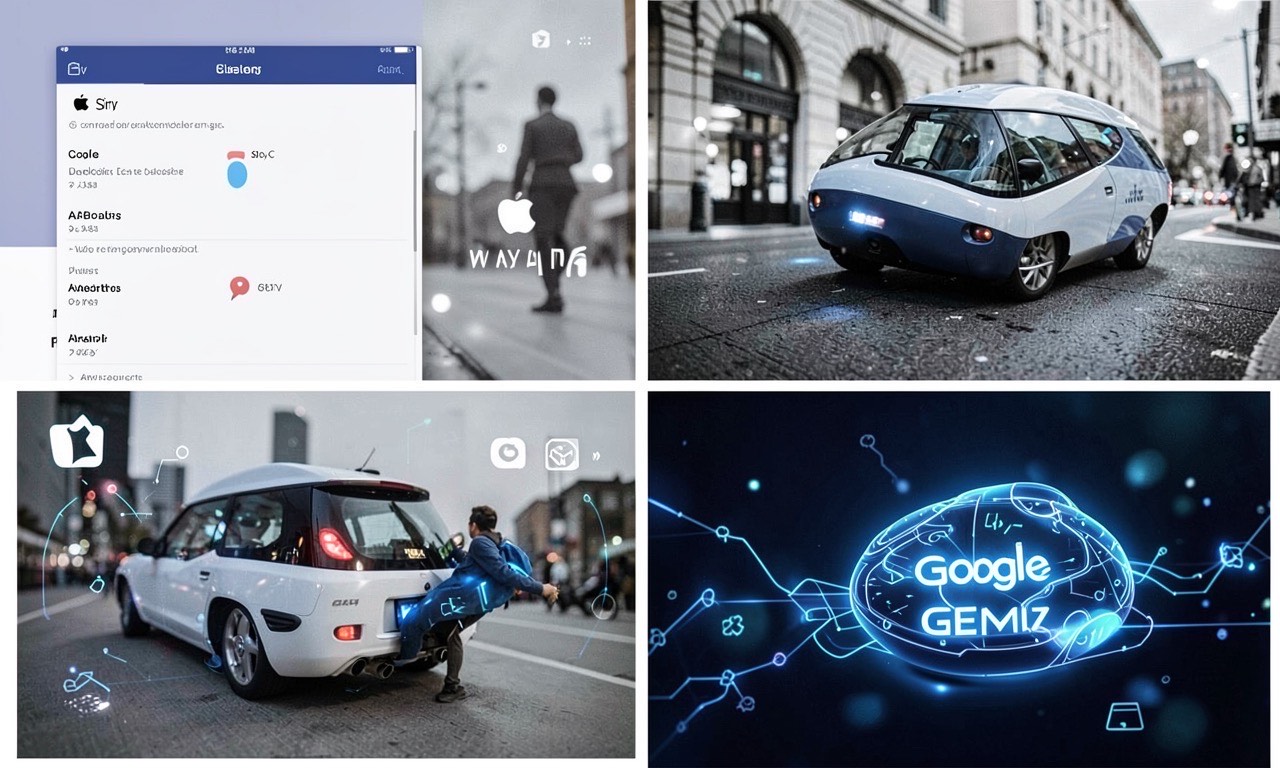
Apple Launches Siri AI Powered by Google Gemini — Asia Locked Out
Apple’s rebuilt Siri AI launched this week, powered by Google’s Gemini models in a partnership that would have been unthinkable a decade ago. The new assistant can perform system-wide actions, understand context across apps, and handle complex multi-step requests.
The Verge reports that Siri AI represents Apple’s “second chance” at an intelligent assistant after years of criticism that Siri had fallen behind competitors. Ars Technica notes Apple is emphasising privacy assurances despite running AI workloads on Google’s cloud infrastructure.
However, the rollout is geographically limited. Much of Asia is locked out initially, pending regulatory approvals and local data handling arrangements. That includes New Zealand, where Apple users will have to wait for a regional deployment timeline.
For NZ users, the delay is frustrating but not surprising. Apple has historically staggered AI feature rollouts by region, and the privacy and data sovereignty questions raised by using Google’s infrastructure are even more complex in markets without comprehensive AI regulation.
Waymo Builds a ‘Virtual Human Driver’ to Study Road Reactions
Waymo has developed a new “Reference Driver” model designed to study how human drivers react to surprises on the road. The system, described as a “behavioural crash dummy” by Engadget, generates realistic human-like responses to unexpected events — from a child chasing a ball into the street to a driver running a red light.
The model helps Waymo’s autonomous systems predict and mimic human defensive driving instincts, potentially making robotaxis safer in mixed traffic. It’s a reminder that autonomous vehicle development is as much about understanding human behaviour as it is about engineering sensors and software.
Decart’s Oasis 3 Generates Photorealistic Driving Simulations
AI startup Decart unveiled Oasis 3, a world model capable of simulating hours of photorealistic driving scenarios in real time. The model is available via API for autonomous vehicle training, robotics research, and gaming applications.
TechCrunch notes that while Oasis 3 is visually impressive, it struggles with long-horizon consistency — a common limitation of generative world models. The startup, backed by Nvidia, is positioned at the intersection of AI simulation and autonomous systems.
Google’s Gemini 3.5 Live Translate Enables Natural Conversation-Speed Translation
Google launched Gemini 3.5 Live Translate, which processes tone, inflection, and pauses alongside vocabulary. The result is real-time translation at the speed and rhythm of natural conversation — not the stilted, robotic cadence of traditional tools.
For New Zealand businesses operating across Asia-Pacific, the tool could reduce friction in cross-language negotiations and customer interactions. It’s part of a broader trend where AI translation is shifting from “good enough to understand” to “indistinguishable from a human interpreter.”