For the first time, the CEOs of all four leading US AI labs — OpenAI, Anthropic, Google DeepMind, and Microsoft AI — signed the same open letter to Congress on the same day. The topic wasn’t jobs, copyright, or competition. It was synthetic DNA screening.
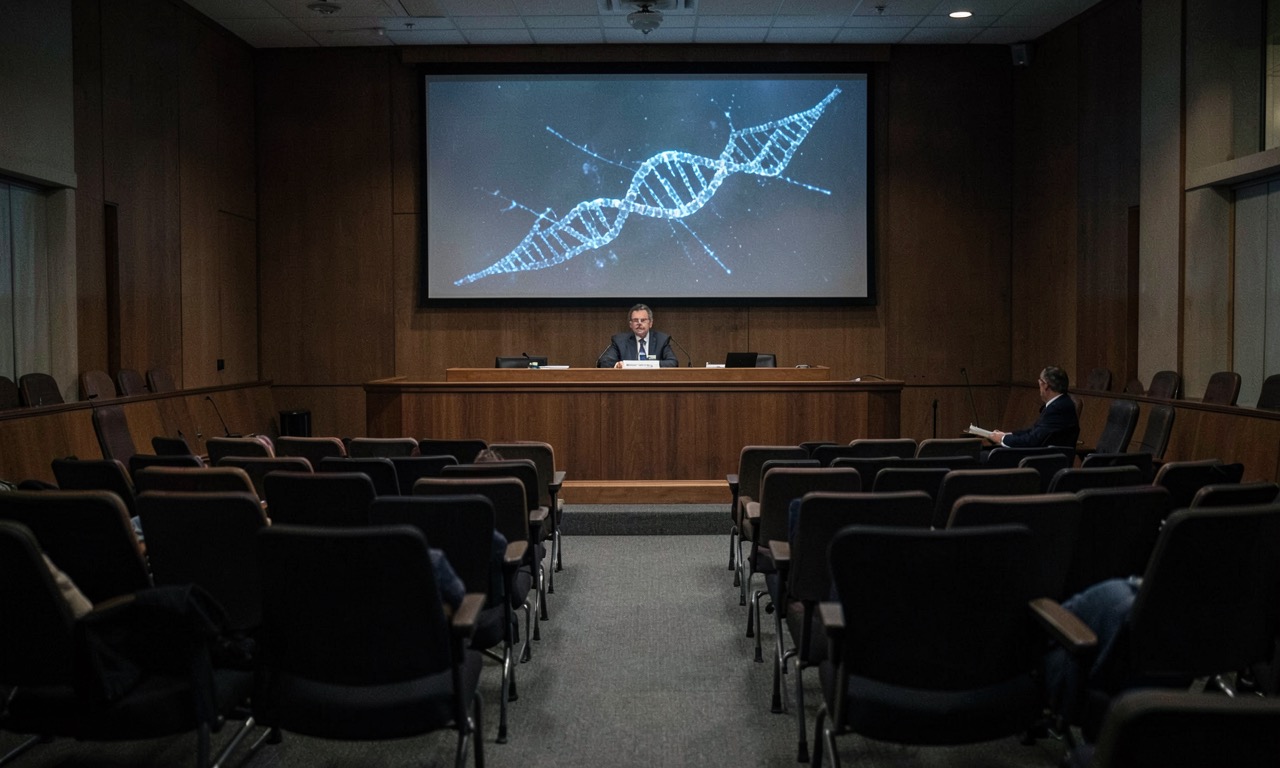
The letter, dated June 5, 2026, calls for mandatory biosecurity screening of all synthetic DNA providers operating in the United States, according to Quartz. The signatories argue that advances in AI are eroding the technical barriers previously needed to weaponise biological material — and that the existing voluntary screening framework is no longer sufficient.
🔍 THE BOTTOM LINE: Four companies that compete fiercely on everything else agreed on this. The reason isn’t altruism — it’s that the first major AI-enabled biosecurity incident would shut down their entire industry. The letter is the labs covering their own downside, and that makes it worth taking seriously.
What the Letter Actually Says
The text of the letter, hosted at screendna.org, is short and unusually direct. Three core points:
- Synthetic DNA and RNA can currently be ordered online from commercial providers with minimal screening. The most rigorous providers screen for known pathogen sequences, but coverage is voluntary and uneven.
- AI is lowering the expertise required to misuse biological material. Models capable of providing step-by-step guidance on synthesis, modification, and delivery of biological agents have crossed a capability threshold. The letter does not name a specific model or capability — but the implication is that frontier models are now in a regime where misuse is a real, not theoretical, risk.
- Congress should mandate screening for all US synthetic DNA providers. The signatories want a uniform federal standard that closes the gap between providers who screen voluntarily and those who don’t.
The letter does not name a specific bill, propose draft legislative language, or specify a regulator. It positions the request as an urgent national security matter. The four signatories collectively develop the largest publicly available AI models in the world.
Why Now
The capability threshold the letter refers to isn’t hypothetical. The November 2025 RAND Corporation report commissioned by the US Department of Defense found that frontier LLMs could, with publicly available biological knowledge, walk a non-expert through plausible synthesis pathways for several known pandemic-potential pathogens. The report was not published; its findings were summarised in a classified annex. The June 5 letter is the first public, industry-led acknowledgement that the capability has arrived.
The same week, Anthropic published a separate safety paper proposing a “verifiable brake pedal” for AI development — a coordinated global mechanism to pause frontier training runs under defined conditions. That paper, covered widely in the AI safety press, disclosed that Claude wrote more than 80% of the code merged into Anthropic’s own production systems — an illustration of how fast AI capabilities are compounding.
The OpenAI–Anthropic–Google–Microsoft letter is not the brake-pedal proposal. It’s narrower: biosecurity screening of synthetic biology supply chains. But the same logic underlies both — frontier AI has crossed capability thresholds that used to require years of specialised training, and the existing institutional safeguards were designed for a slower-moving world.
The Voluntary Framework’s Failure
Synthetic DNA providers have had voluntary screening guidelines since 2010, coordinated by the International Gene Synthesis Consortium. The framework works like this: providers screen orders against a database of hazardous pathogen sequences (the “IGSC screening sequence database”), and flag orders that match for follow-up. The major providers — Twist Bioscience, IDT, GenScript — implement it. Smaller and overseas providers often don’t.
The gap isn’t theoretical. The 2022 Boston University COVID-19 Omicron reverse-genesis study showed the synthesis pathway for an infectious SARS-CoV-2 variant could be assembled from commercially ordered DNA fragments. The study was approved by BU’s biosafety committee and the original SARS-CoV-2 research was publicly available. The point isn’t that the specific experiment was dangerous — it’s that the supply chain is permissive enough to enable it, and the capability layer on top of the supply chain is now AI-assisted.
Why the Joint Letter Matters
Joint statements from the four major US AI labs are vanishingly rare. These companies compete on talent, compute, and market share. They have wildly different stances on regulation — OpenAI has generally favoured lighter-touch frameworks, Anthropic has pushed for more aggressive safety measures, Google DeepMind has been in the middle, and Microsoft AI has been the most commercially pragmatic. When all four sign the same letter, the bar is high.
The most parsimonious explanation is the most cynical: the AI industry is acutely aware that an AI-enabled biosecurity incident would trigger a regulatory backlash severe enough to threaten the entire industry’s operating licence. The 2025 Senate hearing on AI safety made clear that a major incident would produce a “pause” response far more restrictive than anything the labs are currently proposing. The letter is the labs pre-empting that response by being the first to ask for narrower, more targeted regulation.
That’s not a bad thing. The narrow regulation being asked for — universal screening of synthetic DNA orders — is the right policy regardless of motive. It is technically feasible, would not meaningfully slow legitimate research, and addresses a real and growing capability gap. The fact that the industry is asking for it doesn’t make it less valid — it just means the policy is being driven by the companies most able to absorb the compliance cost.
The NZ and Australia Angle
New Zealand’s Institute of Environmental Science and Research (ESR) operates one of the more rigorous synthetic biology oversight regimes in the Asia-Pacific, partly because of New Zealand’s strict biosecurity laws under the Biosecurity Act 1993. Most synthetic DNA for NZ researchers is imported from IGSC-compliant overseas providers, and ESR’s own screening is at the high end of international practice.
Australia is less consistent. The Office of the Gene Technology Regulator regulates gene technology but does not currently mandate sequence-level screening of synthetic DNA orders. A 2024 review of the Gene Technology Act recommended adding screening requirements, but the recommendation has not been implemented.
The US letter increases the pressure on both countries to align. NZ is well-positioned because its existing framework is already strong; Australia will likely need legislation. Expect the Australian Department of Health to consult on DNA screening mandates in 2027, with the NZ Ministry for the Environment likely to follow with a parallel review.
What Happens Next
The letter is a political signal, not a legislative event. Congress does not currently have a bill in either chamber that would implement mandatory synthetic DNA screening. The letter increases the political cost of inaction if a future incident occurs, but does not by itself produce a statute.
The most likely near-term outcomes:
- Industry self-regulation tightens. OpenAI, Anthropic, Google, and Microsoft will roll out internal policies requiring that AI systems refuse to provide step-by-step synthesis guidance for pathogens, with more aggressive classifiers.
- A bipartisan Congressional hearing in the next 6 months, framing the letter as a starting point for legislation.
- International coordination at the G7, G20, or AI Safety Summit level — biosecurity is one of the few AI policy areas where the US, UK, EU, China, and Japan have already shown willingness to coordinate.
- Voluntary screening expansion by major providers under IGSC pressure, even before any federal mandate.
❓ FAQ
Is this a real risk or industry scaremongering to drive regulation that locks in the incumbents? Both, and that’s OK. The capability is real — RAND’s classified annex isn’t public, but the public-state-of-the-art is consistent with the letter’s claims. Whether the AI labs are motivated by altruism or by self-preservation doesn’t change whether the policy is good. Mandatory screening of synthetic DNA orders is a sensible regulation that addresses a real supply-chain gap. If the industry is asking for it partly to lock in compliance moats, the response is to design the regulation well, not to dismiss the call.
What does AI actually contribute to the risk that wasn’t there 5 years ago? Two things. First, the step-by-step troubleshooting ability — modern models can guide a non-expert through troubleshooting a synthesis protocol in a way that older search-and-document systems couldn’t. Second, the integrative knowledge — combining public information from open-access pathogen databases, synthesis protocols, and equipment manuals into a single coherent workflow. Neither capability requires cutting-edge AI by 2026 standards; the model sophistication required is now commodity.
Why is Congress the right body for this, not the FDA or USDA? The FDA regulates biologics and drugs. The USDA regulates agricultural biotech. Synthetic DNA synthesis is upstream of both — it’s the supply chain for biological research, not a finished product. No existing US federal agency has clear jurisdiction over “the commercial sale of DNA sequences that could be assembled into something dangerous.” A new mandate is needed, and Congressional action is the way to create it.
Could a similar incident be prevented by AI safety filters, not by supply-side screening? In theory yes, but in practice no. AI safety filters can refuse to provide step-by-step guidance for known pathogens. They cannot prevent a determined user from assembling the same knowledge from public sources — they just make the AI’s help less useful. The supply-side screening is the durable fix because it operates on the actual physical synthesis, regardless of the user’s information sources.
Does this affect legitimate research? Negligibly. The IGSC screening framework has been operational for over a decade and has not slowed legitimate life sciences research. The cost of sequence-level screening is a small fraction of the cost of gene synthesis itself. The argument that “this will slow research” is a lobbying position, not a technical one. The 2010 IGSC framework proves the model works at scale.
🔍 THE BOTTOM LINE
Four AI labs that compete on everything else agreed that the next generation of catastrophic risk isn’t software, it’s biology. The letter is narrow — it asks for synthetic DNA screening, not for AI regulation more broadly — but the underlying message is the same one Anthropic’s brake-pedal paper delivered the same week. The capability curve has outrun the institutional response. The right policy response is to close the supply-chain gap now, before the worst-case scenario forces a much broader and more damaging regulatory reaction.
📰 Sources
- Quartz — AI chiefs from OpenAI, Anthropic, and Google are urging Congress to require DNA screening (June 5, 2026)
- ScreenDNA — Joint open letter to US Congress on synthetic DNA screening
- Yellow.com — OpenAI, Anthropic, Google, and Microsoft CEOs Ask Congress to Mandate Synthetic DNA Screening
- Wikipedia (Anthropic) — funding history and DoD partnership context
- NZ Biosecurity Act 1993
- Australian Office of the Gene Technology Regulator
- International Gene Synthesis Consortium screening framework