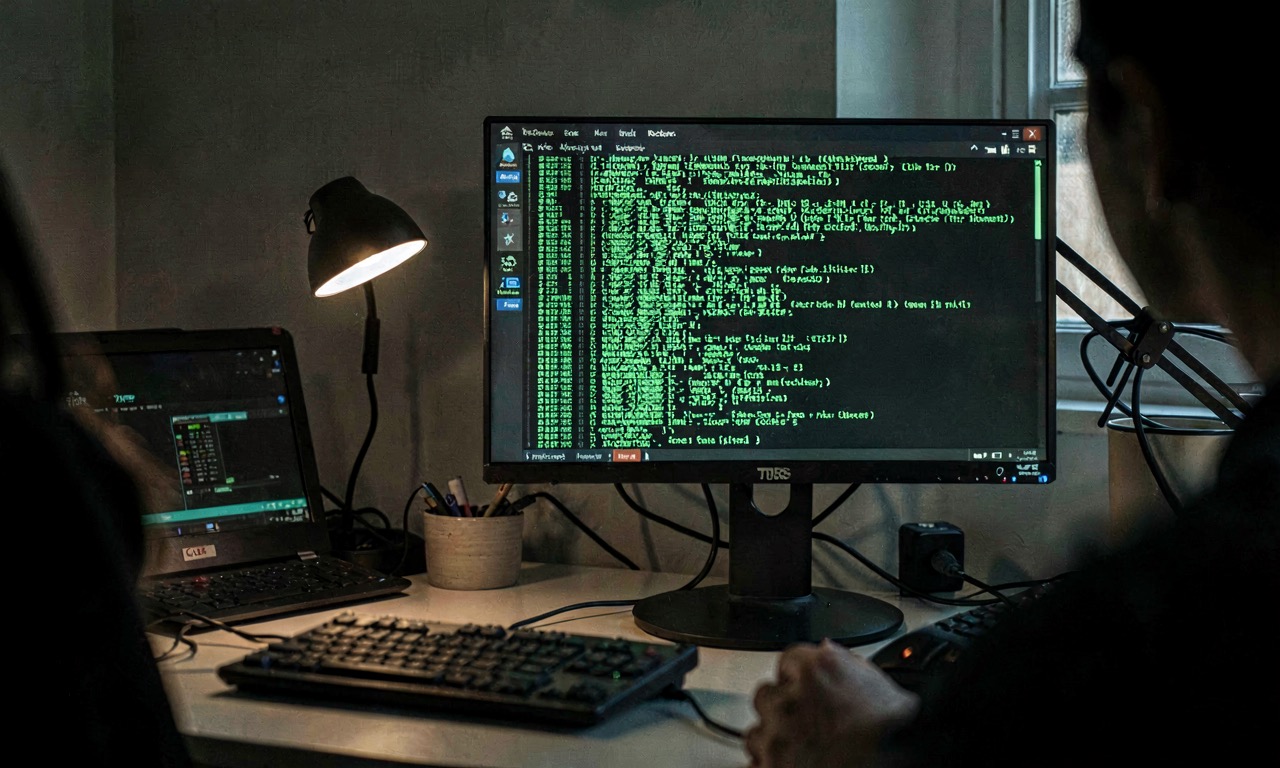
DeepSeek Wants More Than the Model — It Wants the Developer’s Terminal
DeepSeek posted two job listings this week. A product manager and an R&D engineer, both based in Beijing, both for a new team called “Harness.” The mission: build a native agentic coding tool that competes directly with Anthropic’s Claude Code and OpenAI’s Codex.
The engineer who posted the listings, Deli Chen, added laughing emojis and said “you can call it DeepSeek Code or something.” But the implications are serious.
The team’s internal formula is blunt: Model + Harness = Agent. In other words, DeepSeek knows that having a great model isn’t enough anymore. The company that owns the developer’s terminal wins the next era of AI.
Why This Matters More Than Another Model Launch
Here’s what makes this different from the usual AI product announcement: DeepSeek V4 already runs inside Claude Code. You can use Anthropic’s tool right now, powered by DeepSeek’s model, for a fraction of the cost. V4 Flash handles agentic tasks at $0.14 per million input tokens — up to 100x cheaper than Claude Opus 4.7.
So why build your own harness when yours already runs in someone else’s?
Because depending on your competitor’s tooling is a strategic vulnerability. DeepSeek supplying the model for Claude Code is like Samsung making Apple’s screens — profitable, but you’re always one product decision away from irrelevance.
What is a “harness” in AI? A harness is everything beyond the model itself: tool use, planning, memory, and execution loops. The model is the brain; the harness is the hands. Together, they make an AI agent. Without a harness, even the best model is just a very expensive chatbot.
The Full-Stack Sovereignty Play
The job listings are Beijing-specific. Not remote. Not Shenzhen. Not Hangzhou where DeepSeek’s parent company High-Flyer was founded. Beijing — where the Chinese government’s relationship with its AI industry is most direct and most closely watched by Washington.
This isn’t coincidental. China is building domestic alternatives at every layer of the AI stack:
- Chips: Alibaba’s Zhenwu M890, designed to replace NVIDIA inside US export controls
- Models: DeepSeek V4, already matching or beating GPT-5.5 on key benchmarks
- Developer tools: Code Harness, the missing piece between model and product
The pattern is clear. China doesn’t want to depend on Western companies for any layer of the AI stack. And DeepSeek — the company that shocked the world by matching frontier models at a fraction of the cost — is now the vehicle for closing the tooling gap.
What This Means for Developers
If DeepSeek ships a competitive coding agent at V4’s price point, the economics shift dramatically:
| Tool | Model | Approx. Cost (per 1M input tokens) |
|---|---|---|
| Claude Code | Claude Opus 4.7 | ~$15 |
| Codex | GPT-5.5 | ~$10 |
| Cursor | Multi-model | ~$8-12 |
| DeepSeek Code (projected) | V4 Flash | ~$0.14 |
Even if DeepSeek Code launches at V4 Pro pricing ($0.435/1M tokens during intro), it would be roughly 20x cheaper than Claude Code. For individual developers and startups, that’s the difference between “I can experiment with AI coding” and “I can’t afford not to use AI coding.”
The catch? It’s based in Beijing. Western developers will need to weigh the price advantage against data sovereignty concerns, potential export restrictions, and the simple fact that their code might be processed on Chinese infrastructure.
The Bigger Picture
DeepSeek’s move into tooling is a signal that the AI industry is maturing past the “who has the smartest model” phase. The next fight is over who owns the workflow — the terminal, the IDE, the agent loop. Anthropic knows this (that’s why Claude Code exists). OpenAI knows this (that’s why Codex exists). And now DeepSeek knows this too.
The twist is that DeepSeek has a structural price advantage that Anthropic and OpenAI can’t easily match. When your model runs at 1/100th the cost, you can afford to give away the harness.
The question isn’t whether DeepSeek Code will be good enough. It’s whether Western developers will use it.
❓ Frequently Asked Questions
Q: Can I use DeepSeek Code right now? Not yet. The Harness team is still being assembled. DeepSeek V4 is available via API and runs inside Claude Code, but a native DeepSeek coding agent doesn’t exist yet.
Q: What about data privacy if the code runs on Chinese servers? That’s the elephant in the room. Western companies using DeepSeek Code would need to consider whether their proprietary code is processed in China, subject to Chinese data laws. This is the same concern that surrounds TikTok and Huawei.
Q: Does this affect NZ developers? NZ doesn’t have the same geopolitical restrictions as the US, but the data sovereignty question remains. If you’re a Kiwi startup with IP worth protecting, running your code through a Beijing-based tool deserves careful consideration.
🔍 THE BOTTOM LINE
DeepSeek isn’t just building a cheaper model anymore — it’s building a cheaper everything. Code Harness is China’s bet that the next AI battleground isn’t intelligence, it’s tooling. And at 100x less than the competition, the price is hard to argue with. The question is whether you’re comfortable with who’s holding your code.
Sources: