$700M for a Company That’s Two Months Old
Brett Adcock — the serial founder behind Figure AI (humanoid robots) and Archer Aviation (eVTOL aircraft) — has raised $700M in Series A funding for Hark, his secretive AI hardware startup. The valuation: $6 billion.
Hark came out of stealth roughly two months ago. It’s building a “universal AI interface” — a combined chip-and-model stack that presumably replaces the fragmented mess of phones, laptops, and smart speakers with a single AI-first device. That’s the pitch, anyway. Details remain thin.
One of the largest Series A rounds in history for a company with no shipping product, no public demo, and two months of existence. Then again, this is Brett Adcock — the man who raised $1.5B for Figure AI and got Archer Aviation to a SPAC merger. He doesn’t exactly struggle to attract capital.
Who Is Brett Adcock?
What is Brett Adcock’s track record? Adcock is a serial entrepreneur who founded Vettery (acquired by Adecco for $100M+), Archer Aviation (eVTOL, went public via SPAC at $3.8B), and Figure AI (humanoid robots, valued at $2.6B after a $675M raise). He has a pattern: go after ambitious physical-tech challenges, raise enormous sums, and ship hardware. Hark is his fourth act.
Adcock’s reputation is part of what makes the $700M possible. Investors aren’t betting on the product — they’re betting on the founder. The same way Figure AI’s valuation was justified by Adcock’s ability to attract talent and capital, not by the number of robots actually deployed.
What Is Hark Actually Building?
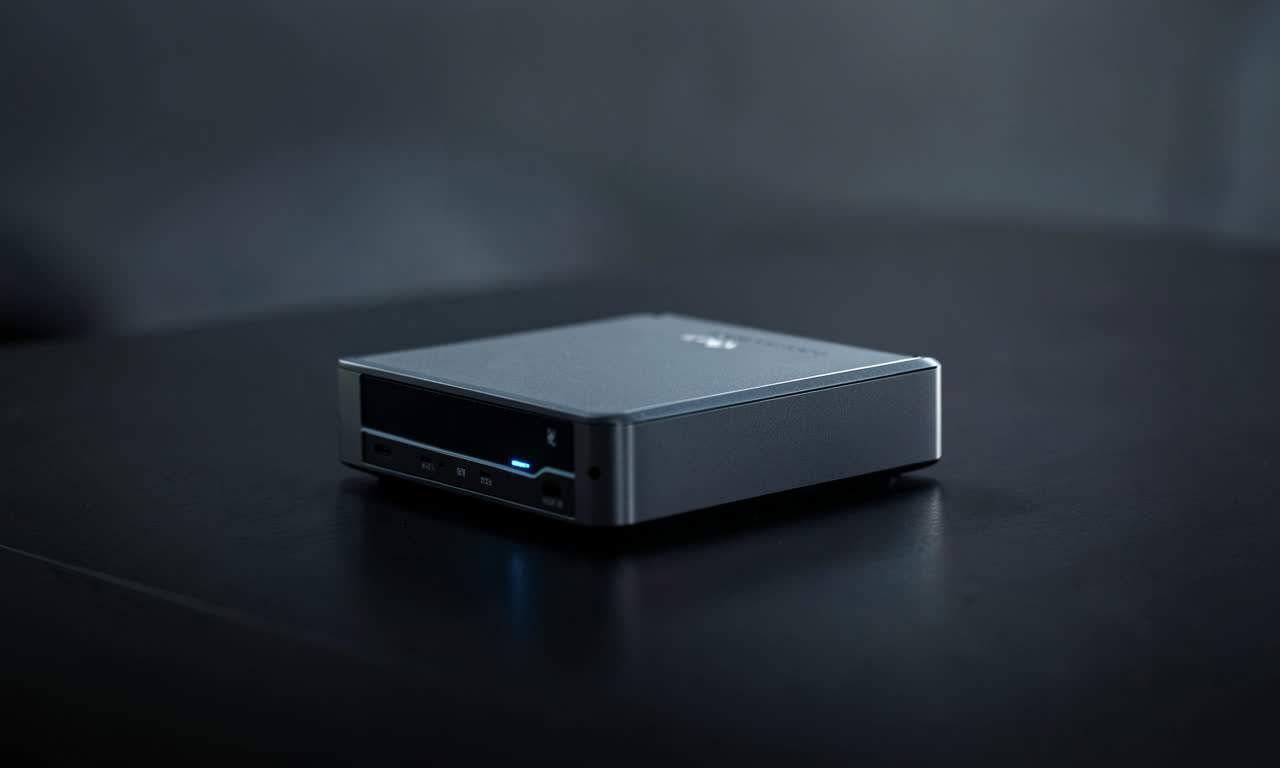
Officially, not much is known. Hark describes itself as building a “universal AI interface” — a hardware device that combines custom silicon with AI models to create a new way of interacting with technology. The combined chip-and-model stack suggests Adcock wants to own both the hardware and the software layer, similar to Apple’s vertical integration but AI-native from day one.
Speculation ranges from an AI pendant/wearable (Humane Pin 2.0, but with better funding) to a desktop AI companion (a smarter, purpose-built alternative to talking to your laptop) to something nobody’s imagined yet. The $700M suggests it’s more ambitious than a wearable.
The AI Hardware Bubble Question
Let’s be honest: $6B for a pre-product company is a lot, even by 2026 standards. The AI hardware space is already crowded with casualties:
- Humane — the $6M pin nobody wanted, sold to HP for parts
- Rabbit R1 — the $199 gadget that was mostly a wrapper around existing APIs
- Brilliant Labs — AR glasses that struggled with battery life
- Multiple smart glasses plays — all competing for a niche that may not exist
But Hark is different in one important way: it’s not trying to be a cute accessory. The $700M raise signals serious silicon work — custom chips cost hundreds of millions to tape out and manufacture at scale. If Adcock is building custom AI silicon, the money makes more sense than the Humane Pin’s $240M ever did.
The Competition
Hark enters a market that’s about to get extremely crowded:
- Apple — integrating on-device AI across the entire product line
- Google — Gemini running on Pixel and Nest hardware
- Meta — Ray-Ban Meta glasses and the Quest platform
- Samsung — Galaxy AI across phones and appliances
- Anthropic/OpenAI — both exploring hardware partnerships
The question isn’t whether there’s demand for AI hardware. It’s whether a standalone device can compete with AI that’s already embedded in the phone, laptop, and smart speaker you already own.
What This Means for NZ
NZ’s AI hardware ecosystem is essentially nonexistent — we design software, not silicon. But Hark’s success or failure matters because it tests a thesis: can a standalone AI device succeed where general-purpose computers already exist? If it can, it creates new platform opportunities for NZ software companies building AI-first experiences. If it can’t, it’s another reminder that the smartphone won.
❓ Frequently Asked Questions
Q: What is a universal AI interface? A hardware device designed from scratch for AI interaction — presumably combining custom silicon with built-in AI models, rather than relying on cloud services or general-purpose computing hardware. Think “AI-first device” rather than “phone with AI features added.”
Q: Why $700M for a Series A? Custom silicon development costs hundreds of millions. Adcock is likely building chips, not just software, which requires massive upfront capital for tape-out and manufacturing.
Q: How does this compare to Humane and Rabbit? Both raised far less ($240M and ~$50M respectively) and tried to ship consumer AI hardware without custom silicon. Hark’s $700M suggests a more hardware-ambitious approach — but also much more money at risk if the product fails.
Q: Does NZ have any AI hardware companies? Not at this scale. NZ’s tech sector is predominantly software. Hark’s trajectory is more relevant as a signal about where global AI hardware is heading than as a direct NZ opportunity.
🔍 THE BOTTOM LINE
$700M for a two-month-old company with no product is either the smartest bet in AI hardware history or the clearest signal yet that venture capital has lost its mind. Given Adcock’s track record, it’s probably somewhere in between — but we won’t know which end until Hark actually ships something.
SOURCES
- TechCrunch — Hark raises $700M Series A for its secretive universal AI interface
- Bloomberg — Hark funding details and valuation
- The Next Web — Brett Adcock’s AI hardware startup emerges from stealth