The Department of Justice told a federal court in Mississippi on Monday that the federal government should be able to dismiss any private Clean Air Act citizen lawsuit it decides is not in the public interest — and used xAI’s Grok Gov Model and its use in the Iran war to make the case.
The new filing, in the NAACP’s lawsuit against xAI and its subsidiary MZX Tech over 57 unpermitted gas turbines powering the Colossus 2 data center in Southaven, Mississippi, goes further than the DOJ memo that landed the day before yesterday. Where the earlier memo threatened national security, the new filing asks the court to adopt a constitutional theory: that the Clean Air Act’s citizen-suit provision does not authorise private groups to “commandeer” federal enforcement decisions, and that the executive branch can effectively cancel such suits at will.
🔍 THE BOTTOM LINE
Two separate things are happening at once in this filing. First, the government is using Grok’s role in Operation Epic Fury — the strikes on Iran that used Grok to deploy more than 2,000 munitions against 2,000 targets in 96 hours — to argue that the Colossus 2 turbines are military-critical infrastructure that cannot be shut down. Second, it is asking the court to read the Clean Air Act’s citizen-suit provision so narrowly that any future administration could block any private environmental enforcement action by simply telling the court the federal government has weighed in. The Southern Environmental Law Center, which represents the NAACP, says the second argument is the bigger one — and is the one that survives xAI.
What Changed in 24 Hours
Friday’s DOJ memo, signed by associate attorney general Stanley Woodward Jr., made the national-security argument. Monday’s filing makes the structural argument. According to the Ars Technica report on the new filing, DOJ lawyers wrote:
“The Clean Air Act does not authorize citizen-enforcement actions that seek relief the governmental enforcers choose to forgo… Nothing in the statute suggests that Congress, when enacting the citizen-suit provision, deputized citizens to ‘commandeer the federal enforcement machinery,’ especially where the United States has determined that a citizen’s suit would not serve the public interest.”
That sentence is the part that matters beyond Mississippi. If a federal judge in the Northern District of Mississippi adopts that reading of the statute, it applies to every Clean Air Act citizen suit in the country. The xAI turbines become the test case for whether the executive branch can pre-empt private environmental enforcement on its own say-so.
The Grok Gov Declaration
The military hook is not abstract. DOJ attached a declaration from Cameron Stanley, the chief digital and artificial intelligence officer for the Department of War (the renamed Department of Defense), describing how Grok Gov Model was used during the Iran strikes:
“Grok provides critical support for the Department of War’s military operations… Grok was used with Maven Smart System to help US forces ‘deploy over 2,000 munitions to 2,000 distinct targets within 96 hours during Operation Epic Fury, a testament to the greatly increased operational efficiency made possible by the Grok Gov Model.’”
Stanley added that the Grok Gov Model has “unique features not found in any other AI model” — a striking claim given that Anthropic’s Claude and OpenAI’s models are also deployed through Maven.
The 2,000-munitions-in-96-hours figure also matters on its own. If Grok Gov Model was load-bearing in selecting targets at that pace, the Colossus 2 turbines are doing real-time inference work for an active theatre — which is the strongest possible version of the DOJ’s argument that the facility is not a private commercial site but a federal instrumentality. The NAACP’s lawyers will have to argue that “used in war” does not change the permitting status of a Mississippi gas turbine. They have not yet filed their response.
The Turbine Count Doubled
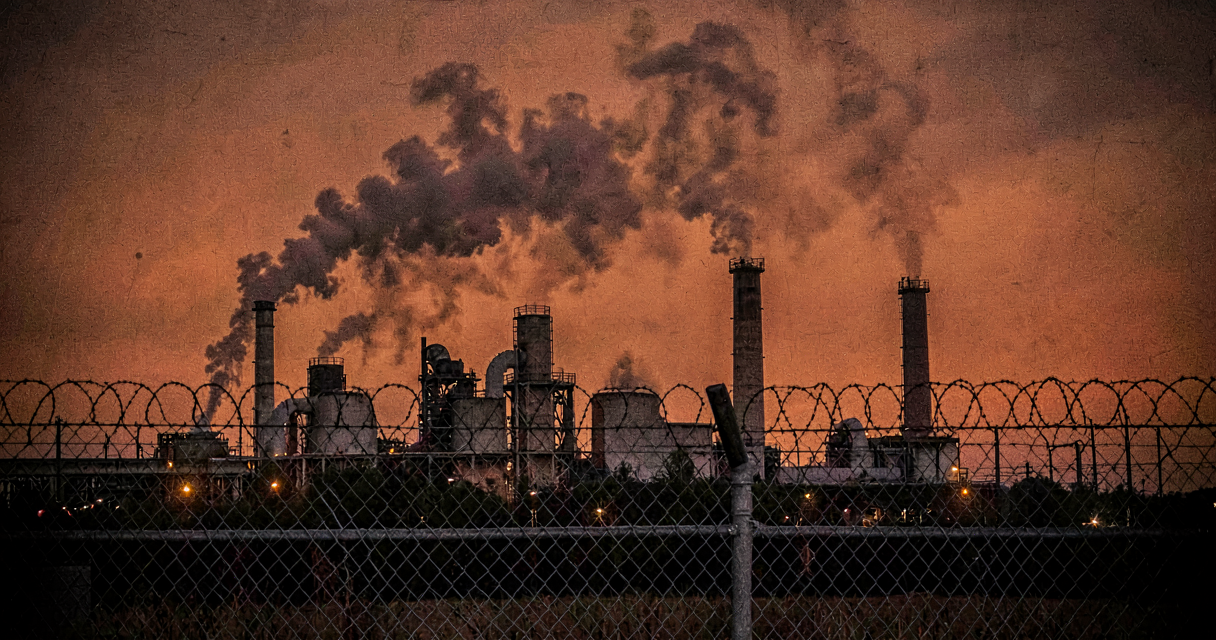
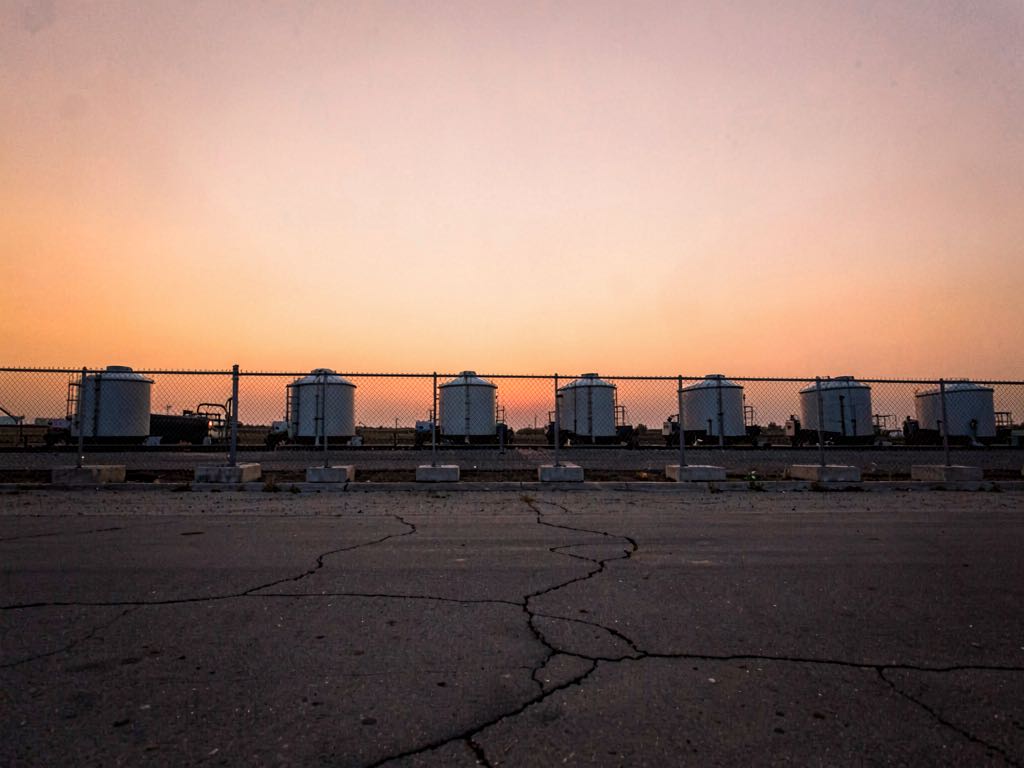
Since the NAACP’s original April complaint, the number of unpermitted gas turbines at Colossus 2 has more than doubled — from 27 to 57, with plans for two more. A letter from Mississippi Governor Tate Reeves entered into the court record says the Mississippi Department of Environmental Quality approved construction permits for permanent turbines in March 2026 and authorised trailer-mounted turbines as “mobile sources” not subject to Clean Air Act permitting. The state, in other words, has already decided that xAI does not need permits. The federal government is now arguing the courts should defer to that state determination — and to the federal government’s own determination that the lawsuits against it should be thrown out.
What the SELC Argues Back
The Southern Environmental Law Center’s response on Monday was sharp and short. “The US is arguing that xAI should be allowed to break the law solely because the Trump administration says so,” the group said. “In the filing, the Department of Justice never disputes that xAI is pumping out unlawful and harmful pollution into Memphis and North Mississippi. Instead, the Department argues that it doesn’t matter whether xAI is breaking the law and threatening community members’ health if the Trump administration blesses the lawlessness.”
SELC’s structural warning is the one to watch. Citizen suits, the group said, “serve as an essential backstop — and often a last resort — for communities when government regulators fail to hold polluters accountable. The provision was passed by Congress with bipartisan support, and courts have repeatedly upheld the constitutionality of citizen suits. Now, the Department of Justice is indicating that it has a right to come in and cancel such community-led suits at any time. This threatens to open the door to significant corruption as polluters pay, or give favors, to avoid complying with the law.”
That is the line that, if it lands in front of the right judge, becomes the constitutional objection that survives xAI. The NAACP is asking for a permanent injunction against continued turbine operation, civil penalties of up to $124,426 per day, and attorneys’ fees.
NZ Angle
The structural argument — that the executive can cancel private environmental enforcement on national-security grounds — does not map directly onto New Zealand, where the Environment Act 1986 and the Resource Management Act treat citizen enforcement differently. But the political logic is portable. A US administration that can tell a court “the turbines power AI used in Iran strikes, so the NAACP can’t sue” is one that, in principle, can tell a court “the data centre trains the model used in NZDF decision support, so the neighbours can’t sue.” The lesson for Aotearoa is to draft any future sovereign-AI legislation so that the national-security carve-out is bounded, time-limited, and reviewable by an independent tribunal — not a ministerial directive.
The Bigger Picture
Two stories are running in parallel inside this one filing. The first is the operational one: xAI’s Mississippi turbines power Grok Gov Model, which helped strike Iran in real time, which makes them a federal asset under military protection. The second is the constitutional one: the Department of Justice is asking a federal court to recognise, for the first time, that the executive branch can pre-empt any private environmental enforcement action by filing a statement of interest. The NAACP’s lawyers will argue both. The judge will likely rule on the second even if the first becomes moot — because the question is too consequential to leave unanswered, and the Mississippi courthouse is the wrong venue to settle it for the country. Expect this to reach the Fifth Circuit, and probably the Supreme Court, before it is finished.
❓ FAQ
What is “Operation Epic Fury”? The US strikes on Iran earlier in 2026, in which xAI’s Grok Gov Model was used alongside Palantir’s Maven Smart System to coordinate more than 2,000 munitions against 2,000 targets in a 96-hour window, according to a declaration from the Department of War’s chief digital and AI officer Cameron Stanley.
Why is the DOJ involved in an environmental lawsuit? DOJ lawyers filed a statement of interest in the NAACP’s case asking the court to dismiss it. The government argues that the Colossus 2 facility is critical to military operations and that the Clean Air Act’s citizen-suit provision does not allow private groups to override the executive branch’s enforcement decisions.
What is the Clean Air Act’s “citizen suit” provision? A section of the US Clean Air Act that allows private individuals and groups to sue violators of the Act’s emissions and permitting requirements. Citizen suits have been used for decades as a backstop when state or federal regulators do not act. The DOJ filing argues that the executive branch can pre-empt such suits by telling the court that federal enforcement priorities are different.
How many turbines are at Colossus 2 now? 57 unpermitted gas turbines as of mid-May 2026, up from 27 in April, with plans for two more. The NAACP’s June 12 filing alleges that all of the turbines require Clean Air Act permits and that xAI has not obtained a single one.
Could this ruling affect cases outside Mississippi? Yes. If the federal district court adopts DOJ’s reading of the citizen-suit provision — that the executive can cancel private enforcement by weighing in — that reading would apply to all federal Clean Air Act cases and could be cited in cases under other environmental statutes that have similar citizen-suit provisions.
Sources
- Ars Technica — Trump admin tries to block Clean Air Act lawsuit over xAI’s gas turbines
- The New York Times — xAI, Musk, Mississippi, Grok turbine lawsuit, NAACP
- Southern Environmental Law Center statement on the DOJ filing
- Earthjustice — Citizen suit enforcement under the Clean Air Act
- US District Court for the Northern District of Mississippi — NAACP v. xAI / MZX Tech filings
- The Information — xAI Colossus 2 buildout coverage