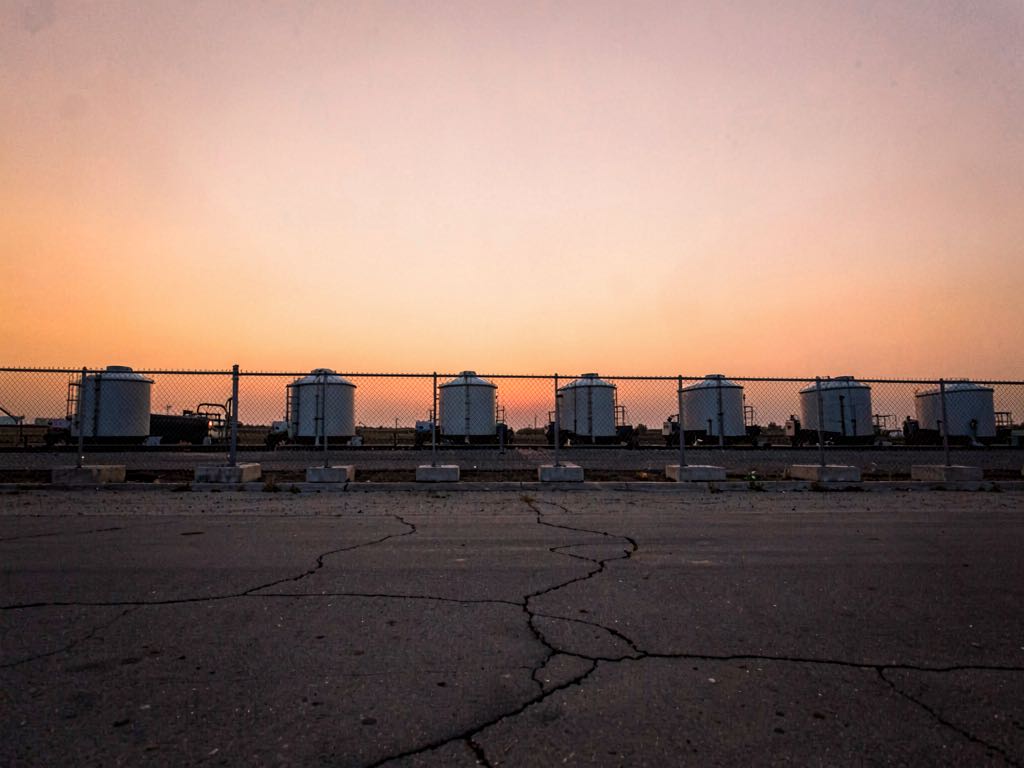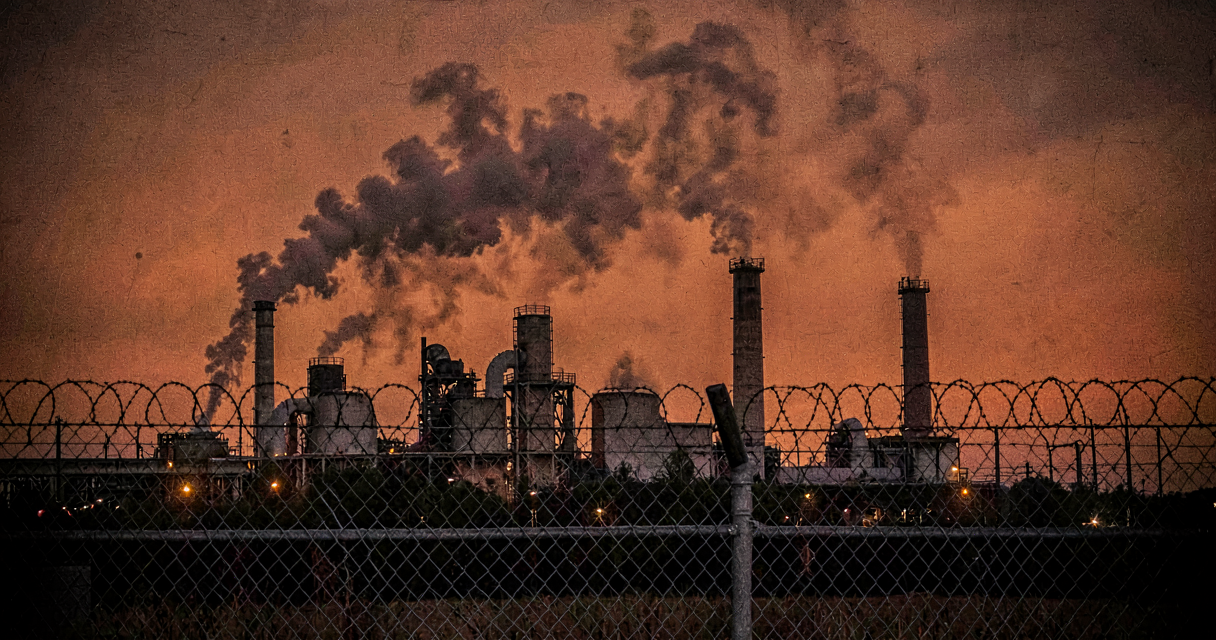
The US Justice Department told a federal court in Mississippi late on Monday that Elon Musk’s AI company xAI has the right to run dozens of polluting gas-burning turbines in the state despite not having permits for them, and asked the court to throw out a NAACP lawsuit that says the turbines violate the Clean Air Act.
The memo, signed by Stanley Woodward Jr., the associate attorney general and the No. 3 official at DOJ, made two arguments. First, the NAACP lawsuit threatens national security by “seeking to shut off the power supply for artificial-intelligence innovation that supports the Department of War’s military operations.” Second, the federal government should have unchallenged authority to stop environmental lawsuits brought by private groups or individuals.
The first time the US Department of Justice has intervened in a citizen environmental lawsuit to argue for the polluter’s right to pollute, in a filing that explicitly invokes AI’s role in active military operations, is a precedent that goes well beyond one data center in Southaven, Mississippi.
🔍 THE BOTTOM LINE
This is a story about three things, in increasing order of importance: (1) a data center in Southaven, Mississippi that powers a frontier AI lab and runs 35+ unpermitted gas turbines in a predominantly Black community; (2) the US Department of Justice intervening against a 116-year-old civil rights organisation in a Clean Air Act case, on behalf of an AI company, in a filing signed by the No. 3 official at DOJ; (3) the precedent this sets for AI infrastructure everywhere — if a frontier AI company’s compute can be framed as supporting “Department of War military operations,” then any local community challenging the pollution that compute produces is now on a collision course with federal national-security authority. For New Zealand, this is a direct preview of the legal regime that any sovereign-AI buildout will run into: the moment you try to build competitive AI infrastructure, the moment you also become a national-security asset, and the moment the citizen environmental review process for that infrastructure becomes subordinate to federal authority.
The Facts
According to the NYT reporting by Karen Zraick and Hiroko Tabuchi:
- xAI operates dozens of unpermitted natural-gas turbines at its data center complex in Southaven, Mississippi, near the Tennessee border. The facility powers xAI’s training and inference for its Grok model family.
- The NAACP filed suit in April under the Clean Air Act, which requires facilities like power plants to seek permits and install pollution-control technologies. The NAACP is represented by Earthjustice and the Southern Environmental Law Center.
- The DOJ memo, filed Monday 16 June in federal court in Mississippi, argues the suit “threatens national security” because xAI’s AI infrastructure “supports the Department of War’s military operations” — a reference to the Pentagon’s renaming of the Department of Defense. xAI’s Grok is integrated into the Maven Smart Systems program, which the Pentagon confirmed in a court filing last week was used in planning bombing missions against Iran earlier this year.
- The DOJ also argued that the federal government should have unchallenged authority to reject citizens’ environmental lawsuits — a position with no recent precedent.
- Laura Thoms, director of enforcement at Earthjustice and formerly an assistant chief for environmental enforcement at DOJ, called the move “remarkable.” “Ordinarily, they would intervene to enforce the law,” she said, referring to the Clean Air Act. To her knowledge, the department has not previously argued it should have the power to reject citizens’ lawsuits on its own authority.
What’s New and What’s Not
What’s not new: Frontier AI labs sit on large amounts of compute. Compute requires power. Power generation produces pollution. Communities near compute infrastructure have always borne the environmental cost. The NAACP’s April lawsuit was the predictable, lawful, and well-precedented response.
What’s new: The Department of Justice has, for what appears to be the first time, intervened in a citizen environmental lawsuit to argue that the polluter’s right to pollute is a national-security matter, and that the citizen lawsuit should be thrown out on that basis. The intervention is signed by the No. 3 official at DOJ, not a line attorney. The memo invokes the AI’s role in active military operations, not generic national-security rhetoric.
What’s also new: The “Department of War” framing. The Trump administration renamed the Department of Defense to the Department of War earlier this year. The DOJ memo uses the new name. That is a deliberate choice — it signals to the court that the matter is being treated as a wartime security question, with the implications that follow.
The National-Security Argument
The DOJ’s argument is structured as follows:
- xAI’s compute supports Department of War military operations (specifically the Maven Smart Systems program, per The Information’s reporting on last week’s Pentagon filing).
- The NAACP lawsuit seeks to shut off the power supply for that compute (by forcing compliance with the Clean Air Act, which would either require permits or shut down the turbines).
- Therefore the lawsuit threatens national security.
The argument is internally consistent. The question is whether the court accepts the framing. Clean Air Act citizen-suit provisions have been a cornerstone of US environmental law since 1970. The statute explicitly grants citizens the right to sue violators. The DOJ memo is, in effect, asking the court to read the citizen-suit provision narrowly — narrowly enough to exclude AI infrastructure on national-security grounds.
If the court accepts the framing, the implications are not limited to xAI. They apply to every AI data center in the United States, and to every community that has standing to challenge the environmental impact of one.
What It Means for New Zealand
New Zealand does not have a Department of War, and does not have a citizen-suit provision in its Resource Management Act. The political context is different. But the structural lesson is the same:
1. AI infrastructure is now treated as critical national-security infrastructure by the United States. The DOJ’s framing — that AI compute is a “Department of War” asset — implies that any disruption to that compute, including lawful environmental review, is a national-security matter. NZ has not yet adopted this framing, but it is the framing the US is now exporting, both through the recent export-control response to Anthropic’s Fable model (classified as a munition three days after release) and through the DOJ’s intervention in the Mississippi case.
2. The “trusted partner” scheme the US and Europe are reportedly discussing for AI model access will have an environmental-protection component. The Financial Times reported on Tuesday that the “trusted partner” scheme would allow US allies to test cutting-edge models. Whether those allies will be required to provide equivalent legal cover for US AI companies operating in their jurisdictions is an open question. The Mississippi filing suggests the US position is: yes, you should.
3. NZ’s sovereign-AI strategy cannot rely on US-aligned framing. A small country that builds its AI strategy around access to US-controlled frontier models and US-style AI infrastructure is building on ground that can shift. The DOJ’s Mississippi memo is the most recent example of the US treating its own AI infrastructure as exempt from the normal environmental and civil-liberties review that applies to other large industrial facilities. Any NZ strategy that adopts the same framing inherits the same vulnerability to community challenge.
4. The audit layer is still the sovereign moat. As the Schneier/Sanders Guardian piece noted, the real AI governance gap is the absence of technical mechanisms to verify the integrity of AI systems. NZ’s opportunity is to build the audit, deployment, and regulatory layer for AI infrastructure that is auditable in a way that Mississippi’s data center is not. The Mississippi case is, in part, about the absence of an auditable environmental record. NZ can build a sovereign capability in the audit layer without needing to host the compute.
The Bigger Frame
The DOJ’s Mississippi memo is not, in the first instance, about xAI or the NAACP. It is about whether the US federal government can use national-security framing to override state and citizen environmental review of critical infrastructure. The answer the DOJ is asking the court to give is yes.
If the court answers yes, the precedent applies to AI infrastructure first, and then to anything else the executive branch wants to call critical. The Mississippi community is the test case. The NAACP is the test plaintiff. The NAACP’s 116-year history of using the legal system to challenge discriminatory environmental practice is the reason this case is being defended at the No. 3 level of DOJ rather than delegated to a line attorney.
For New Zealand, the most actionable takeaway is that the environmental review of AI infrastructure is now a sovereign-governance question, not a local one. The countries that build sovereign AI capabilities with auditable environmental and operational records will have something to sell to the rest of the world. The countries that build it on the Mississippi model will have a legal fight on their hands — and, as of 16 June 2026, a federal government that has signalled it will side with the AI lab, not the community.
Sources
- The New York Times — Karen Zraick & Hiroko Tabuchi, “D.O.J. Seeks to Halt Pollution Lawsuit Against Elon Musk’s Data Center” (16 Jun 2026)
- The Information — “Pentagon Says It Used xAI’s Grok in Iran War as DoJ Fights Data Center Lawsuit” (16 Jun 2026)
- Earthjustice — public statements, Laura Thoms quoted in NYT
- Southern Environmental Law Center — co-counsel for NAACP
- Financial Times — “US and Europe discuss access to AI models after Anthropic dispute” (16 Jun 2026)
- The Guardian — Bruce Schneier & Nathan E Sanders, “The Anthropic ‘Fable’ saga” (16 Jun 2026)
- NAACP — plaintiff, original April 2026 filing