On 28 April 2026, Reuters reported that SpaceX’s confidential SEC registration statement ties Elon Musk’s full stock grant to three concrete milestones. The grant, currently valued at $175 billion with a potential upside of $1.1 trillion, unlocks entirely only when SpaceX reaches a $7.5 trillion market cap, helps establish a permanent human settlement on Mars with at least one million residents, and develops space-based computing infrastructure capable of delivering at least 100 terawatts of processing power. Additional incentives, per Teslarati’s reading of the same filing, are tied to the deployment of orbital data centres.
The structure is bulletproofed against the kind of lawsuit that voided Musk’s $56 billion Tesla pay package in the Delaware Chancery Court. Fortune reported in June that SpaceX is no longer incorporated in Delaware — Musk publicly moved the company to Texas after the Tesla ruling — and that a shareholder would need to own 3% of the company, a multi-billion-dollar stake at SpaceX’s projected $1.8 trillion IPO valuation, merely to bring a legal claim. The compensation is spelled out clearly in the IPO registration statement for any investor to read before buying a single share. As University of Florida finance professor Jay Ritter put it to Fortune: “If you don’t like it, you don’t have to buy it at that price.”
The interesting part is not the size of the payout. The interesting part is the milestone structure. The $1.1 trillion is the milestone payment for closing a closed-loop capital machine — and the SpaceX-Cursor acquisition three days ago is the piece that just made the loop closeable.
🔍 THE BOTTOM LINE
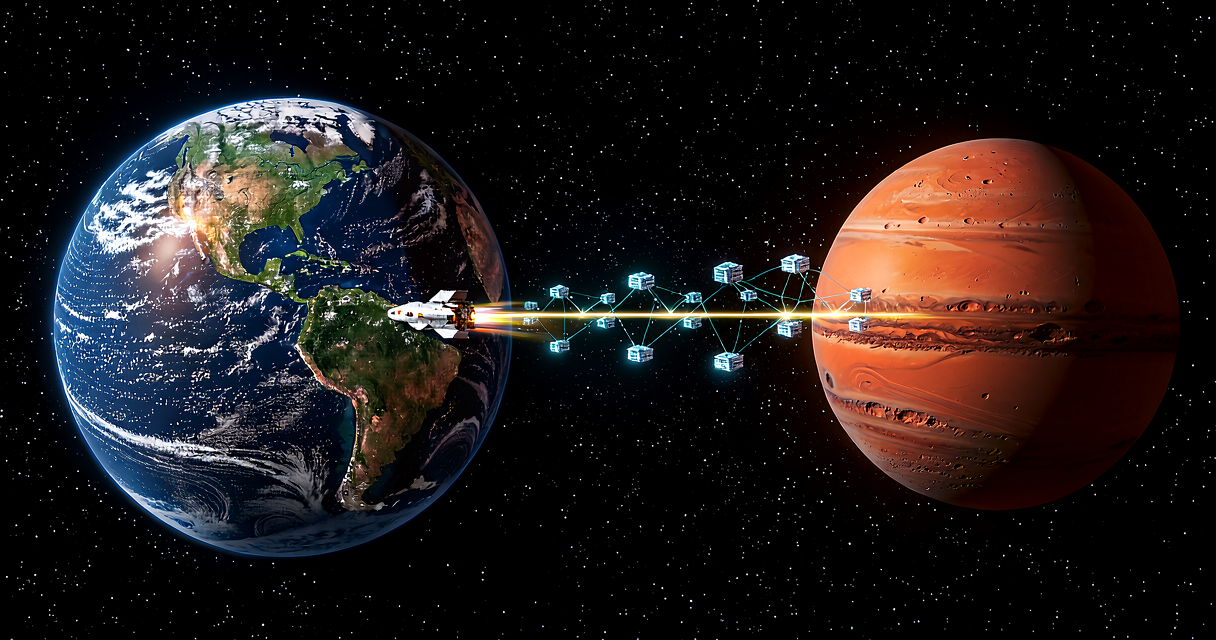
Six Musk businesses — SpaceX, xAI, Cursor (now inside xAI), Tesla, Boring Co, and Neuralink — are no longer six businesses. They are six stages of a single capital flywheel. Stage one is Earth revenue: Tesla margin, xAI inference, Starlink subscriptions, Boring Co infrastructure contracts, Neuralink medical revenue, and the new Cursor subscription book. Stage two is the transport layer: Starship cadence, with the public target of one launch per hour and a per-ton-to-Mars cost below $100,000. Stage three is the Mars surface: Boring Co subsurface habitat construction, Tesla power electronics, Optimus humanoid labour, Neuralink crew augmentation, xAI real-time mission planning, and Cursor-coded habitat operating systems. Stage four is the return leg: Mars-based compute, in-situ resource utilisation, and the manufactured goods and rare materials that flow back to Earth. Stage five is the next jump: the loop is closed, and Earth revenue is no longer the only ATM. The $1.1 trillion payout is the milestone payment for closing the loop once. After that, the colony is self-funding.
The Pay Structure: Why It Looks Like a Payout But Isn’t
The most common reading of Musk’s $1.1 trillion pay package is that it is a personal enrichment event. That reading misses the design.
A $1.1 trillion personal stock grant at a $7.5 trillion market cap is roughly 15% of equity at the unlock moment. For a founder who has built the company from $0 to $7.5 trillion, 15% is a normal founder share for a generational company. The number is shocking because the market cap is shocking — not because the share is unusual.
The milestone structure is what is new. It is also what is bulletproofed. The Delaware Chancery Court voided Musk’s 2018 Tesla grant on the grounds that the process was an after-the-fact transfer of wealth — the company was already public, the grant was approved by directors with conflicts, and shareholders had not consented. The Musk-SpaceX structure avoids all three failure modes. SpaceX is going public with the grant already in the registration statement. Investors see the dilution before they buy. The grant is contingent on milestones (not time served) — if the milestones are not met, Musk gets nothing. The board approval happens in the IPO disclosure, not after the company is public. The structure is, in effect, a Delaware-proof equity contract for a multi-decade capital programme.
The grant is, in other words, the capital structure for the Mars programme. It is not Musk’s salary. It is not Musk’s bonus. It is the equity that lets the rest of the financial architecture — the debt, the capex, the operational runway — line up behind a multi-decade plan to put a million people on Mars.
The Six-Business Flywheel
The structural argument for why this pay package is not what it appears is that Musk’s six businesses are no longer six businesses. They are six stages of a single capital programme, and the programme is the flywheel.
| Business | Earth role | Mars role | Stage of the loop |
|---|---|---|---|
| SpaceX | Launch revenue, Starlink subscriptions, Space Force contracts | Transport, surface-to-orbit, return | 2: Transport |
| xAI | Grok API revenue, training compute, frontier model R&D | Real-time mission planning, habitat AI, colony ops | 5: Compute + decisions |
| Cursor (now inside xAI) | $60B all-stock acquisition; dev-tool subscription revenue | Autonomous code for habitat OS, life-support, robotics | 3: Mars-surface software |
| Tesla | EV + FSD + robotaxi margin, energy storage, Optimus R&D | Surface mobility, power electronics, Optimus labour | 3: Mars-surface hardware |
| Boring Co | Tunnel revenue (LVCC, Vegas, Nashville, doubling tunneling power in 2026) | Subsurface habitat construction (radiation shielding) | 3: Mars-surface construction |
| Neuralink | Medical device revenue, BCIs for paralysis patients | Crew augmentation, productivity for off-world colonists | 3: Mars-surface humans |
The structure is: Earth revenue → Mars transport → Mars surface operations → Mars return (IP, compute, materials) → next-generation Earth revenue → bigger Mars presence → return → closed loop.
Each stage of the loop pays for the next. Tesla margin and Starlink subscription revenue fund the Starship cadence. Starship cadence puts the Boring Co habitat, Tesla power electronics, Optimus robots, Neuralink-augmented crew, and xAI-coded operations on Mars surface. The Mars surface operations generate new IP, new compute (the 100 TW orbital data centre programme), and new materials (regolith processing, asteroid redirect, manufactured goods in 1/3 g). Those come back to Earth as high-margin exports, and the next round of capex is funded not by Earth ATMs alone but by the Mars-Earth loop itself. The payout is the milestone payment for closing the loop the first time.
Why the Cursor Acquisition Was the Missing Piece
The Cursor acquisition, closed three days ago at $60 billion all-stock, is the move that turned the flywheel from concept to executable plan. Before Cursor, the bottleneck for Mars surface operations was not hardware. It was software velocity.
The 1-million-person target cannot be hit without an AI-native operating system for the colony. Life support, power distribution, surface mobility, resource extraction, medical triage, and crew scheduling are all real-time decision problems at a scale no human team can supervise. The operating system has to be autonomous, self-modifying, and capable of writing its own modules in response to situations the original developers could not anticipate. That is a Cursor-class engineering problem — the same problem Cursor solved for software teams, applied to colony operations.
Cursor brought ~300 engineers — the largest concentration of elite AI-coding talent in private hands. They are now inside xAI’s compute stack, with the second-largest training cluster in the world (Colossus 2, Memphis) behind them. The dev velocity on the habitat OS just moved from “linear with headcount” to “compute-bound and likely exponential.” The Cursor team is also the team that built the AI coding tool the rest of the frontier AI labs are now using. The Cursor purchase is therefore not just an acqui-hire. It is an acquisition of the tooling layer of the AI industry, folded back into the Mars programme’s software pipeline.
The acquisition was framed in public reporting as a talent play. It is more precisely a software-velocity play for the Mars surface operating system. The 1M-person target is a software problem as much as a hardware problem. Cursor solves the software problem.
The Computability Question: $7.5T Market Cap, 100 TW of Orbital Compute
The 100 terawatts of space-based compute in the pay structure is the line item that most observers have skipped over. It deserves more attention.
A terawatt is 10¹² watts. 100 TW is roughly the installed electrical generation capacity of the entire United States. Musk is committing to a build-out of orbital compute at a scale equal to US terrestrial electrical generation. The framing in the SEC registration is “space-based computing infrastructure” — Starship-launched server clusters in sun-synchronous orbit, with continuous solar power and no atmospheric thermal load, beaming compute down via laser or microwave link. The economics, on paper, are staggering. Space-based solar is approximately 8× more efficient per unit area than terrestrial solar (no atmosphere, no night, no weather). At 100 TW of orbital compute, the energy cost per FLOP is a small fraction of terrestrial data centre cost.
The strategic logic is that compute is the scarce input for AI — and the scarce input for compute is power. If you control 100 TW of orbital compute, you control the global AI cost curve. The same orbital infrastructure is also the compute backbone for the Mars colony. The 100 TW line item is not a side quest. It is the same infrastructure, sized to the global AI market, with the Mars colony as a customer of last resort.
For a $7.5 trillion SpaceX market cap to be supportable, SpaceX has to be the operator of one of the two or three largest compute platforms in the world. The Starship launch cadence required to put 100 TW of compute in orbit is the same cadence required for Mars colonisation. The two programmes share 80% of their infrastructure. This is the same flywheel logic that makes Tesla, xAI, and Boring Co co-dependent.
Where the Earth Subsidies Come From
The flywheel is closed-loop. The flywheel is started with Earth revenue, and the Earth-revenue stack is unusually concentrated.
The Musk-aligned companies, by 2026 revenue and profit:
- Tesla — global EV leader, energy storage, Optimus in early production. Reported 2025 revenue around $115B, with auto gross margin in the 18-20% range and energy storage margin above 30%. Tesla margin funds the largest single line of Mars-capex subsidy.
- SpaceX — Starlink is the dominant satellite-internet operator; commercial launch is the dominant heavy-lift provider. Starlink revenue crossed $12B in 2025 and is growing at >50% YoY. The IPO at $1.8T is the largest in US history.
- xAI — Grok inference and the new Cursor subscription revenue. xAI’s compute and talent capex is the largest in the private AI sector, with Colossus 2 in Memphis at the centre. Subscription revenue is growing but still sub-scale relative to capex.
- Boring Co — small relative to the others, but profitable on the LVCC loop and now expanding in Nashville and Vegas. The Boring Co P&L is not the subsidy. The Boring Co tunneling technology is the subsidy — the only company boring human-rated tunnels at commercial scale, with the engineering IP that translates directly to Mars subsurface habitat construction.
- Neuralink — early revenue, small. The Neuralink P&L is not the subsidy. The Neuralink interface IP is the subsidy — the only company with a working high-bandwidth brain-computer interface in human trials, with the engineering IP that translates to crew augmentation for off-world colonists.
- Cursor — folded into xAI as of June 17. Pre-acquisition Cursor revenue was reportedly in the high hundreds of millions. The Cursor subscription book is the subsidy — the only company with a category-defining AI coding tool, with the dev-velocity that translates to the colony operating system.
The Earth revenue stack is heavily concentrated in Tesla and SpaceX. The flywheel only works if Tesla’s auto margin holds and SpaceX’s Starlink growth holds. Both are at risk: Tesla is under pressure from Chinese EV competitors and from a softening US EV market; Starlink faces regulatory friction in India, China, and parts of Europe, and the orbital compute build-out may face spectrum and export-control issues of its own. The flywheel is robust at the architecture level and fragile at the input level. That is a 2027–2028 question, not a 2026 question.
What It Means for New Zealand
For a small jurisdiction at the bottom of the Pacific, the closed-loop Musk flywheel is a third-order strategic fact. The direct exposure is limited. NZ is not a launch site, not a compute cluster location, and not a battery cell manufacturer. The indirect exposure is more interesting.
1. The export-control gap is now visible at the consumer level. When the Commerce Department forced Anthropic to shut down Fable and Mythos on Friday, the framing was national security. When Musk’s orbital compute build-out is delivering 100 TW of solar-powered AI compute from sun-synchronous orbit, the framing will be different. Compute beamed from space does not respect national borders. NZ access to frontier AI compute will, within a decade, depend not on which terrestrial cloud we are customers of but on whether orbital compute is a regulated good or a free service. The Five Eyes conversation that produced the Lutnick letter is the wrong conversation for orbital compute. The right conversation is multilateral spectrum allocation, orbital traffic management, and consumer device standards. NZ is well-placed to convene that conversation because it is small enough to be a neutral party and trusted enough to be a serious one.
2. The “1 million people on Mars” target is the largest single capex programme in human history. A back-of-envelope on Musk’s stated $100K/ton-to-Mars economics suggests a per-person delivered-to-Mars cost in the $5-20M range, including life-support infrastructure for the first decade. 1M people × $10M = $10 trillion. The $7.5T SpaceX market cap is sized to the capex, not the revenue. The programme is therefore a capital-allocation event the size of a major world economy. NZ’s relevant question is not whether to participate in the programme directly. The relevant question is what NZ’s role is in the non-Mars tail: the orbital compute, the AI tooling, the regulatory layer, the supply chain for high-margin materials. The opportunity is in the loop, not at the destination.
3. The “sovereign AI” frame is now obsolete. The framing of the past two years has been sovereign AI — the idea that nations need their own frontier model, their own data centres, their own training compute. The Musk flywheel is the end of that framing. If 100 TW of orbital compute is real, the answer to “where is the AI” is in orbit, not in any one country. The sovereign-AI question shifts from “where is the model” to “what is the audit, attribution, and regulatory layer for AI that is generated off-world and beamed down.” That is the same audit-and-provenance gap that the Schneier/Sanders Guardian essay on Fable and the Macron G7 “trusted partner” story both identified. NZ’s path to relevance is to be the jurisdiction that built the audit layer before the rest of the world realised they needed it. The Musk flywheel does not foreclose that path. It makes the path more important.
What to Watch
The next 12 months will indicate whether the flywheel is real or whether it is a financial-engineering structure that does not survive contact with execution. Five things to watch:
- SpaceX IPO price discovery — at $135/share, the implied market cap is $1.75T. If it opens higher, the $7.5T target becomes more credible on the public-market curve. If it opens flat or down, the milestone structure looks unaffordable.
- Starship orbital refuelling demonstration — the single technical milestone that has to be hit before Mars surface operations are credibly scheduled. Target: late 2026 or early 2027.
- Cursor integration into xAI — first public product shipped by the combined team. The habitat OS will not be public, but a Cursor+xAI joint shipping product would be a signal of integration velocity.
- Optimus production rate — currently in low-thousands per year. A step-change to 10K+/year is the threshold at which the labour-cost economics for Mars surface operations start to pencil.
- Orbital compute pilot — first 100 MW-class Starship-launched server cluster. This is the line item that is most underreported in the public coverage and the one that has the most leverage on the global AI cost curve.
The trillion-dollar payout is the milestone for closing the loop. The loop is closing. Whether it closes on Musk’s timeline is the open question. The structural argument for the loop is the most coherent of any private capital programme in history. The execution risk is also the largest of any private capital programme in history. Both are true. The pay package is designed so that the payout happens only if the loop closes. The structure is the bet.