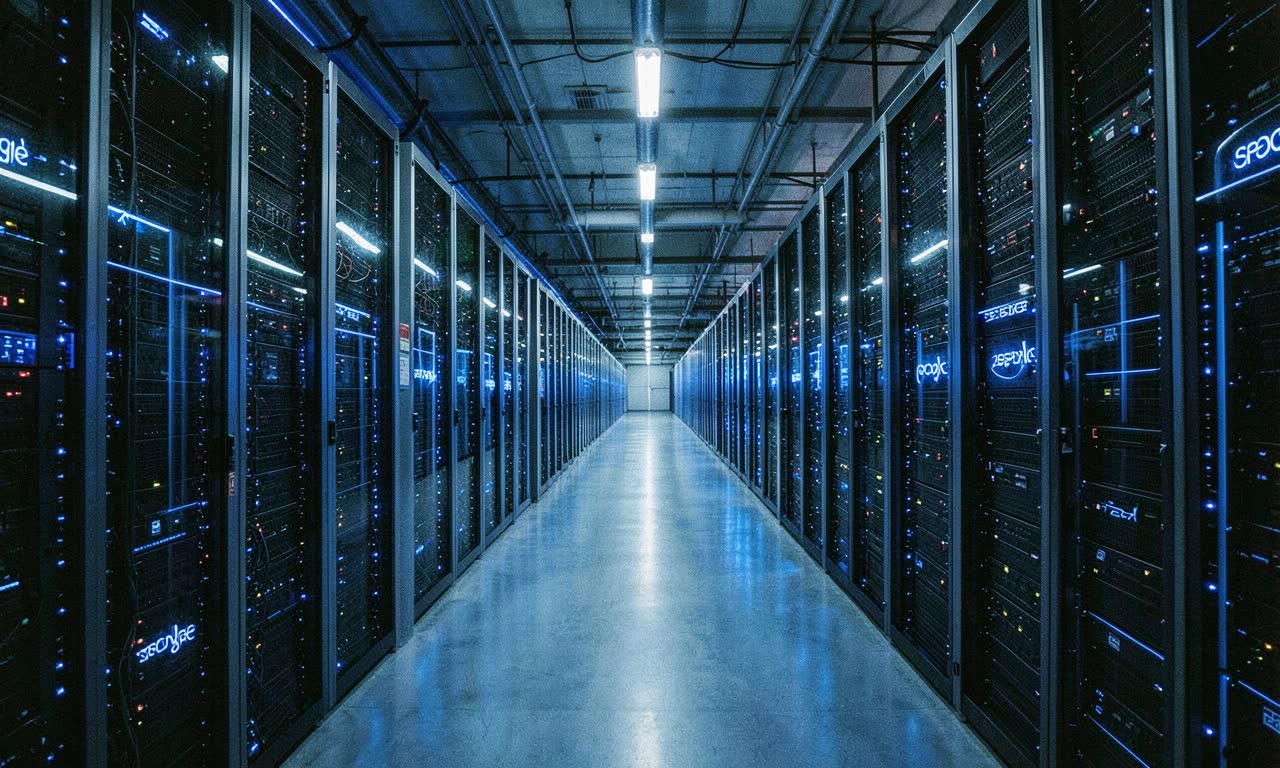
SpaceX has inked a compute deal with AI startup Reflection worth $6.3 billion, signaling its aggressive pivot into the foundational layer of the global AI economy. This latest agreement, following similar deals with Anthropic and Google, positions SpaceX as a crucial infrastructure backbone for frontier AI development — and confirms that the real money in AI is not in the models, but in the raw silicon and energy required to run them.
🔍 THE BOTTOM LINE
This isn’t just another contract; it’s a declaration that compute power — the raw energy and silicon required to train massive models — is the most valuable commodity in the AI economy right now. For New Zealand, this signals where the global AI investment gravity is pulling: towards hyperscale infrastructure providers like SpaceX, rather than purely software layers. A $6.3 billion deal for a single startup’s compute capacity is not a rounding error. It is a signal that the AI infrastructure build-out has entered a new phase — one where the bottleneck is no longer model architecture but the physical capacity to run it.
What Changed
The market has seen an acceleration in “compute-for-AI” deals. Previously, major tech players secured compute capacity piecemeal. Now, with Reflection securing a $6.3 billion commitment from SpaceX’s Colossus data center infrastructure, the trend is clear: AI startups are signing massive, long-term utility contracts for raw processing power CNBC.
Reflection is not a household name, but it is a serious player in the frontier AI space, focused on developing autonomous agent systems that require sustained, high-bandwidth compute access. The $6.3 billion figure — more than 20 times the $300 million figure initially floated — reflects the sheer scale of compute required to train and run next-generation agentic models. For context, that is roughly equivalent to the entire annual R&D budget of a mid-sized nation.
Context
This move fits into a pattern of vertical integration by mega-cap tech players. SpaceX isn’t just selling rockets; it’s monetising its vast energy and data centre footprint. Having already secured deals with giants like Anthropic — who committed to 300 megawatts of compute at Colossus 1 in Memphis Anthropic Just Bought 300 Megawatts of Musk’s Compute — and Google, which is paying $920 million a month for GPU capacity through 2029 Google Will Pay SpaceX $920 Million a Month for Compute, the Reflection deal solidifies SpaceX’s narrative: they are building an AI utility provider on par with traditional cloud giants.
The pattern is unmistakable. SpaceX has become the world’s most expensive GPU landlord, and the tenants are lining up. The company’s Colossus cluster — over one million H100-equivalent GPUs — is now the most concentrated pool of AI compute outside of government hands.
NZ Angle
For our local scene here in Aotearoa, this is a mixed bag. On one hand, it confirms that the global money flow for frontier AI compute is immense and highly centralised. On the other hand, it underscores the urgent need for New Zealand to develop its own high-density computing capacity or niche specialisation. Relying solely on overseas infrastructure risks making us just another consumer of someone else’s silicon power.
The $6.3 billion Reflection deal is larger than the entire annual GDP of several Pacific Island nations. It is a reminder that the AI infrastructure build-out is happening at a scale that dwarfs most national economies. New Zealand’s path is not to compete on raw compute scale — that race is already lost. The opportunity is in green data centres powered by our renewable energy advantage, and in the audit, compliance, and sectoral fine-tuning layers that hyperscale providers cannot easily replicate.
The Other Side
Critics argue that these massive compute deals create an insurmountable barrier to entry for smaller, innovative AI firms. If the best compute is locked up in mega-deals with infrastructure giants, how do nimble Kiwi startups compete? The concern is valid. When a single startup can commit $6.3 billion to compute, the message to smaller players is clear: you are not playing in this league.
But there is a counter-argument. The hyperscale compute providers are creating a commodity market for raw processing power. As SpaceX, Google, and Microsoft compete to fill their data centres, the unit cost of compute is likely to fall — not rise. The $6.3 billion deal is a bet on volume, not a bet on scarcity. If the bet pays off, smaller players may benefit from a more liquid compute market than exists today.
The Bigger Picture
The race isn’t just about who has the most compute; it’s about who controls the energy powering that compute. SpaceX’s ability to leverage its infrastructure — including its Starlink energy footprint and its Starship launch capacity for orbital compute — suggests a deep synergy between aerospace, energy management, and AI processing. This is a model we should watch closely as it influences everything from data centre placement to national energy policy.
The Reflection deal also raises a question that few are asking: what happens when the compute provider is also a model developer? SpaceX owns xAI, which builds Grok. If the same company that controls the compute also controls a competing model, where does that leave startups like Reflection that depend on that compute? The vertical integration that makes SpaceX efficient also makes it a potential bottleneck for everyone else.
❓ FAQ
Q: What is “compute power” in this context? A: It refers to the raw processing capability — the sheer number of calculations a supercomputer or data centre can perform per second (measured in FLOPS) — necessary to train large AI models. The $6.3 billion deal buys Reflection sustained access to a significant slice of SpaceX’s Colossus cluster.
Q: Does this mean SpaceX will build more data centres in NZ? A: Not necessarily, but it signals that the demand for such infrastructure is global and massive, putting pressure on regional energy grids everywhere. New Zealand’s renewable energy surplus makes it a theoretically attractive location, but the regulatory and connectivity hurdles remain significant.
Q: How does this compare to Google’s cloud offerings? A: While Google offers cloud services, these SpaceX deals suggest a direct, raw capacity sale bypassing standard cloud service layers. This can be more bespoke and powerful for bleeding-edge research, but it also means less flexibility and more lock-in for the customer.
Q: Is $6.3 billion a lot for compute? A: Yes. It is more than 20 times the $300 million figure initially reported. To put it in perspective: it is roughly the same as the entire annual defence budget of New Zealand. The figure reflects not just current needs but a multi-year commitment to sustained frontier AI training.
🔍 THE BOTTOM LINE
SpaceX’s $6.3 billion deal with Reflection is a stark reminder that in the AI race, infrastructure is the product. New Zealand needs to move beyond just being an exporter of software talent; we must actively participate in building or securing access to next-generation compute capacity if we want our local innovations to scale globally. The hyperscale era of AI compute has arrived — and the ticket to entry just got a lot more expensive.
📰 Sources
- CNBC — SpaceX signs $6.3 billion AI compute deal with startup Reflection
- Bloomberg — Anthropic’s $200 billion Google Cloud commitment and SpaceX compute deal
- The Information — SpaceX’s infrastructure strategy and Colossus cluster details
- CNBC — SpaceX says it can buy Cursor later this year for $60 billion