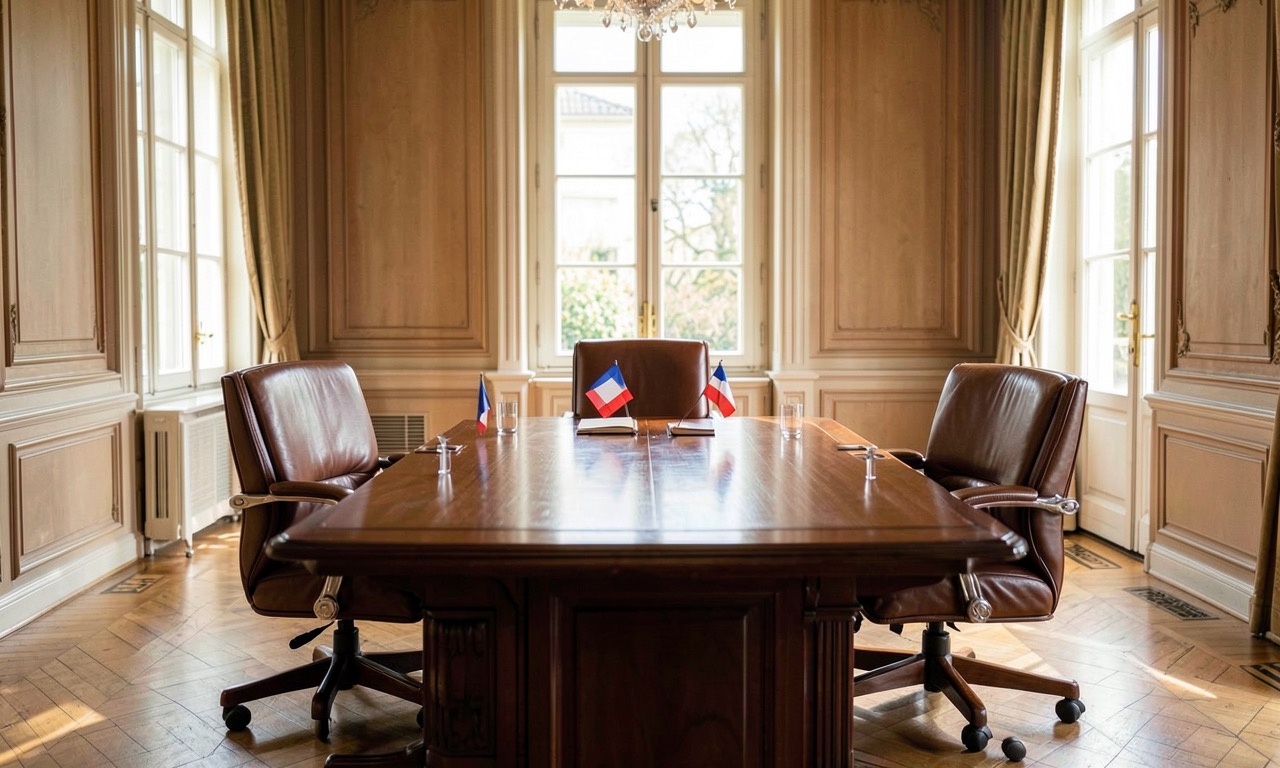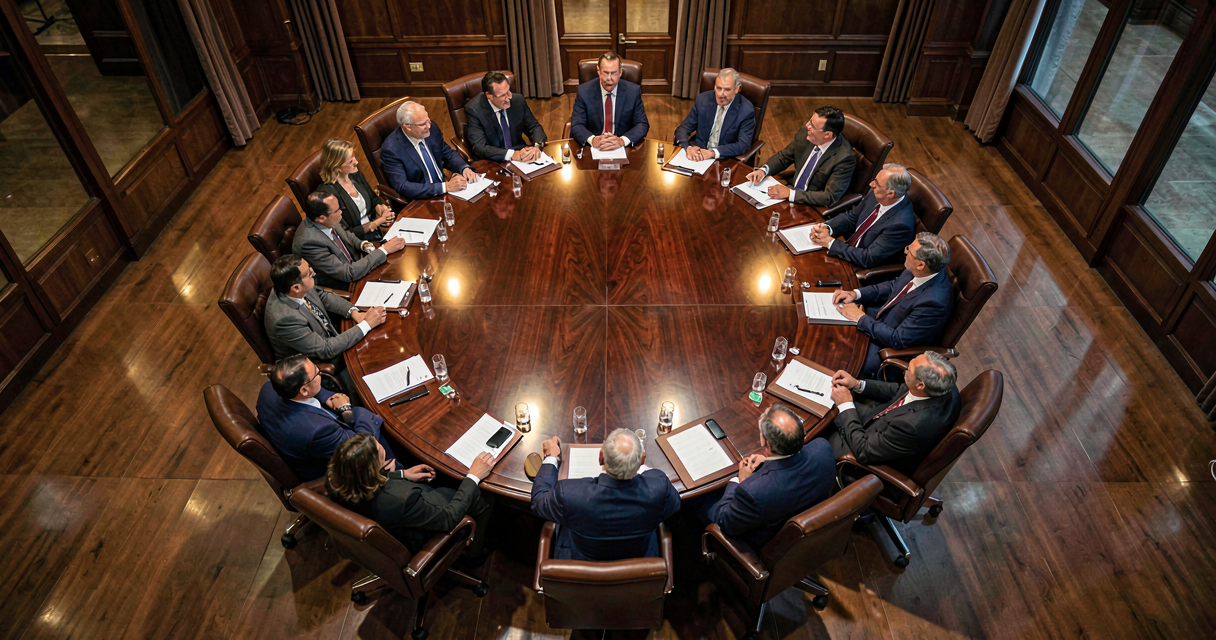
French President Emmanuel Macron convened Group of Seven leaders and the chief executives of Anthropic, OpenAI, and Meta Platforms in Evian, France on Wednesday to design a “trusted partner” framework that would let European and allied nations keep accessing leading-edge US AI models — even as the Trump administration’s Commerce Department moves to block foreign-national access to the same technology.
According to Bloomberg reporting by Ania Nussbaum and Mark Bergen, Macron met with Anthropic CEO Dario Amodei and OpenAI CEO Sam Altman at the Évian resort on Wednesday, and plans bilateral meetings with executives from Meta and OpenAI. The French leader has discussed options with Amodei, and is pushing for European access to leading-edge models via a collective framework, “according to a diplomat familiar with his thinking.”
This is the first major international response to the Lutnick letter, and the first time a G7 leader has publicly framed the US export-control regime as a problem to be solved collectively rather than accepted unilaterally. It is the news story most likely to determine what AI access actually looks like for New Zealand, the United Kingdom, and the rest of the US-allied world over the next 12 months.
🔍 THE BOTTOM LINE
The Macron meeting turns the US AI export-control story from a domestic American dispute into an international trade and alliance issue. Three things are now in the open. First, France — and through France, the EU and the G7 — is no longer waiting for the US to publish its “trusted partner” criteria. They are drafting their own framework in parallel. Second, the CEOs of all three major US frontier AI labs are at the table, which means the US companies themselves are positioning for the regime rather than resisting it. Third, the meeting happened in Evian, not in Washington, which is a signal that the European response is being built independently of the US process. For New Zealand, this is the first concrete signal that the post-Lutnick AI world is going to be organised through a multilateral framework rather than a series of bilateral US decisions — which is the only way the country’s interests get represented at all.
What Just Happened
The meeting took place in Evian, France, on Wednesday 17 June, on the margins of the G7 summit that France is hosting this year. The Bloomberg report, bylined Ania Nussbaum and Mark Bergen and timestamped 12:27 PM UTC, says Macron led the talks personally. The CEO attendees were Dario Amodei of Anthropic and Sam Altman of OpenAI. Bilateral meetings with Meta and additional OpenAI executives are planned.
The purpose of the meeting, per a diplomat familiar with Macron’s thinking, was to explore how allied nations could continue to access “the most advanced artificial intelligence models” through “so-called trusted partners” — a phrase that matches the Financial Times’s earlier reporting on a US-Europe “trusted partner” framework for AI model access.
The Bloomberg story is the second major story in 24 hours to use the “trusted partner” framing. The first was the FT’s Tuesday report that the US and Europe were in early-stage talks on a framework that “would allow US allies to test cutting-edge models.” The Macron meeting is the first time a head of state has convened a working session to design that framework.
The Three Layers of the Story
Layer 1: The CEO meeting. The presence of Amodei and Altman in the same room as a G7 head of state is itself a news story. The frontier AI labs have, until now, engaged with governments through regulatory filings, congressional testimony, and the occasional op-ed. They have not, in this cycle, sent their CEOs to a G7 summit. The fact that both Anthropic and OpenAI are now at the table — at a meeting organised to work around the US government’s restrictions on their own products — is a signal that the labs are positioning for the post-Lutnick regime rather than resisting it. Anthropic in particular has a direct interest: a “trusted partner” framework would let it serve allied foreign users without violating the Commerce Department’s restrictions.
Layer 2: The diplomatic meeting. Macron is the first G7 leader to publicly convene a working session on the US export-control problem. The previous stories — the Lutnick letter, the DOJ Mississippi filing, the NYT’s reporting on Anthropic employees — were all US actions. The Macron meeting is the first non-US response. That it is happening at G7 level, with the EU and other allied nations watching, signals that the diplomatic response is going to be multilateral, not bilateral.
Layer 3: The framework meeting. The “trusted partner” concept is now in the public record on three sides: the US side (per the FT’s earlier reporting), the European side (per Macron’s meeting), and the AI lab side (per the CEO attendance). The phrase has gone from leak to negotiating framework in 72 hours. That is fast by diplomatic standards. It suggests that the work to design the framework is more advanced than the public reporting has so far indicated, and that the meeting in Evian is one of the first visible outputs of a process that has been running quietly for weeks.
What the Framework Will Probably Look Like
The US “trusted partner” concept, as described in the FT’s earlier reporting, would allow US allies to “test cutting-edge models.” The European version, as described by the Macron meeting’s framing, would let allied nations “deploy the most advanced artificial intelligence models” — a stronger formulation than “test.”
The difference matters. Testing is what nations do when they want to evaluate whether a foreign technology is suitable for their own use. Deployment is what nations do when they have already decided to use the technology and need the legal framework to do so under their own jurisdiction. The Macron meeting is signalling that the European side wants the framework to support deployment, not just evaluation.
The likely architecture, based on the public reporting:
- Eligibility criteria. Allied nations that meet a US-defined standard (likely tied to intelligence-sharing arrangements, export-control alignment, and AI safety regulation) would be designated “trusted partners.” New Zealand’s Five Eyes relationship and its existing AI safety work would put it in the front of the queue.
- Deployment mechanism. Trusted partner nations would be able to host frontier US AI models on domestic infrastructure, with appropriate access controls to prevent onward transfer to non-trusted jurisdictions. This is the model the EU has been pushing through its AI Act.
- Reciprocity. Trusted partner status would come with obligations — likely including commitments to align with US export controls on US-origin chips and to participate in joint AI safety evaluation work. The EU is unlikely to accept this without negotiation.
- Audit and verification. Trusted partner nations would need to demonstrate that they can audit and verify the integrity of the AI systems they host. This is the sovereign moat for jurisdictions that can build the audit layer.
What It Means for New Zealand
The Macron meeting is the first story in this cycle where New Zealand’s interests are directly in play. Three concrete implications:
1. The framework will have a place for NZ. The Five Eyes intelligence-sharing relationship, the existing data-sovereignty arrangements with the US, and NZ’s track record on AI safety regulation (the Algorithm Charter for Aotearoa New Zealand) make NZ a strong candidate for trusted partner status. The Macron meeting’s framing of “trusted partners” as the unit of access means NZ is no longer at the wrong end of a unilateral US decision — it is in the queue for a multilateral framework that recognises the value of the alliance.
2. The audit layer is the real ask. Trusted partner status will require NZ to demonstrate that it can audit and verify the integrity of the AI systems it hosts. This is the sovereign moat that the Schneier/Sanders Guardian essay, the DOJ Mississippi filing analysis, and the Anthropic employees story all identified. The Macron meeting is the moment when that audit requirement moves from a thought experiment to a negotiating point.
3. The window is short. The Macron meeting is happening this week. The “trusted partner” framework is being designed this month. Trusted partner status will be allocated in the next 6-12 months. The countries that have the audit infrastructure in place when the framework is finalised will get the early designations. The countries that don’t will be negotiating from a weaker position. The NZ strategy for the next 90 days should focus on building the audit layer — provenance tracking, action logging, agent sandboxing, regulatory-grade red-teaming — to a level where NZ can credibly offer to host frontier AI systems on behalf of trusted partners.
The Bigger Frame
The Macron meeting is the first story in the US AI export-control cycle that is not a US story. It is a French story, told through a French president, in a French town, with French diplomatic framing. The shift matters because it means the response to the Lutnick letter is no longer a domestic US policy debate — it is an international negotiation.
For the frontier AI labs, this is the moment they have been waiting for. Anthropic, OpenAI, and Meta now have an alternative path to serve allied foreign users without violating the Commerce Department’s restrictions, as long as the “trusted partner” framework is agreed. For the US government, it is the moment it has to decide whether the export-control regime is unilateral or whether it will be embedded in a multilateral framework with allies. For allied nations, including New Zealand, it is the moment the AI access question moves from a passive dependency on US domestic policy to an active negotiation that the allies themselves can shape.
The next story in this sequence will probably be either a US response to the Macron meeting (the White House may want to assert ownership of the “trusted partner” concept) or a more detailed read-out of the G7 working session. Either way, the story is now international, and the AI access question is now a question of alliance diplomacy as much as it is a question of US national security.
For New Zealand, the takeaway is the same one the Fable/Schneier story and the DOJ Mississippi story produced: the sovereign-AI play is real, it is now in motion, and the next 90 days will determine whether NZ is at the table or on the menu.
Sources
- Bloomberg — Ania Nussbaum & Mark Bergen, “Macron Pushes G7 Talks on Anthropic AI Access After US Ban on Foreign Use” (17 Jun 2026)
- Financial Times — “US and Europe discuss access to AI models after Anthropic dispute” (16 Jun 2026)
- The New York Times — Sheera Frenkel, Julian E. Barnes & Dustin Volz, “Anthropic Employees Accuse Trump Administration of Targeting Them” (17 Jun 2026)
- Bloomberg — “Lutnick’s Letter to Anthropic Warned of Curbs on Top AI Models” (16 Jun 2026)
- The Information — “Is Anthropic Losing Goodwill With AI Researchers?” (16 Jun 2026)
- The Guardian — Bruce Schneier & Nathan E Sanders, “The Anthropic ‘Fable’ saga” (16 Jun 2026)