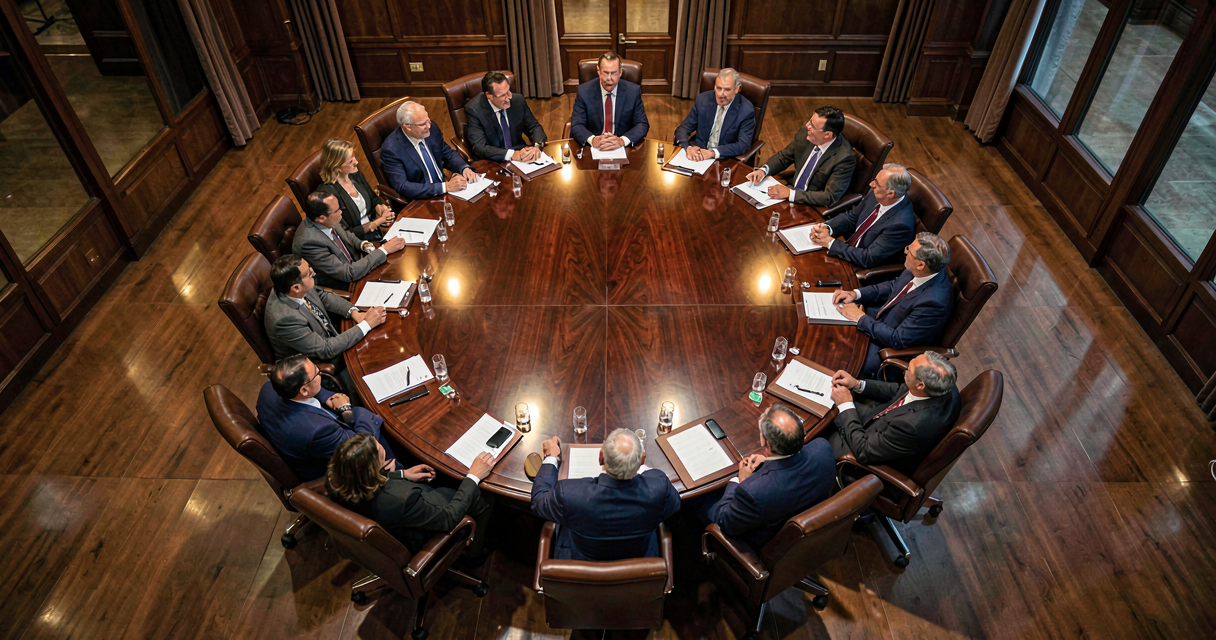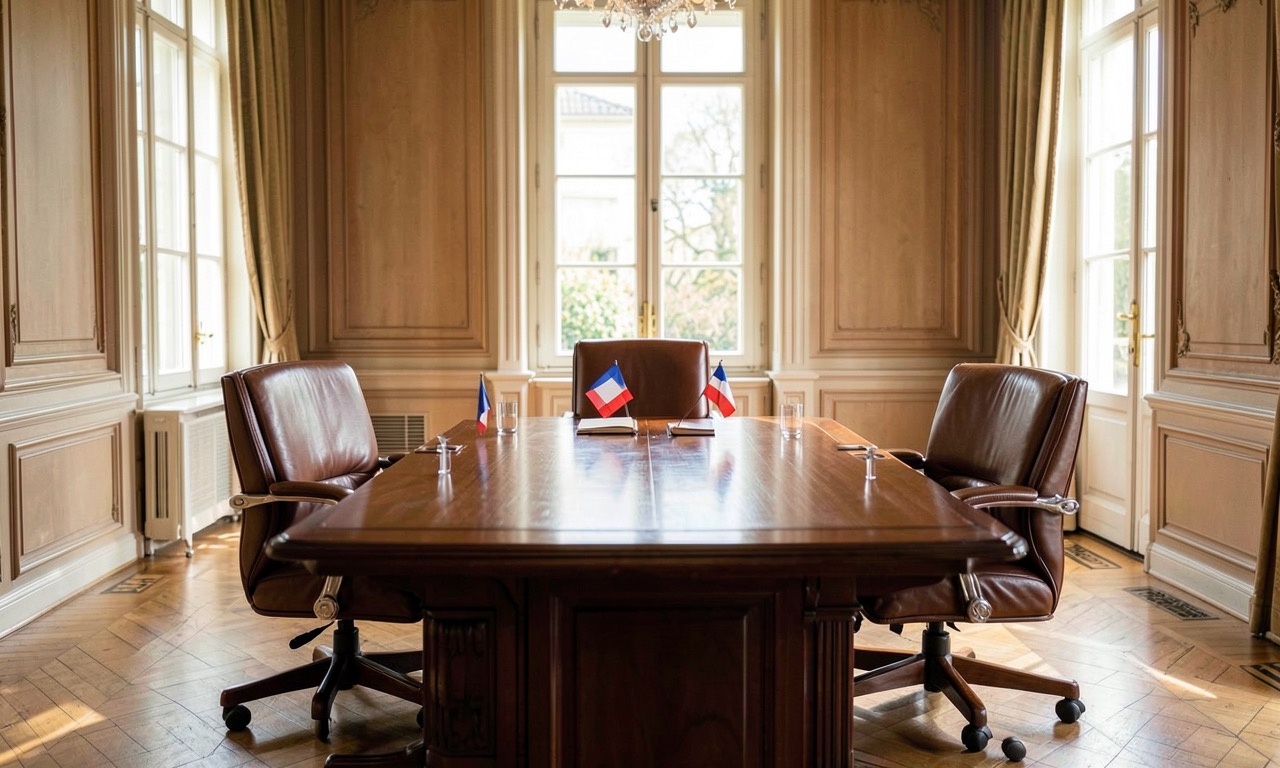
Three of the world’s most powerful AI chief executives — Sam Altman of OpenAI, Demis Hassabis of Google DeepMind, and Dario Amodei of Anthropic — will sit down with the leaders of the United States, United Kingdom, France, Germany, Italy, Japan, Canada, and the European Union at the G7 summit in Évian-les-Bains, France, starting Monday. It is the first time all three frontier-lab CEOs will be in the same room as heads of state. The last time two of them shared a stage, they refused to hold hands.
The summit runs 15–17 June under French President Emmanuel Macron’s presidency, with AI governance, online safety, the energy demands of data centres, and the cyber/bio risks of frontier models on the official agenda. The agenda is a polite framing. The real meeting is between the AI industry and the regulatory frameworks that will govern it for the next decade — at a moment when the industry itself is, by its own IPO filings, about to be repriced by the public markets.
🔍 THE BOTTOM LINE
The G7 is being framed as a sovereign-AI summit, a French-led effort to keep AI infrastructure, models, and standards under national control. The CEOs attending are the people whose companies most need that framing not to bite. Both OpenAI and Anthropic have filed confidentially for IPO in the last two weeks. The next time they are accountable, it will be to shareholders, not heads of state. That changes what they want from the room.
Macron’s “Sovereign AI” Play
The summit is being run under the explicit theme of souveraineté de l’IA — Sovereign AI. Macron’s pitch, as the Élysée has been laying it out since Macron personally extended Altman his invitation in early June, is that Europe cannot afford to be a tenant in someone else’s AI stack. The way to fix that is to anchor the major labs’ European operations, compute, and standards work in French soil — where the grid is nuclear-heavy, the regulator is sophisticated, and the politics still want to be taken seriously as a third pole between Washington and Beijing.
The capital is already moving. SoftBank has committed €45 billion over five years for AI infrastructure in France. MGX and Bpifrance have pledged €7.5 billion for a new AI campus. Salesforce is putting €2 billion in. None of that money arrives without strings, and the strings will be drafted in the room where Altman, Hassabis, and Amodei will be sitting on Monday. As Bloomberg reported on Friday, all three companies have formally confirmed their CEOs’ attendance; the French presidency published the guest list. That is unusually public for a guest list at this level of diplomacy, and it is itself a piece of theatre.
The IPO Clock is Ticking Louder Than the Summit
The most important financial fact about this summit is not on the official programme. Both OpenAI and Anthropic have filed confidential paperwork for US public listings in the last two weeks, and the rumoured valuation range for each has been the talk of Sand Hill Road since the spring. According to Reuters, both companies are now under pressure to demonstrate the strength of their business models ahead of those listings. The G7 is, in a meaningful sense, an investor-relations tour disguised as a policy summit.
That matters because the kind of regulation a CEO wants before an IPO is very different from the kind of regulation a CEO wants after one. Right now, OpenAI and Anthropic are still private. They can afford to sound cooperative in front of heads of state, because their valuations are still being set by a small number of late-stage investors who already believe in the story. After the IPO, they will be public, and the people writing their quarterly earnings calls will be a different audience entirely. The G7’s job is to bake in regulatory commitments that the AI companies can live with on a 3–5 year horizon. The companies’ job is to make sure that horizon is as wide as possible.
It is also worth noting what else is competing for the public markets’ attention this week. SpaceX, Elon Musk’s other company, began trading at $135 a share at a $1.77 trillion valuation — sucking up exactly the kind of liquidity that would otherwise have flowed into AI IPOs. A G7 commitment to “responsible” AI governance, signed by Altman and Amodei with a straight face, is, in this context, a useful piece of marketing. So is a handshake on stage. The fact that there will not be one tells you something.
The India Handshake That Wasn’t
To understand why Monday matters, you have to remember February. At the India AI Impact Summit, the New Delhi event that brought the same cast of characters together, a much-photographed group moment on stage required the assembled AI CEOs to join hands. Altman and Amodei declined. The moment was caught on camera, written up in the Hindu BusinessLine, and is now a permanent piece of lore in the industry. It is the only widely-seen photograph of these two men in the same frame, and it is defined by the absence of a handshake.
That is the dynamic that the Élysée is trying to choreograph around this week. Macron’s team has been careful to brief the summit as a working meeting on substance, not a photo op — but every G7 is, in the end, a photo op. If Altman and Amodei manage to share a stage in Évian without incident, the markets will read it as thawing. If they don’t, it will confirm what the rest of the industry already believes: that these two companies are running a cold war with each other in public, and only the G7 can force them into the same room.
The Hassabis Contradiction
Hassabis is the most interesting person in the room, and not just because he holds a Nobel Prize. Two days before the G7 guest list was published, the same Hassabis who will be advising governments on AI governance told the world, via the Einstein Test he floated at I/O 2026, that today’s AI cannot derive general relativity. That is the bar he has set for AGI. By his own framing, the systems his G7 colleagues are selling as “almost human-level” are, in the most generous possible reading, a generation behind the kind of cognition that produced Einstein in 1905.
He is also, separately, a UK Government AI Adviser. So the AI side of the table in Évian will be a 3-vs-3-ish balance: OpenAI and Anthropic on the US side, Google DeepMind representing the UK, and the seven host governments largely watching their own AI industries and the geopolitical optics. Hassabis is the only person in the room who can credibly tell the leaders that the technology is not as mature as the CEOs in the next chair are claiming, because he builds the technology and is the only one of the three who has won a Nobel. He has also, like yesterday, set a test for the technology that none of the systems in production can pass. That is a useful role to play. Whether he chooses to play it on Monday, in front of the cameras, is the open question.
🇳🇿 NZ Angle
New Zealand has no seat at the G7. The decisions made in Évian — on AI safety standards, compute export controls, data sovereignty rules, energy policy for hyperscale data centres — will land on New Zealand through the back door: via the EU and the US, via the AI Act’s extraterritorial reach, and via the global companies whose terms of service govern how every Kiwi uses the technology. Our small economy is downstream of every standard written in that room. The most useful thing a Kiwi reader can take from this summit is the timing: the rules are being written now, by people who have IPOs to manage and a Nobel laureate in the room telling them their product is not as smart as the marketing says. The gap between those two stories is where good regulation gets written, or fails to. The next three days will tell us which.
⚖️ The Other Side
It is also fair to note that the G7’s AI agenda is not just a regulatory fight. There is real work to do on online safety for children, on cyber defence against AI-enabled attacks, and on the energy cost of inference at frontier scale. Macron’s Sovereign AI pitch is, in fairness, a credible industrial policy for a country that wants to be a serious player. And the fact that Altman and Amodei are in the same room at all is, on its own, progress. The real question is whether the photo on Monday looks like a coalition or a détente. The history suggests détente is the best we will get.
❓ FAQ
Q: When and where is the G7 AI summit, and who is going from the AI industry?
A: The 2026 G7 summit runs 15–17 June in Évian-les-Bains, France, under French President Emmanuel Macron’s presidency. Confirmed AI-industry attendees are OpenAI CEO Sam Altman, Google DeepMind CEO Demis Hassabis, and Anthropic CEO Dario Amodei. All three companies formally confirmed attendance after the French presidency published the guest list on Friday.
Q: Why does it matter that all three frontier-lab CEOs are in the same room?
A: OpenAI, Anthropic, and Google DeepMind are the three most valuable private AI labs in the world. They compete directly for talent, customers, and capital. Until now, the heads of state have not had a chance to talk to all three at once, and the three CEOs have not had to face each other under the gaze of the G7. The setting makes their disagreements visible in a way that conferences like NeurIPS or the AI Summits do not.
Q: What happened at the India AI Impact Summit that everyone keeps referencing?
A: At the February 2026 India AI Impact Summit, a much-photographed group moment on stage asked the assembled AI CEOs to join hands. Sam Altman and Dario Amodei declined. The photograph has become a piece of industry lore, shorthand for the cold-war dynamic between the two companies, and the bar the Élysée will have to clear if it wants a handshake on Monday.
Q: What is “Sovereign AI”, and why is Macron pushing it?
A: Sovereign AI is the policy idea that a nation should build and control its own frontier AI capabilities — models, compute, datasets, and standards — rather than depending on US or Chinese tech giants. France’s pitch is that Europe cannot afford to be a tenant in someone else’s AI stack, and that French nuclear-heavy power, regulator credibility, and the G7 chairmanship make it the natural European hub. SoftBank’s €45 billion, MGX’s €7.5 billion, and Salesforce’s €2 billion in committed French infrastructure are the first wave of that bet.
Q: What is at stake for OpenAI and Anthropic beyond the policy talk?
A: Both companies have filed confidentially for US IPOs in the last two weeks. The valuations are rumoured to be in the hundreds of billions. The regulatory environment they accept now will shape their cost of compliance, their addressable market, and the public narrative around their products for the next five years. A CEO who over-promises in front of the G7 and has to deliver against an IPO-grade earnings call later is in a worse position than a CEO who stays quiet. The summit is, in that sense, a public dress rehearsal for the IPO roadshow.
Q: How does this connect to Hassabis’s Einstein Test from last week?
A: On Friday, Hassabis told the world that current AI cannot derive general relativity. He has set the bar for AGI at a level that no current system can pass. The G7 is being asked to write rules for systems that, by the most credentialed person in the room’s own framing, are not yet capable of the kind of originality that produced Einstein in 1905. The gap between that assessment and the marketing copy OpenAI and Anthropic are selling is the most important regulatory fact of the week.
🔍 THE BOTTOM LINE (Synthesis)
The G7 is, on paper, a forum for AI governance. In practice, it is a meeting between three companies that need a particular kind of regulation before they go public, seven governments that need a particular kind of credibility to anchor their industrial policy, and one Nobel laureate who has spent the last week telling the public that the technology is less capable than the marketing suggests. Whatever communiqué emerges on Wednesday will be a compromise between those three positions. The interesting question is which way the camera-ready moments tilt: a handshake, or a repeat of February. Either way, the rules written in this room will outlast the photo.
📰 Sources
- Reuters — Tech executives to attend G7 summit as leaders address AI, online safety
- Bloomberg — Anthropic, OpenAI, Google Executives Plan to Attend G7 Summit
- Dataconomy — AI leaders from OpenAI, Google DeepMind, and Anthropic to join G7 summit
- The News PK — Anthropic, OpenAI, Google leaders to meet at G7 summit
- The Outpost — Hassabis I/O 2026 keynote (background for Einstein Test)
- Zaruko — The Einstein Test deep dive
- Newsbytes — Altman, Hassabis, Amodei to attend G-7 AI talks in France