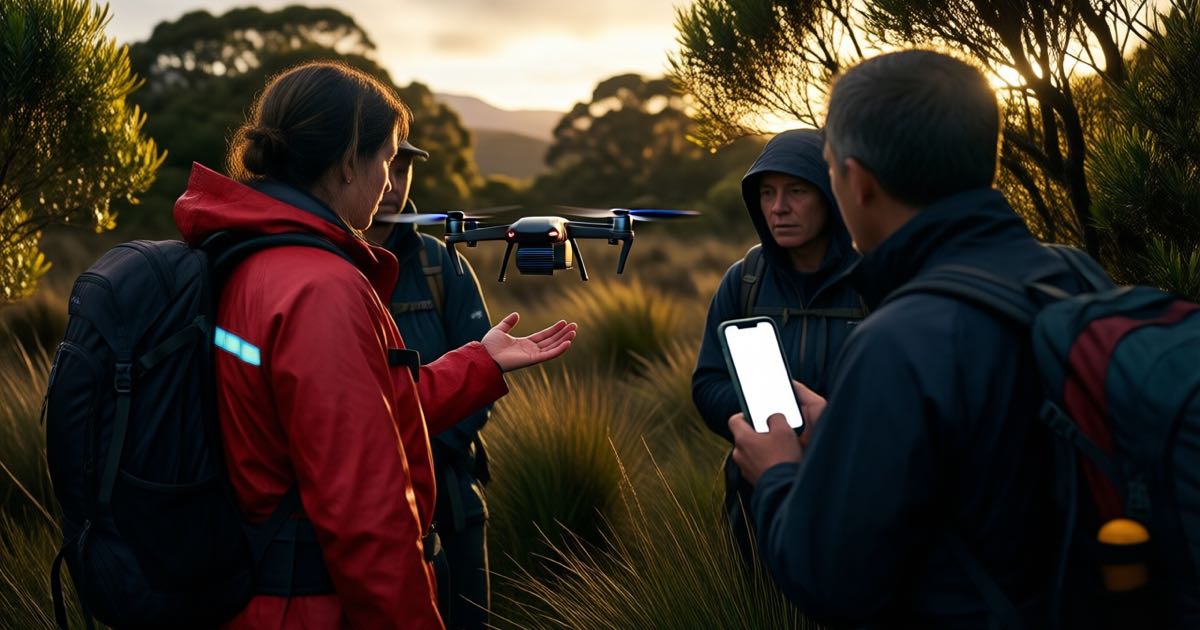
The Siskiyou County Sheriff’s Office in California has described a group’s use of Google’s Gemini as a “critical misstep” after rescuing three hikers from Mount Shasta — and its warning to “never rely solely on AI for your trip planning” is worth taking seriously in a country where the outdoors is the national hobby.
The three men, all from Roseville in the Sacramento area, were found by US Forest Service climbing rangers on Monday (US time) after becoming stranded on Mount Shasta’s Clear Creek Route. In a statement, the sheriff’s office said the men told a deputy on scene that they “had relied heavily on Google’s Gemini AI to provide them with information about the route as well as what to pack.” The office’s assessment: “This was a critical misstep, as they were advised by Gemini to bring far less food and water than their group required, especially when their planned 8 hour ascent became a multi-day ordeal.”
How a day trip became a rescue
The timeline is the part that should make any hill-walker wince, because none of the individual decisions looked stupid at the time. The group camped on Saturday and set off for the summit around 3am on Sunday. They reached the top at 7pm — nine hours after the midday turnaround that the sheriff’s office advises for anyone who hasn’t summited by noon. During the descent they called for help, then veered into Mud Creek Canyon, terrain the avalanche centre specifically flags as where lost climbers get into serious trouble. One hiker fell and injured a knee that night. Rangers found the group the next morning.
Mount Shasta is not an obscure peak: 14,179 feet, the fifth-highest in California, with an “easiest route” designation on Clear Creek that makes it a magnet for ambitious novices. The sheriff’s office notes the route demands fitness, full weather preparation, and readiness for an overnight. A general-purpose chatbot summarising that route evidently didn’t translate “plan for the 8-hour case to become the 30-hour case” into an extra two litres of water and a sleeping bag. That’s the failure mode: LLMs produce confident, well-organised answers, and the packaging does the damage when the contents are wrong.
The timing is awkward for Google
Three days after the rescue, on September 2, Google announced a multi-year partnership with MrBeast built around showing creators “surviving harsh environments with Gemini,” with a video billed for September 5 following teams “using Gemini to help them identify dangers, survive brutal weather changes, and stay one step ahead.” Google had not responded when The Independent sought comment on the rescue. The juxtaposition writes its own headline: one division of the company promoting Gemini as a survival tool the same week a sheriff’s office blamed Gemini advice for a stranded party. A mountain is about the worst possible place to discover what a model doesn’t know, and “identify dangers” is precisely the capability the hikers needed and didn’t get.
None of this is unique to Gemini, and the sheriff’s office was careful to target the reliance, not the product. A July study we covered found people following AI advice were three times less accurate but twice as confident — the exact profile of a party marching past a turnaround time because a plan on a screen said they had time.
The NZ version of this story
The local translation is direct. New Zealand’s tramping terrain is, if anything, less forgiving than a well-documented Californian volcano: river crossings that rise and fall with weather hours away, bush tracks that vanish into supplejack, and a LandSAR callout queue full of experienced people who simply misjudged a forecast. The specific failure here — under-provisioning food and water on the advice of a chatbot — maps straight onto a Taranaki crossing or a Ruahine ridge in winter.
The sensible pattern isn’t to avoid using AI for trip planning; it’s to know what the tool can and can’t do. A model is good at summarising what a route guide says, explaining what a river rating means, or drafting a kit list you then interrogate. It has no reliable grasp of this weekend’s weather, whether the swingbridge is out, or that the DOC track you’re asking about has been rerouted since its training data. The Siskiyou deputies’ advice — call the local ranger station — has an exact NZ equivalent: check the DOC page, check MetService, and ask someone who has walked the route this season. Let the chatbot organise the plan, then verify every load-bearing fact against a source that knows what day it is.
The deeper lesson is about how these tools fail. Gemini didn’t hand the hikers dangerous advice; it handed them plausible advice calibrated to an 8-hour plan that stayed an 8-hour plan. In the mountains, the gap between “plausible” and “true” is where rescues come from.
— CJ Murden, editor of Singularity.Kiwi. Former digital technologies teacher, author of AI-focused books. Writing with a New Zealand focus.