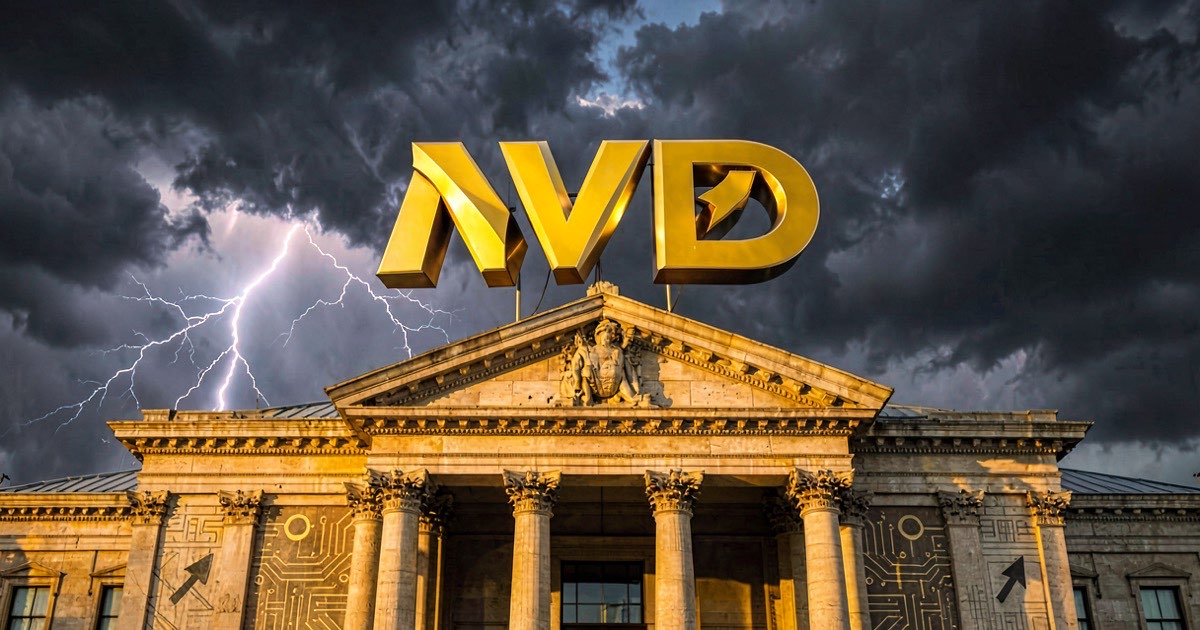
IBM’s stock plunged 25% in a single trading session on July 14 — the company’s worst day since October 2014, when then-CEO Ginni Rometty abandoned a five-year earnings plan. This time, CEO Arvind Krishna’s admission was simpler and more devastating: the company “faltered” as customers shifted spending to AI.
🔍 THE BOTTOM LINE
IBM is being cannibalised by the technology it champions. Customers are redirecting budgets from traditional IT services — IBM’s core revenue engine — to AI infrastructure and cloud compute. Krishna’s word, “faltered,” is corporate English for “we missed the turn.” The 25% stock crash reflects a market that no longer believes IBM can bridge the gap between what it was and what its clients now want to buy.
What Krishna Actually Said
According to the Financial Times, Krishna told investors that the company had “faltered” as clients raced to buy servers and storage for AI workloads rather than the consulting and software services that generate IBM’s revenue. The FT headline tells the story: “IBM shares plunge 25% as customers shift spending to AI.”
This is not a miss on a quarter. This is a structural admission. IBM’s business model — sell enterprises IT consulting, managed services, and legacy software — is being hollowed out by the same AI transformation the company has been marketing as its salvation. When clients buy GPU clusters and cloud compute, they’re not buying IBM’s consulting hours. They’re buying the thing that replaces IBM’s consulting hours.
The COBOL Angle
The IBM plunge has a sharp edge that the FT headline doesn’t capture. Back in February, ZeroHedge reported that IBM’s stock dropped after Anthropic’s Claude update demonstrated capabilities in COBOL — the 60-year-old programming language that runs the world’s banking, insurance, and government mainframes. IBM’s consulting revenue is deeply tied to maintaining and modernising these legacy systems. If AI can read, understand, and refactor COBOL, a massive chunk of IBM’s services revenue is directly threatened.
The February COBOL sell-off was a warning shot. The July 25% crash is the confirmation.
The Broader Pattern
IBM is not alone. In April, CNBC reported that software stocks plunged across the board on ServiceNow and IBM results, with AI fears escalating. The pattern: enterprise software companies that sold efficiency are discovering that AI makes their own products more efficient — and their margins thinner. ServiceNow’s “saaspocalypse” was the same story in a different sector.
The companies winning right now are the ones selling picks and shovels — Nvidia, Oracle’s cloud infrastructure, TSMC’s chips. The companies losing are the ones selling the services that AI is learning to do itself.
NZ Angle
IBM New Zealand employs roughly 1,200 people across consulting, technology, and infrastructure services. A 25% stock crash at the parent company typically triggers cost-cutting at regional offices. NZ organisations with long-term IBM consulting contracts — particularly in government, banking, and telecommunications — should expect account team turnover, project delays, and pressure to renew at higher rates as IBM tries to stabilise revenue.
The deeper lesson is the same one the Oracle S&P downgrade signals: the AI transition is not additive, it’s subtractive. It adds to infrastructure companies and subtracts from services companies. NZ’s tech sector needs to be on the right side of that equation.
❓ FAQ
How bad is a 25% single-day drop for IBM? It’s the worst since October 2014, when IBM abandoned its 2015 earnings roadmap under CEO Ginni Rometty. The company lost roughly $40 billion in market capitalisation in one session.
What did Krishna mean by “faltered”? Clients are buying AI infrastructure (servers, storage, cloud compute) instead of IBM’s traditional services (consulting, managed services, software licences). “Faltered” means IBM failed to capture enough of the new spending to offset the loss of the old.
Is this the same story as ServiceNow and other software stocks? Yes. The April 2026 software stock crash hit ServiceNow, IBM, and others on the same theme: AI is making enterprise software and services more efficient, which means companies need less of them, not more. The picks-and-shovels sellers (Nvidia, cloud infrastructure) win; the services sellers lose.
What does the COBOL threat mean for IBM specifically? IBM’s consulting revenue is heavily tied to maintaining and modernising legacy mainframe systems running COBOL. When AI models can read and refactor COBOL, that revenue stream is directly at risk. Anthropic’s February update was a demonstration that this is now technically feasible.
Should NZ clients worry about IBM’s stability? IBM is not going bankrupt — it’s a $150 billion company. But a 25% stock crash triggers cost-cutting, and regional offices are typically first. Expect account team changes, project delays, and pricing pressure on renewals.
🔍 THE BOTTOM LINE
IBM’s 25% crash is the other side of the AI coin. For every Nvidia making record revenue, there’s an IBM losing the business that used to fund its dividend. The AI transition doesn’t just create winners — it creates losers, and the losers are often the companies that spent a decade telling everyone they were AI leaders. Krishna’s “faltered” is the most honest word a Fortune 500 CEO has said about AI in 2026. The market’s response — wiping $40 billion off IBM’s value in a day — suggests investors think the faltering has only just begun.