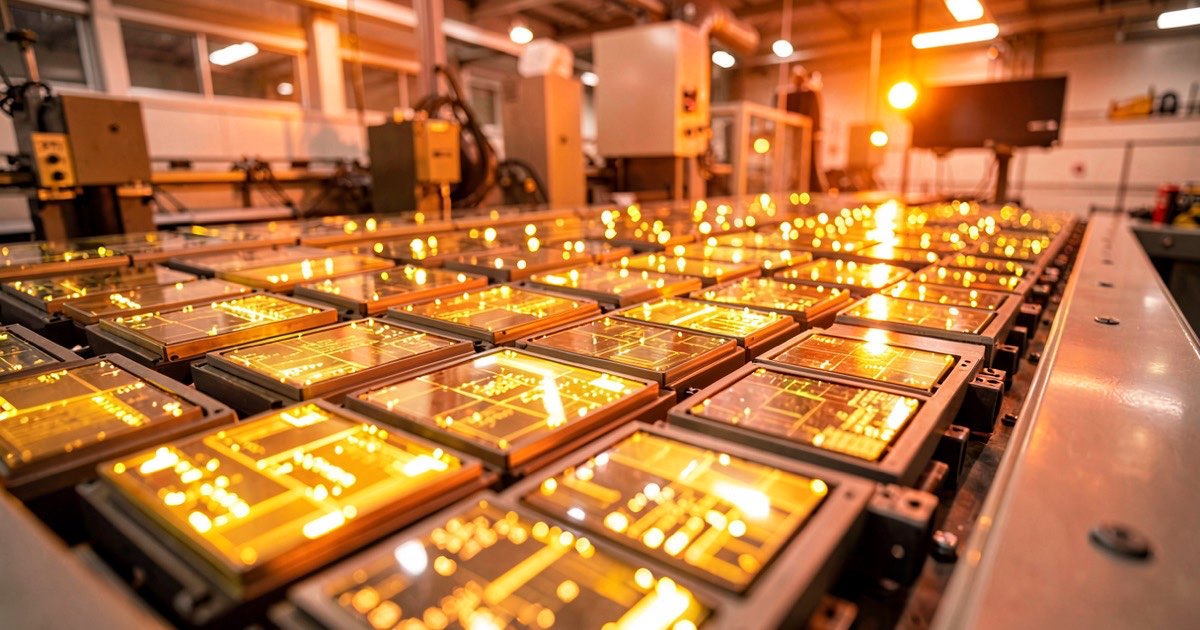
IBM has unveiled the world’s first sub-1 nanometer chip technology, a “nanostack” 3D transistor architecture at the 0.7nm node that packs nearly 100 billion transistors onto a chip the size of a fingernail. The breakthrough, announced from IBM Research in Yorktown Heights, projects up to 50% more performance or 70% greater energy efficiency than IBM’s 2nm node — and arrives at a moment when the AI industry is straining the limits of what silicon can physically deliver.
🔍 THE BOTTOM LINE
This isn’t a smaller chip. It’s a different way of building chips. IBM’s nanostack architecture stacks transistors vertically in three dimensions rather than shrinking them flat — doubling density without hitting the atomic wall that planar scaling was approaching. For AI workloads that demand exponential compute and energy, this is the first credible path beyond Moore’s Law that doesn’t require abandoning silicon entirely.
What Changed: From Planar to Volumetric
For decades, chip progress meant making transistors smaller on a flat plane. That approach is running out of atoms. At 2nm and below, quantum tunneling and heat dissipation become physics problems, not engineering ones. IBM’s answer: stop shrinking sideways and start building up.
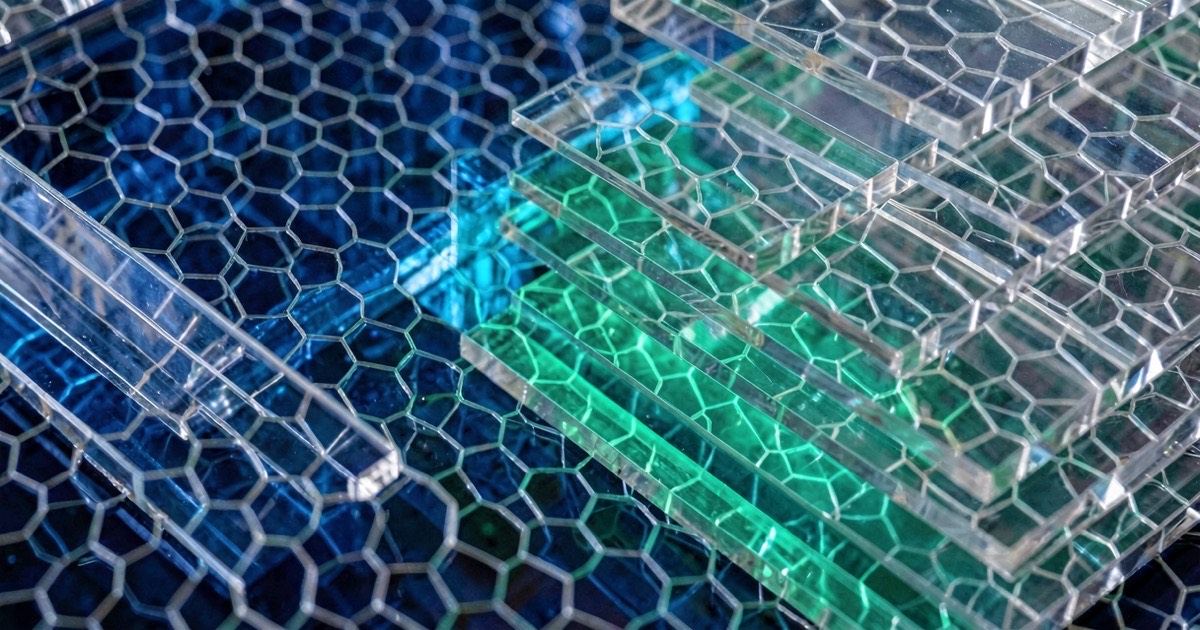
The nanostack architecture vertically stacks and staggers transistors using 3D sequential integration. It’s the industry’s first known 3D nanosheet-based design — an evolution of the nanosheet technology IBM itself invented. The key innovation: each stacked layer can use different material combinations, optimising performance and power efficiency of each transistor independently. IBM validated the design through ultra-thin dielectric bonding in CMOS integration, demonstrating functional CMOS inverter operation with expected switching performance.
Jay Gambetta, Director of IBM Research and IBM Fellow, said: “With our new nanostack architecture, we’re not just making smaller transistors, we’re reinventing how chips are built to deliver dramatically more power and energy efficiency.”
The numbers: 100 billion transistors on a fingernail-sized die, nearly double the density of IBM’s 2nm chip from 2021. That’s not an incremental node shrink — it’s a structural leap.
Why Now: The Compute Crunch
The timing isn’t coincidental. The AI industry is hitting a compute wall. Training frontier models like GPT-5 and Claude Fable requires staggering processing power, and the energy bill is becoming the dominant cost — not the silicon. Nvidia’s $150 billion annual Taiwan spending exists precisely because the demand for advanced silicon has outstripped what current fabs can produce. OpenAI’s move to build custom chips with Broadcom is another signal: the biggest AI players are restructuring their hardware strategies because the current roadmap isn’t enough.
IBM’s nanostack directly addresses both bottlenecks: 50% more performance means faster training and inference. 70% better energy efficiency means the power bill — which for a large AI training run can exceed the hardware cost — drops dramatically. This isn’t just about faster phones. It’s about whether the next generation of AI models is economically feasible to run.
The NZ Angle
New Zealand won’t manufacture sub-1nm chips — that requires multi-billion-dollar fabs that exist in Taiwan, Korea, and the US. But the application matters locally. Higher compute density at lower power means edge AI becomes practical: sensors, drones, and monitoring stations that can run sophisticated models without constant cloud connectivity. For NZ’s agriculture tech sector, that means on-farm AI processing for crop health, water quality, and biosecurity without relying on a data centre in Sydney or Singapore. For scientific research — climate modelling, seismology, oceanography — the 70% energy efficiency gain could make previously uneconomical simulations feasible on local infrastructure rather than requiring expensive cloud compute.
The Other Side: Decades from Your Laptop
IBM’s research breakthroughs historically take 5-10 years to reach consumer products. The 2nm chip announced in 2021 still hasn’t appeared in any shipping device — it was a research demonstration, not a product. The nanostack is likely the same: a proof of concept that proves the physics works, not something you’ll see in a 2027 iPhone. Manufacturing yield at sub-1nm scale is genuinely hard. The experimental validation is promising, but moving from lab to fab requires solving production-grade consistency across billions of stacked transistors — a different class of problem entirely. And IBM doesn’t operate leading-edge fabs anymore; it partners with Samsung and Intel for manufacturing. The commercial path depends on those partners adopting the architecture.
❓ FAQ
What does “sub-1 nanometer” actually mean? The 0.7nm figure refers to the transistor node — a measure of the technology generation, not the literal size of any single feature. At this scale, the node name is more a marketing label than a physical dimension. What matters is the density: 100 billion transistors on a fingernail-sized chip.
Is this the end of Moore’s Law? Moore’s Law in its original form — transistors getting smaller on a flat plane every two years — is already dead. IBM’s nanostack is proof that the spirit of Moore’s Law (computing power doubling roughly every two years) can continue through 3D architecture rather than 2D shrinking.
When will this appear in products I can buy? Realistically, 5-10 years. IBM’s 2nm announcement in 2021 hasn’t shipped in consumer products yet. The nanostack is a research milestone, not a product launch. But it signals the direction the industry will follow.
How does this compare to what TSMC and Samsung are doing? TSMC’s 2nm node (N2) uses gate-all-around nanosheets — technology IBM invented. The nanostack is the next step beyond that: stacking nanosheets vertically. IBM tends to pioneer architectures 5-7 years before they reach commercial fabs. TSMC and Samsung will likely license or develop similar 3D stacking approaches.
🔍 THE BOTTOM LINE
IBM’s nanostack is the semiconductor industry’s most important architecture announcement in years — not because it ships tomorrow, but because it proves the physics works. The AI industry’s compute demand is doubling every few months. Energy costs are becoming the binding constraint on model scale. A chip architecture that delivers 70% better efficiency at double the density is exactly the path forward the industry needed. The silicon roadmap just got extended — not by shrinking, but by building up.