While the US and China pour billions into AI education mandates, a country of 380,000 people may have found a smarter way in.
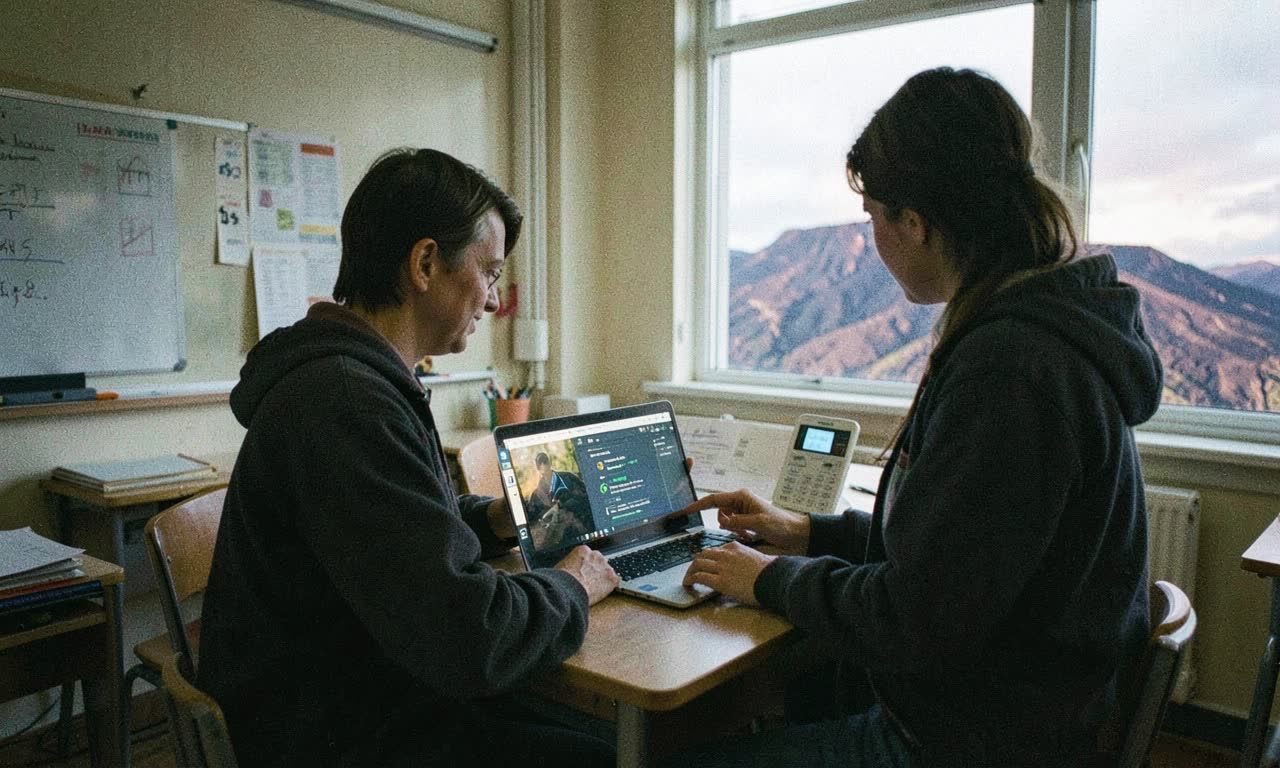
Iceland’s Ministry of Education and Children has partnered with Anthropic to launch one of the world’s first comprehensive national AI education pilots — and it starts with teachers, not students.
The Model: Teachers First, Students Second
The pilot puts Claude, Anthropic’s AI assistant, directly into the hands of Icelandic teachers. Not as a student-facing chatbot. Not as an automated grading tool. As a teacher productivity and training platform.
The focus is practical classroom applications:
- Personalized content creation — Teachers generate customized materials for different learning levels in Icelandic
- Curriculum adaptation — Existing resources modified for specific classroom needs and learning styles
- Administrative efficiency — Routine tasks like rubrics and parent communications automated
Early adopters report reclaiming several hours per week — time redirected toward direct student interaction rather than paperwork.
This is the opposite of the “give every student a chatbot” approach dominating US and Chinese education policy. Iceland’s bet: train the 15,000 teachers first, build institutional AI literacy from the inside out, and let that expertise cascade into classrooms organically.
Why Language Matters
Icelandic is spoken by roughly 380,000 people worldwide. It’s a language with limited digital resources — most AI tools default to English, forcing teachers to work in a second language or accept poor translations.
Claude’s support for Icelandic changes this. Teachers interact in their native language, generating lesson plans, worksheets, and materials that reflect local curriculum requirements and cultural context.
For small nations with unique linguistic identities, this is not a minor feature. It’s the difference between AI that erodes local culture and AI that preserves it.
The Small-Nation Blueprint
Iceland’s approach offers something the US and China can’t: a replicable model for small countries.
The math is straightforward. A nation of 380,000 can train its entire teaching workforce on a single AI platform in months. The US — with 3.7 million teachers across 50 states with 50 different education policies — can’t coordinate that in years.
Iceland’s pilot builds on Anthropic’s growing public-sector portfolio, including a similar partnership with Rwanda to deploy AI learning companions across Africa and a Maryland state government initiative. But Iceland is the first to focus exclusively on teacher training at national scale.
The pilot runs throughout the academic year, with results expected to inform both Iceland’s broader AI education strategy and Anthropic’s international expansion.
What This Means for New Zealand
New Zealand shares key characteristics with Iceland: small population (5.1 million vs 380,000), unique linguistic considerations (te reo Māori), and a documented AI education gap.
As we’ve covered in our NZ education gap analysis, New Zealand currently lacks any coherent national AI teacher training program. While US states push past 134 AI education bills, NZ educators are left to figure it out individually.
Iceland’s model offers a direct template: partner with a major AI provider, start with teachers, support the local language, and measure results nationally. The question isn’t whether NZ could do this — it’s whether the Ministry of Education has the urgency to act before the gap widens further.
The Bigger Picture
National-scale government partnerships with AI companies are still rare. Most AI-in-education deployments happen at district or school level, with uneven training and no standardized evaluation.
Iceland’s ministry-backed approach provides what most AI education initiatives lack: structure, accountability, and a feedback loop. If the pilot succeeds, it becomes evidence that small nations don’t need US-scale budgets to achieve US-scale ambition in AI education.
They just need to start with the right people — the ones standing at the front of the room.