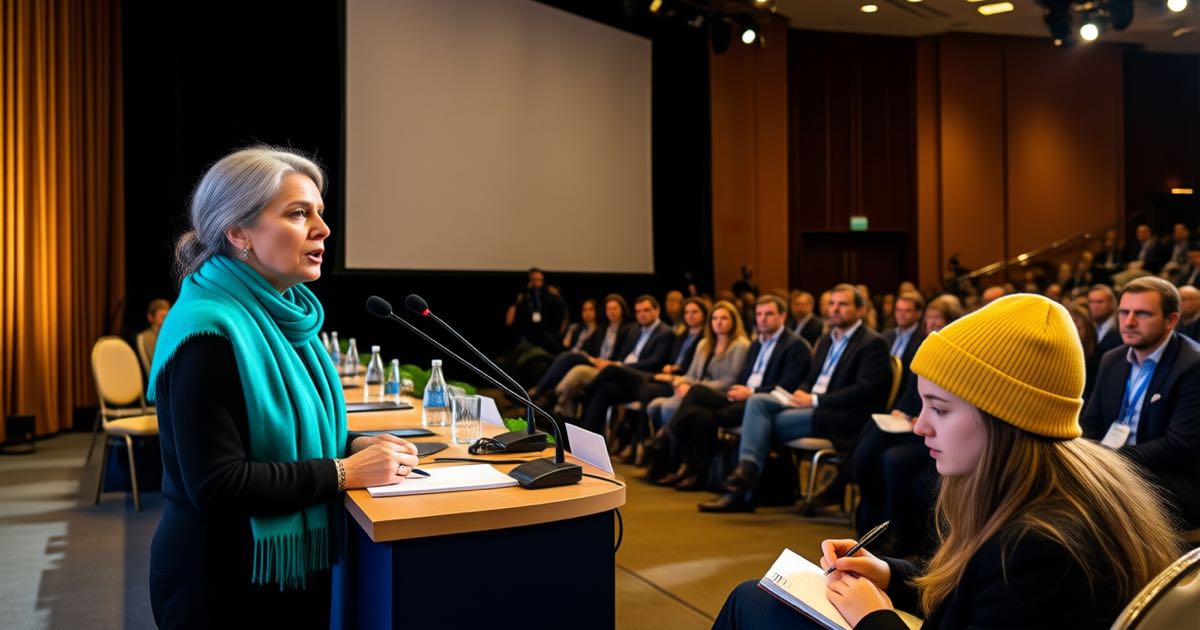
When the head of the International Monetary Fund starts using the language of natural disasters about a technology, it travels further than any corporate restructure memo. At the IMF and World Bank annual meetings in Bangkok — hosted by Thailand from 12 to 18 October — managing director Kristalina Georgieva called AI “a slow-moving tsunami, but tsunami none the less” for the global labour market. She also said something more useful than the scare-quote: who gets hit first, and what part of the wave has already made landfall.
🔍 THE BOTTOM LINE
The IMF’s central estimate is that around 40 percent of jobs worldwide will be augmented, downgraded or eliminated by AI over time — rising to about 60 percent in advanced economies like New Zealand’s. Georgieva’s warning, delivered on the first day of the Bangkok meetings, is aimed squarely at young workers: the routine, repetitive first jobs that used to launch careers are the tasks AI handles first. The complicating half of her own remarks is that AI investment is one of the things keeping global growth steady at around 3 percent even as an energy supply shock drags on it — meaning the same technology is generating growth and reshaping who gets to participate in it. Readers can weigh both halves: the hazard and the tailwind come from the same place.
What Georgieva Actually Said
Three claims, in order of confidence. First, the numbers: IMF research estimates roughly 40 percent of global jobs will be affected — some enhanced, some downgraded, some removed — with exposure at approximately 60 percent in advanced economies and 23 percent in low-income countries. Georgieva was explicit that lower exposure in poorer nations reflects AI being “further away,” not that those workforces are safer from it.
Second, the mechanism. She said AI is hollowing out demand by absorbing routine and repetitive tasks, while job growth is simultaneously appearing in lower-paid sectors — construction and data-centre work were her examples. That is the two-speed pattern economists have been describing all year, and Georgieva, per Bloomberg’s account, described it as “not a story to celebrate.” Workers with AI skills are earning more, she noted, but that premium hasn’t turned into broad-based job growth — an initial IMF study put the share of US jobs already requiring AI skills at about 10 percent.
Third, the people at the front of the wave. “The people to worry about first and foremost are young people that are coming into the labour market,” she told the panel. “Normally, they would get into these routine, repetitive jobs and then grow up the ranks. But if they’re gone, I don’t think any young person wants to be a barista in a coffee shop as [their] professional future.”
The Version That Fits New Zealand
Strip the Bangkok location out and Georgieva is describing the situation New Zealand’s own institutions flagged weeks ago. Reserve Bank governor Anna Breman told Parliament in September that AI could blunt employment growth for young New Zealanders in the short term — a scenario risk, not a prophecy, but from the same starting point: the tasks juniors learn on are the tasks that automate first (this site covered that warning here). The concern reappears in a different form in the disappearing first rung: apprenticeships and entry roles that no longer lead anywhere.
The IMF’s 60-percent exposure figure for advanced economies puts a number on what MBIE’s modelling already suggested for New Zealand: the exposure is high, but it splits between risk and opportunity — MBIE’s OIA release put just 2 percent of NZ occupations at high automation risk while 36 percent had high augmentation potential. Georgieva’s “augmented, downgraded or eliminated” phrasing is doing deliberate work there: two of those three outcomes are survivable, one is not, and no global dataset can yet tell a specific worker which one applies to their desk.
The Other Half of Her Speech
Read only the headlines and you’d miss that Georgieva was also crediting AI investment with keeping global growth at roughly 3 percent despite an energy supply shock — with AI infrastructure buildout concentrated in Asia, including Thailand, supplying hardware and construction demand. The Washington Post’s opinion desk and other outlets noted the flip side: if AI sustains growth while hiring fewer people per unit of growth, the tax and distribution questions grow faster than the jobs ones.
The World Bank’s response ran in the same week: its jobs council urged “crisis-era” style support measures for workers — the kind of scaffolding usually reserved for recessions, applied to a technology transition instead.
What the Hiring Data Says Back
For all the scale of the warning, the actual job-loss evidence remains narrower than the rhetoric. US software development postings are rising again after the automation scare, but with most of the gain going to senior and AI-titled roles (yesterday’s analysis of the Indeed Hiring Lab data) — the profession growing while its entry point thins is precisely the Georgieva pattern. And the counterintuitive finding keeps holding: the firms spending the most on AI have been hiring more people, not fewer, at least in the datasets published so far.
The honest reading is that Georgieva is describing a transition still early enough to shape. A tsunami’s damage depends on what’s built on the shore — whether the first rung gets redesigned or simply removed.
FAQ
What did the IMF say about AI and jobs? At the IMF-World Bank annual meetings in Bangkok on 12 October 2026, managing director Kristalina Georgieva said AI is like a “slow-moving tsunami” for jobs, and IMF research estimates about 40 percent of jobs worldwide will be augmented, downgraded or eliminated — rising to roughly 60 percent in advanced economies and 23 percent in low-income countries.
Who is most at risk from AI job disruption? Young workers, per Georgieva: the routine, repetitive entry-level jobs that traditionally started careers are the tasks AI absorbs first. She flagged that AI-skilled workers are earning more, but overall job growth is currently concentrated in lower-paying sectors like construction and data centres.
Is AI good or bad for the economy? Georgieva argued both at once: AI infrastructure investment is helping keep global growth around 3 percent despite an energy shock, even as it reshapes the labour market and could shift revenue from labour to capital, affecting tax bases.
What is New Zealand’s exposure? Being an advanced economy, New Zealand sits in the higher-exposure band in IMF terms. MBIE’s own modelling found 2 percent of occupations at high automation risk but 36 percent with high augmentation potential, and the Reserve Bank has already warned AI could soften short-term job growth for young New Zealanders.
📰 Sources
- Reuters — IMF says AI investment keeps global growth around 3% with major Asia benefits (12 October 2026)
- Fortune — IMF chief warns AI’s ‘slow-moving tsunami’ is coming — and it could leave Gen Z graduates stuck making lattes (13 October 2026)
- CNBC — IMF director warns AI could leave young workers without a way up the career ladder (12 October 2026)
- Bloomberg — IMF chief alarmed at ‘slow-moving tsunami’ of AI for jobs, taxes (12 October 2026)
- International Monetary Fund — World Economic Outlook, October 2026 (13 October 2026)
- The National — AI investment boom offsets energy shock to keep global growth at 3%, IMF chief says (12 October 2026)
- Trade Arabia — World Bank urges crisis-era job support as IMF warns of AI ‘tsunami’ (13 October 2026)
— CJ Murden, editor of Singularity.Kiwi. Former digital technologies teacher, author of AI-focused books. Writing with a New Zealand focus.