Microsoft has begun replacing models from OpenAI and Anthropic with its own in-house MAI models in shipping products including Excel and Outlook, according to Bloomberg reporting surfaced via Techmeme. The move — described by sources as a cost-reduction initiative — marks the first time Microsoft has actively swapped out its biggest AI partners’ models in live products rather than simply adding alternatives alongside them.
🔍 THE BOTTOM LINE: Microsoft has invested $13 billion in OpenAI and $5 billion in Anthropic. Now it’s replacing them in the products that hundreds of millions of people use daily. The partnership isn’t ending — but the dependency is. And the financial model that powered the AI boom — cloud provider pays frontier lab for model access — just got its first crack.
From Build to Shipping: The MAI Migration
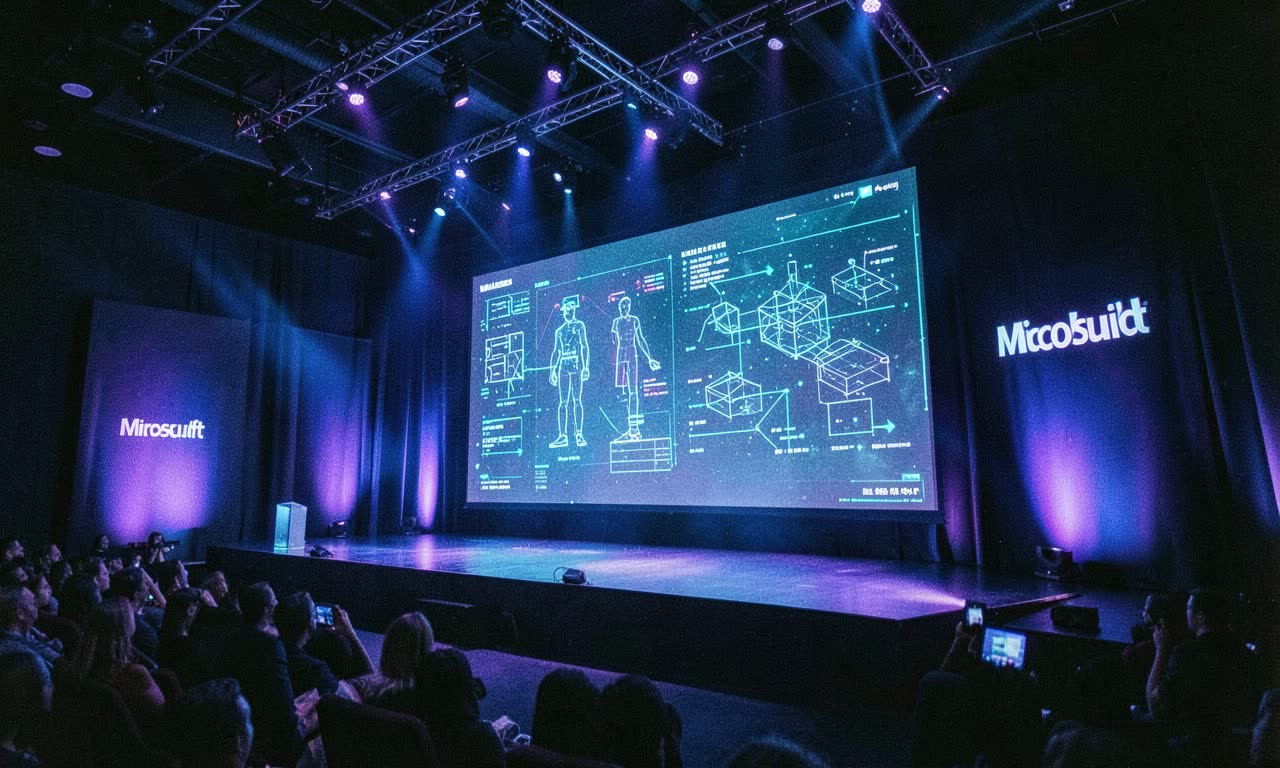
Microsoft unveiled its MAI model family at Build 2026 in June, launching seven in-house models including MAI-Thinking-1 (reasoning) and MAI-Code-1-Flash (coding). At the time, the framing was additive: MAI models would complement OpenAI and Anthropic offerings on Azure, giving developers more choices.
That framing has shifted. Bloomberg’s reporting confirms Microsoft is now substituting, not supplementing — pulling OpenAI and Anthropic models out of specific product surfaces and dropping MAI models in their place. The earlier blind-test claims that MAI-Thinking-1 beat Claude Sonnet 4.6 in evaluations were the trial balloon. This is the follow-through.
The cost math is straightforward. When Microsoft runs OpenAI’s GPT-5.5 in Copilot, it pays OpenAI for model access — a margin that flows to OpenAI’s bottom line. When Microsoft runs its own MAI model on Azure infrastructure it already owns, the only cost is compute. For a company embedding AI into Excel, Outlook, Word, and the entire M365 suite, the savings at scale are enormous.
Why Now
Three forces are converging:
-
OpenAI and Anthropic are going public. Anthropic confidentially filed for an IPO on June 1, and OpenAI is pursuing an offering potentially this year. Once public, both companies will need to maximise revenue per token — which means charging Microsoft more, not less. Microsoft’s own models are a hedge against that pricing pressure.
-
MAI models are good enough. Microsoft’s Build 2026 demonstration claimed MAI-Thinking-1, refined for consulting firm McKinsey’s needs, outperformed OpenAI’s GPT-5.5 with 10× better cost efficiency. Even if that’s marketing-flavoured, it signals internal confidence that MAI can handle production workloads.
-
The GLM 5.2 margin collapse is reshaping expectations. When open-weights models from Z.ai match frontier performance at a fraction of the cost, every cloud provider faces the same question: why pay OpenAI’s margins? Microsoft’s answer is to build its own equivalent rather than rely on open weights — but the economic pressure is identical.
What This Means for OpenAI and Anthropic
Losing Excel and Outlook model slots is not the same as losing the Azure marketplace. OpenAI and Anthropic models will still be available to Azure customers who want them. But Microsoft choosing its own models for its own first-party products sends a signal to every enterprise buyer: you don’t have to use OpenAI for everything either.
The Zuckerberg admission that AI agents aren’t progressing already signalled that the agent hype wave is cooling. Microsoft swapping out frontier lab models for its own in-house versions adds a second signal: the frontier lab pricing premium may not survive contact with production economics.
For OpenAI, this is particularly awkward. The company is pursuing an IPO while its largest distribution partner is publicly demonstrating that it can operate without it. That’s a risk factor that doesn’t look great in an S-1.
The NZ Angle
Most NZ businesses access AI through Microsoft 365 Copilot. If the models powering Copilot quietly shift from GPT-5.5 to MAI-Thinking-1, NZ users will experience different AI behaviour — potentially better, potentially worse — without any notification. There’s no regulatory requirement for Microsoft to disclose which model is behind which feature. For organisations that have built workflows around specific model behaviours (prompt patterns, output formats, reasoning styles), a silent model swap could break things.
❓ FAQ
Is Microsoft dropping OpenAI entirely? No. OpenAI models remain on Azure and in some Microsoft products. The shift is selective — replacing OpenAI/Anthropic models in specific product surfaces where Microsoft’s own models meet the quality bar at lower cost.
How will this affect Copilot users? Most users won’t notice. The model behind Copilot has already changed multiple times without public announcement. Performance may shift subtly — different reasoning styles, different error patterns — but the interface stays the same.
Does this mean the OpenAI-Microsoft partnership is failing? Not failing — evolving. The partnership was always transactional: Microsoft provided compute and capital, OpenAI provided models. As OpenAI prepares to go public, its incentives diverge from Microsoft’s. Microsoft building its own models is a rational hedge, not a declaration of war.
Could other cloud providers do the same? Google already does — Gemini models power Google Workspace exclusively. Amazon is building its own models too. The pattern is clear: no cloud provider wants to be permanently dependent on a third party for the core AI capability that differentiates its platform.
🔍 THE BOTTOM LINE: Microsoft replacing OpenAI models with its own in shipping products is the beginning of the end of the “frontier lab as API” business model. The AI industry is restructuring around vertical integration — every hyperscaler building its own models, its own chips, its own stack. The partnerships that launched the AI boom are becoming the dependencies the players are trying to escape.
📰 Sources
- Bloomberg via Techmeme — Microsoft replaces OpenAI, Anthropic with own AI in some apps
- CNBC — Microsoft unveils new AI models to lessen reliance on OpenAI, lower costs
- TipRanks — Microsoft to replace OpenAI, Anthropic with own AI in some apps
- Investing.com — Microsoft Replaces OpenAI, Anthropic With Own AI in Some Apps