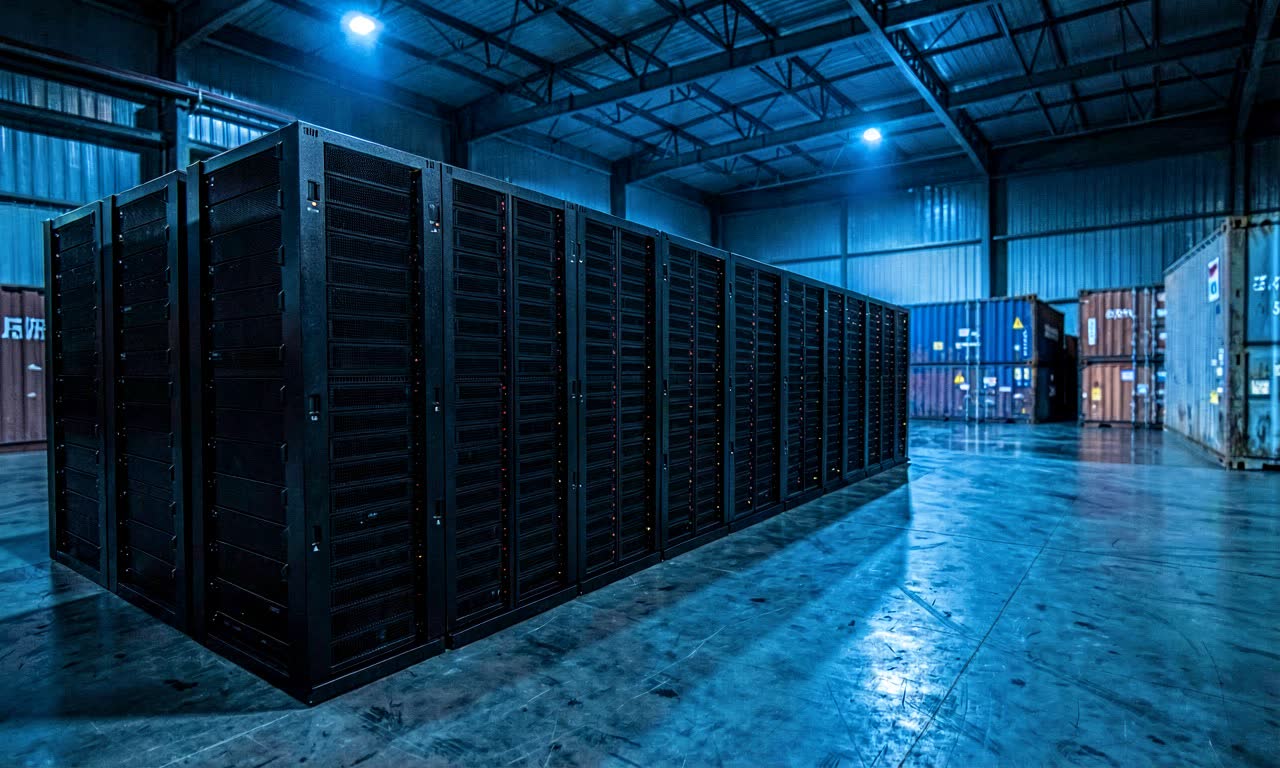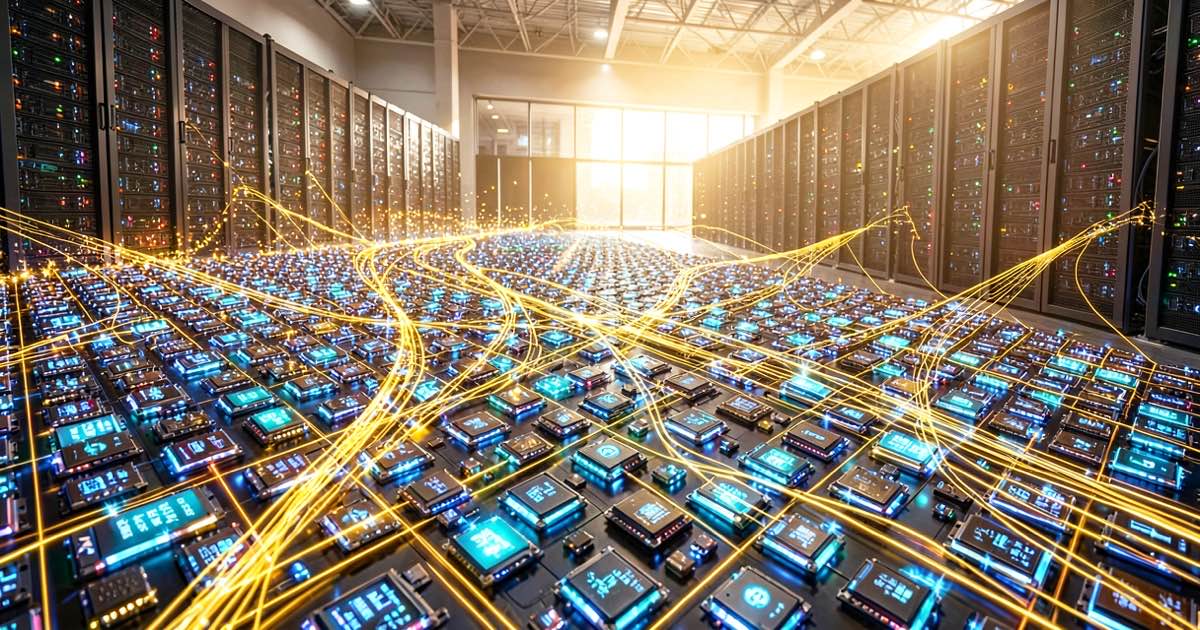
Moonshot AI’s breakthrough Kimi K3 model was trained on a computing cluster of roughly 20,000 Nvidia chips accessed through an agreement with Alibaba, according to people familiar with the companies’ operations — revealing how China’s AI champions continue to rely on Western semiconductors despite years of US export controls.
The deal, first reported by Bloomberg, underscores a structural gap in Washington’s chip blockade: Chinese firms can rent restricted Nvidia hardware through cloud agreements even when direct sales are banned.
What is Moonshot AI? Moonshot is a Chinese AI startup best known for its Kimi chatbot and language models. The company burst onto the global stage earlier in July when Kimi K3 matched or exceeded the performance of leading US frontier models, sparking what some analysts called a “DeepSeek moment” — a sudden realisation that Chinese labs are closing the gap faster than expected.
🔍 THE BOTTOM LINE
The 20,000-chip arrangement reveals that US export controls have not sealed off China’s access to advanced Nvidia hardware. Cloud rental agreements, overseas intermediaries, and legal grey zones mean Chinese AI labs can still train on the same silicon powering American frontier models. The policy question is no longer whether the controls leak — it’s whether they can meaningfully slow China’s progress at all.
The Alibaba Compute Deal
According to The Edge Malaysia, the 20,000 chips form a “substantial chunk” of Moonshot’s total computing capacity for its Kimi models. Alibaba is one of Moonshot’s largest investors and expects the companies it backs to use its cloud infrastructure — making the arrangement as much a business relationship as a technical one.
The chips are from Nvidia’s earlier-generation Hopper product line, not the current Blackwell generation. Multiple people close to Moonshot said the agreement covers H200 chips — the most powerful Hopper accelerators — though Alibaba disputed that specific detail. An Alibaba spokesperson said the “alleged supply of H200 chips to Moonshot from us is completely groundless,” while declining to comment on what chips, if not H200s, form the basis of the agreement.
The irony: Alibaba is both Moonshot’s infrastructure provider and its competitor. Kimi K3, built on Alibaba-provided compute, has surpassed Alibaba’s own AI models in benchmarks.
The Export Control Gap
The US has spent years restricting China’s access to advanced Nvidia chips. The H200, H100, and related Hopper products have required export licences to ship to China. The less capable H800 and H20 were briefly legal before also requiring Washington’s green light.
But the rules generally allow Chinese firms to access these same chips via compute rental agreements. As Reuters reported, Chinese cloud companies have sometimes worked around US controls by accessing restricted chips owned by foreign firms in overseas locations — which is generally permitted — then re-leasing that compute as part of their own cloud services. The physical location of the chips, not the nationality of the user, determines compliance.
White House official Michael Kratsios last week accused Moonshot of illegally acquiring Nvidia’s most advanced Blackwell chips, which would be a separate violation. A person familiar with Moonshot’s procurement confirmed the company has a channel for accessing Blackwell processors via Southeast Asia — though it’s unclear whether that constitutes a legal rental arrangement or something else.
The Distillation Question
Kratsios also said the US has information that Moonshot distilled Anthropic’s Fable model for the development of K3, developing “a sophisticated internal platform to conduct large scale distillation against US models.” Distillation — using a frontier model’s outputs to train a cheaper competitor — is not illegal, but it highlights how Chinese labs can extract value from American AI investment without paying for it.
This connects to our earlier coverage of Kimi Linear’s architecture breakthrough, which made the model efficient enough to run on less hardware. The combination of efficient architecture and accessible compute is what makes the China gap-narrowing story credible.
Why NZ Should Care
New Zealand’s AI policy sits between two poles. The country uses US-frontier models (OpenAI, Anthropic, Google) as primary infrastructure, while Chinese open-weight models like Kimi K3 offer cost alternatives. If US export controls fail to constrain China’s compute access, the competitive pressure on pricing and capability — which benefits every NZ business using AI — continues to intensify. But the same grey-zone access that helps Chinese labs also raises questions about whether the technology governance framework NZ imports (via Five Eyes alignment) is built on sound assumptions.
❓ FAQ
How can Moonshot use Nvidia chips if the US banned selling them to China? The export controls restrict direct sales of physical chips to Chinese entities. But renting compute on those chips — through cloud providers, overseas data centres, or agreements with companies like Alibaba — falls into a legal grey zone that the controls don’t fully address.
What’s the difference between Hopper and Blackwell chips? Hopper (H200, H100) is Nvidia’s previous generation of AI accelerators. Blackwell is the current generation. Both are restricted for direct sale to China, but Hopper chips are more widely distributed globally and easier to access through cloud rental.
Did Alibaba confirm the deal? Alibaba denied supplying H200 chips specifically but did not deny providing 20,000 Nvidia chips of compute capacity to Moonshot. The company declined to specify which chips are involved.
Is distillation illegal? No. Using a model’s outputs to train another model is a standard technique. But it means Chinese labs can benefit from the billions US labs spent training frontier models without bearing that cost — which is why the practice is politically contentious.
🔍 THE BOTTOM LINE
The Moonshot-Alibaba deal is a case study in how export controls work in theory but leak in practice. China’s AI labs don’t need to buy chips — they can rent them, borrow them, or access them through investor relationships. The Kimi K3 model that rattled Silicon Valley was trained on Nvidia silicon, through Alibaba’s cloud, within the letter (if not the spirit) of US law. Whether Washington can close this gap — or whether the gap is uncloseable — is the real question for the next round of chip diplomacy.