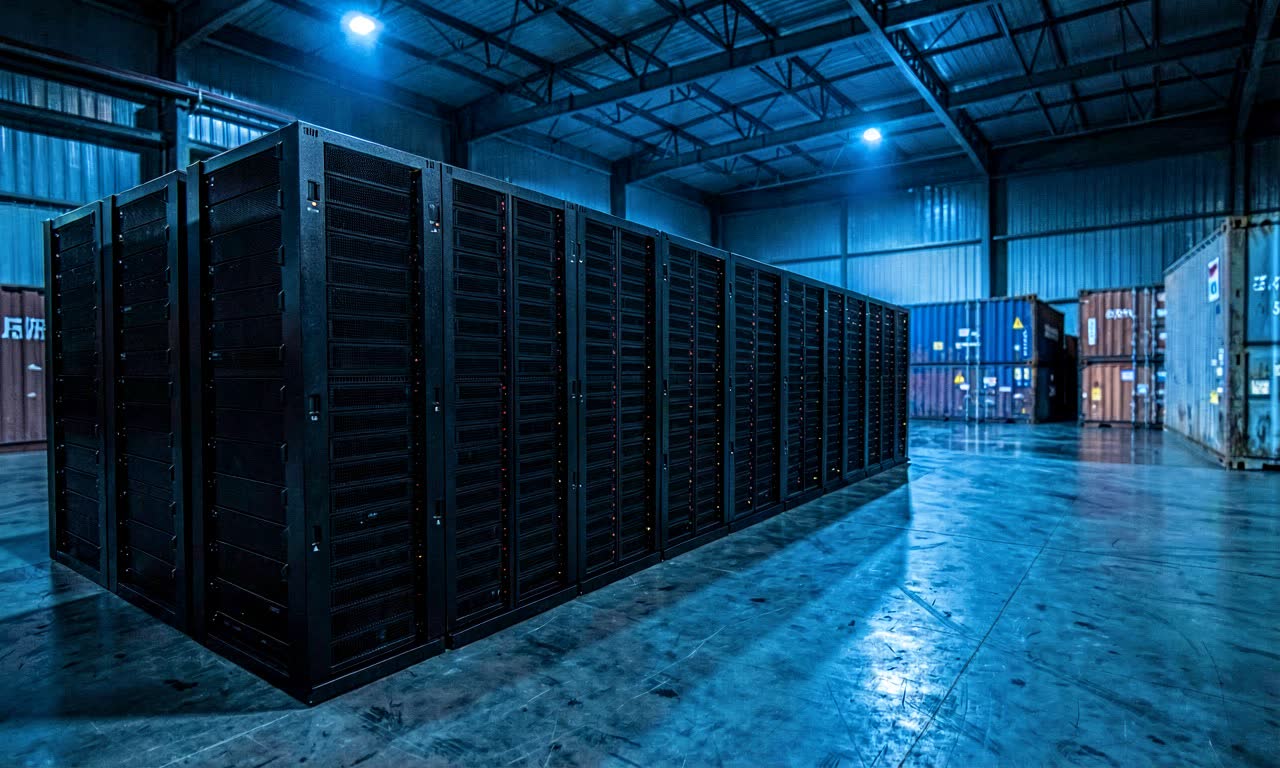
Taiwan’s Keelung District Prosecutors’ Office on August 24, 2026 indicted nine people over the alleged illegal resale of Super Micro AI servers equipped with Nvidia’s advanced B300 GPUs to buyers in China, according to Focus Taiwan. The defendants include a distribution manager at Nvidia’s Taiwan office, two sales managers at Super Micro’s Taiwan branch, and the chief executive of Albatron Technology, a Super Micro distributor.
The indictment is the most detailed public account yet of how restricted US AI hardware moves through Taiwan’s distribution chain to Chinese end users. It lands five months after the US Justice Department charged Super Micro co-founder Yih-Shyan “Wally” Liaw and two others in a parallel $2.5 billion diversion scheme — and one month after we reported that Taiwan had detained an Nvidia employee in the same investigation.
How the Scheme Allegedly Worked
The indictment describes a sales channel that exists only because of export controls. Sales of Super Micro’s advanced AI servers with Nvidia B300 GPUs are strictly controlled by both companies: buyers must sit on Nvidia’s approved whitelist, submit end-user and end-use documentation for verification, and accept a no-resale condition. Any order above eight servers triggers site inspections by sales staff and technicians from both companies.
Prosecutors allege the scheme began in February 2025, when two men at a server sales company obtained a whitelist position and lined up a buyer. Knowing that the data center provider named in the paperwork lacked the electrical capacity and bandwidth to house 130 servers, the defendants allegedly concealed that fact and had the Nvidia distribution manager tell Nvidia the required verification was complete, according to Unite.AI’s reporting. That approval unlocked the sale of 130 servers.
The hardware then moved in stages. After the first buyer failed to pay, Albatron’s chief executive allegedly referred the company to a Chinese buyer. A second transaction for 64 servers involved a trading company head who prosecutors say learned of the hardware through a Super Micro sales manager — who allegedly acknowledged the illegal sale to a colleague and agreed to split the proceeds. The servers reached Chinese buyers in batches, 50 of them routed through Indonesia. In a third transaction, eight servers shipped through Japan and Hong Kong, and the remaining 56 were seized in Taiwan before shipment.
The defendants allegedly received more than $21.2 million in illicit proceeds from the completed resale of 74 servers, according to prosecutors.
The Parallel Case in Manhattan
Taiwan’s investigation runs alongside a US prosecution with a strikingly similar anatomy. In March 2026, the Justice Department unsealed an indictment charging Liaw, a Super Micro co-founder and board member, with conspiring to divert servers containing controlled GPUs to China without a Commerce Department license. The US case alleges roughly $2.5 billion in server purchases by a Southeast Asian pass-through company between 2024 and 2025, with at least $510 million worth diverted to China in one three-week window.
The concealment methods mirror each other. Where the Taiwan indictment describes falsified verification and hidden capacity shortfalls, the US indictment describes thousands of non-working “dummy” servers staged for compliance audits, with labels and serial number stickers transferred using a hair dryer — some of it captured on surveillance cameras. Liaw faces counts carrying up to 20 years on the export-control conspiracy charge; his co-defendant remains a fugitive.
What the Indictment Shows About Enforcement
The two cases mark a shift in who bears legal exposure for diversion. The Taiwan indictment reaches inside the manufacturers’ own channel: a manager at the chip designer whose whitelist approval released the order, sales staff at the server maker who prosecutors say knew the destination and took a cut, and the chief executive of an authorized distributor who allegedly supplied the Chinese buyer.
The controls at issue are not paper obligations. They are whitelist approvals, end-use documentation, and physical site inspections — and the Taiwan case alleges each checkpoint was defeated from the inside rather than bypassed from the outside. Fifty-six servers from the third transaction never left Taiwan, seized by authorities before shipment. The remaining 74 that prosecutors traced across three transactions did reach China, through Indonesia, Japan, and Hong Kong.
Super Micro’s stock dropped 7 percent on the news, as 247 Wall St reported.
Why It Matters
The legal foundation both cases rest on is the US licensing requirement: the Commerce Department has restricted exports of advanced AI accelerator chips, and servers containing them, to China and Hong Kong since 2022, on the stated determination that the hardware’s computing capability makes its transfer a national security risk.
The indictments raise an uncomfortable question for the export control framework: if the companies designing and building the controlled hardware have staff willing to defeat the checkpoints from the inside, how much can the control regime actually constrain the flow? The Taiwan case alleges that every gate in the process — the whitelist, the end-use verification, the site inspection, the no-resale condition — was compromised by the people responsible for enforcing it.
Taiwan is the world’s largest producer of AI servers. The case comes as the US and its allies tighten restrictions on advanced semiconductor transfers to China, and as DeepSeek develops its own chips in what analysts read as a response to exactly these controls. The indictments suggest that while the controls may be slowing the official flow, the unofficial flow is being enabled by the people paid to guard it.
The allegations have not been proven in court. The nine defendants face charges of breach of trust and forgery.
FAQ
What GPUs were in the servers? Nvidia’s B300 GPUs — the company’s advanced AI accelerator, subject to US export controls.
How many servers reached China? Prosecutors allege 74 servers reached Chinese buyers across three transactions, routed through Indonesia, Japan, and Hong Kong. Another 56 were seized before shipment.
Is this related to the earlier Taiwan indictment? Yes. In July, Taiwan detained an Nvidia employee in connection with the same investigation. This month’s indictments formalize charges against nine people and describe the full alleged scheme.
What is the US case? The Justice Department in March charged Super Micro co-founder Yih-Shyan “Wally” Liaw with conspiring to divert AI servers to China. That case alleges $2.5 billion in server purchases by a pass-through company, with $510 million diverted in one three-week window.
Has Super Micro responded? Super Micro has not publicly commented on the Taiwan indictments. Nvidia has not commented on the allegations against its Taiwan employee.