Shenzhen-based EngineAI says the cost of building a general-purpose humanoid robot has dropped below RMB100,000 — roughly $13,800 USD. CEO Zhao Tongyang made the claim at the World Robot Conference in Beijing last week, telling reporters that comparable machines cost more than RMB1 million three years ago.
That is a 90 per cent cost reduction in three years. If the figure holds up to independent scrutiny, it puts humanoid robots in the same price bracket as a cheap car. The question is whether that comparison means what it sounds like.
What EngineAI Actually Said
Zhao was careful to scope the claim. The RMB100,000 figure refers to robots designed for factory work, household tasks, and other practical applications — not low-cost toy products or research platforms stripped of real capability. He did not say the robots are selling for RMB100,000. He said the cost of building them has fallen to that level.
That distinction matters. Cost of production is what the manufacturer pays for components, assembly, and testing. It does not include software development, distribution, warranty, support, or the margin that keeps a company alive. When TechNode reported the claim, it noted the figure came from the company’s own CEO, not from an independent teardown or cost audit.
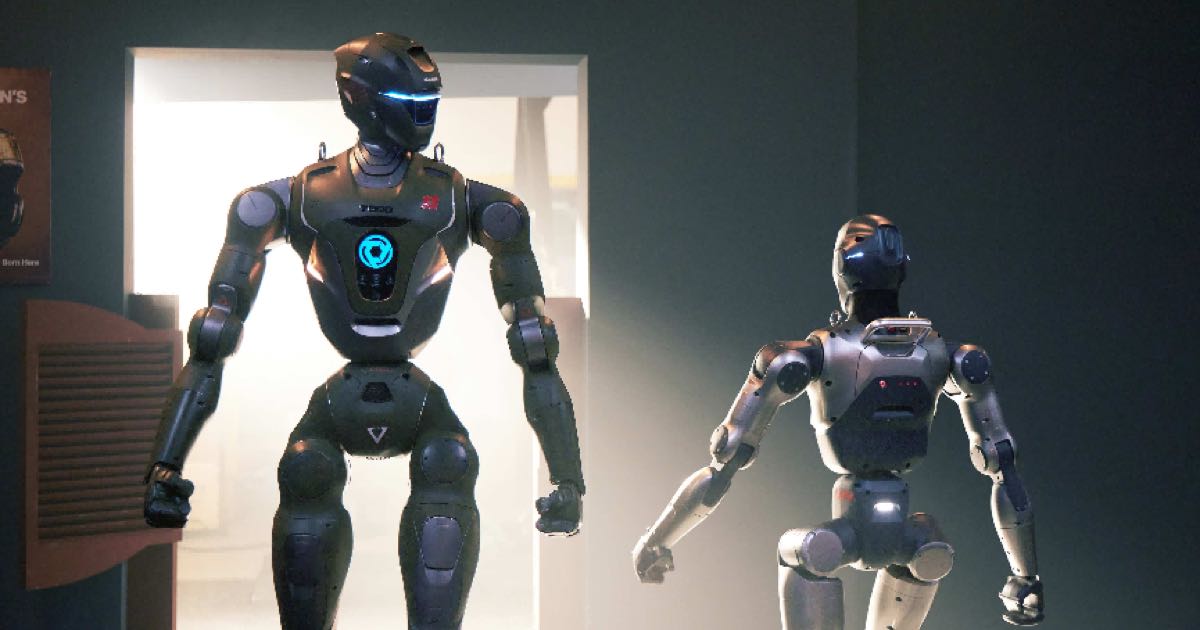
EngineAI, founded in October 2023, is one of the newer entrants in China’s crowded humanoid robotics scene. Its T800 model is listed at around $25,000 on some buyer-facing platforms, which gives a rough sense of the gap between production cost and retail price. Even allowing for the T800 being a higher-spec model, the margin between build cost and list price is where the business actually lives.
Why the Cost Is Falling
The cost decline is not EngineAI’s achievement alone. It reflects a broader supply chain shift that we have tracked across the Chinese humanoid industry. Component prices — actuators, harmonic reducers, sensors, compute modules — have dropped as Chinese manufacturers scale up production and domestic alternatives replace imported parts.
At the World Robot Conference, multiple makers demonstrated performance improvements alongside falling hardware costs. Unitree, AgiBot, and Honor all showed faster, cheaper machines than a year ago. The pattern is consistent: the supply chain is maturing, and the price curve is bending downward.
This is what happens when an industry moves from hand-built prototypes to volume manufacturing. It happened with drones, solar panels, and EV batteries — all in China, all on similar timelines. The humanoid robot supply chain is not there yet, but the direction is clear.
Cost Is Not the Bottleneck
Here is the uncomfortable part. A robot that costs $14,000 to build is not a robot that costs $14,000 to own. And a robot you can afford is not a robot you can use.
The real bottleneck in humanoid robotics is not hardware cost. It is generalization — the ability to handle environments and tasks the robot was not explicitly trained for. Unitree founder Wang Xingxing told the World Robot Conference that AI models have become the company’s biggest area of investment, and that generalization remains the core challenge for the entire industry.
A robot that costs $14,000 but can only sort packages on a pre-mapped conveyor belt is a specialised industrial tool, not a general-purpose humanoid. The price tag gets attention. The capability gap is what determines whether anyone buys one.
The Competitive Picture
EngineAI’s cost claim lands in a week where the Chinese humanoid industry has been flexing. Unitree’s Shanghai IPO surged 460 per cent on its first day. XPeng’s robotics unit Dogotix raised $900 million. The World Humanoid Robot Games drew 2,056 robots from 16 countries to Beijing. Chinese robots ran 100 metres faster than Usain Bolt’s world record.
The signal is scale. China can field thousands of humanoids, fund billion-dollar robotics startups, and drive component costs down by orders of magnitude. Whether that translates into robots that actually do useful work in factories, hospitals, and homes — the question that the Beijing Games’ failures highlighted just as clearly as its successes — is a different matter.
For New Zealand, the cost curve matters in a specific way. A robot at $14,000 production cost is approaching the threshold where it becomes economically viable for medium-sized manufacturers to pilot — not at the $50,000+ list prices that have dominated the market. NZ’s agricultural and logistics sectors, where labour shortages are acute, are the natural first test bed. But import costs, the FCC’s ban on certain Chinese humanoid robots, and the lack of local support infrastructure all add friction. Cheaper hardware helps. It does not solve the deployment problem.