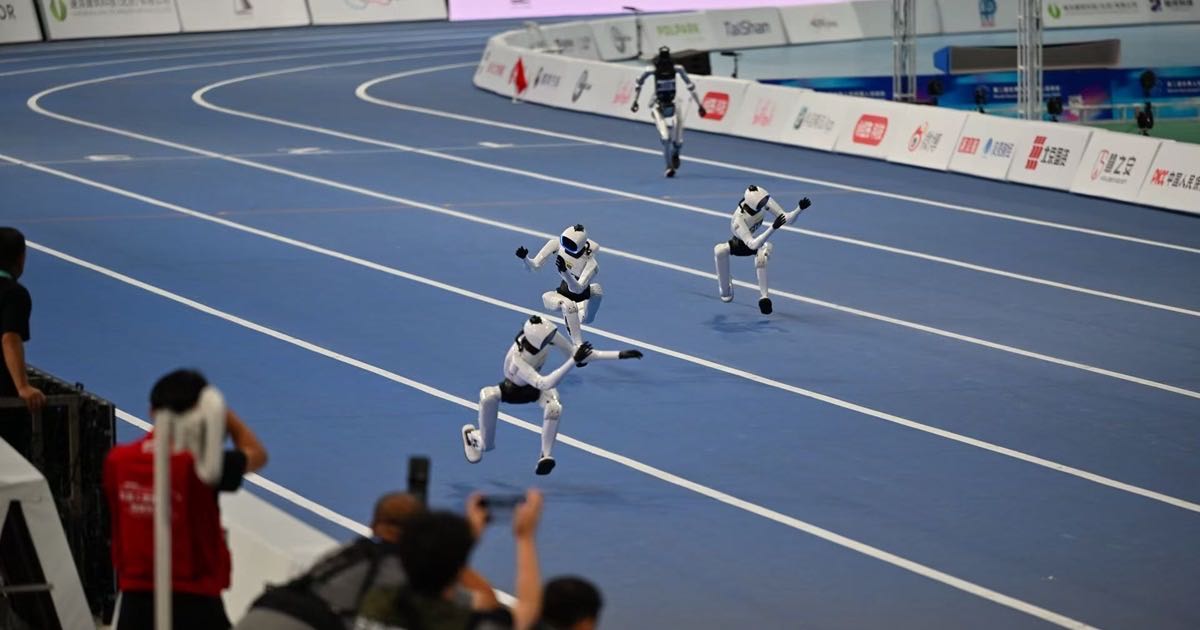
The second World Humanoid Robot Games closed in Beijing with a number that would have sounded like satire six months ago: 8.64 seconds for the 100 metres, by a humanoid running on two legs. Reuters reported the result on August 29, 2026 (local New Zealand time), noting it was nearly a full second faster than the record set at these same games just days earlier. For scale: Usain Bolt’s human world record stands at 9.58.
The Games opened on Saturday, August 22, and the records started falling immediately. On day one, Chinese humanoids broke the 100m and high jump marks, according to AP. By the closing weekend the sprint record had dropped again — 8.86, then lower — with sparks visibly flying off the leading machines at the finish line. Organisers said more than 2,000 humanoid robots took part across the five days of track, field, and combat events.
We’ve been tracking this event since its first edition put humanoids through their paces in Beijing last year, and the story hasn’t really been who wins. It’s the slope of the curve.
The slope is the story
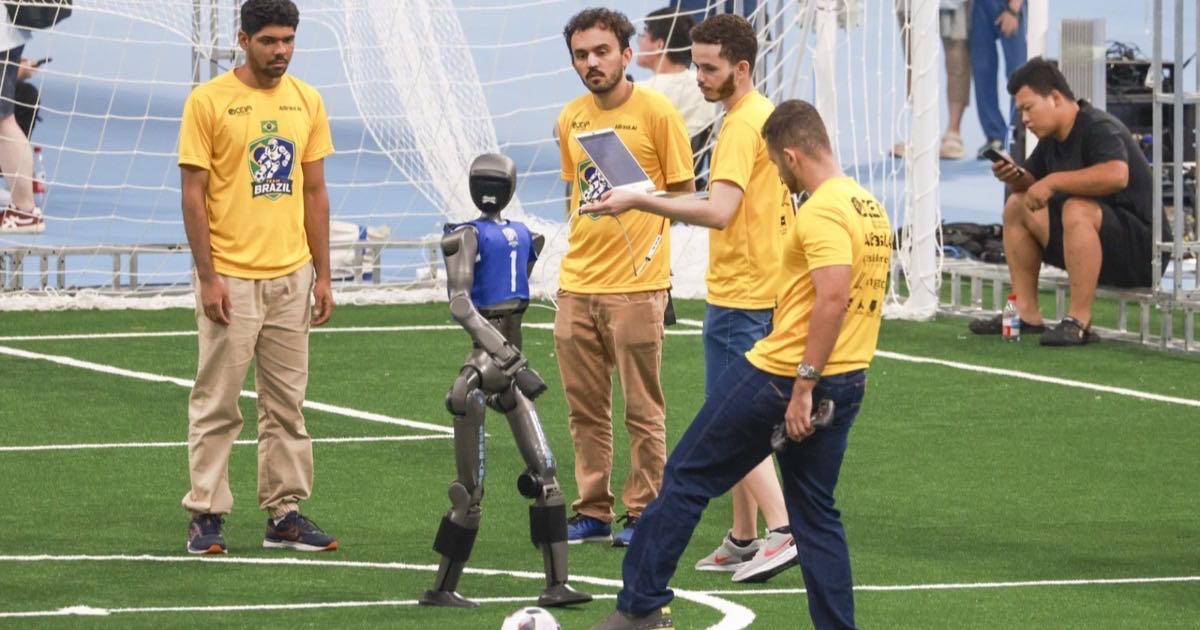
Compare editions. At the first Games, humanoids mostly shuffled, fell over, and provided a useful reality check about how far the hardware still had to go — falls and restarts drew as much coverage as any result. This year a bipedal machine ran 100 metres faster than any human in recorded history, with a record that lasted days rather than years.
That’s the pattern worth watching. When a benchmark falls nearly a full second inside a single five-day event, the limiting factor isn’t some fixed physical ceiling. It’s actuator power density, control software, and how much engineering attention the category is attracting — all of which are compounding right now. The Unitree CEO’s much-quoted “robots are poised for their ChatGPT moment” line, delivered around these Games, is marketing talk until you look at a chart like this one, at which point it starts sounding like a forecast.
A caveat worth stating plainly: a sprint record is a stunt-optimised result. These machines are tuned for one event, on one track, in ideal conditions. General-purpose usefulness — navigating a warehouse, folding laundry — remains where the industry’s real bottleneck is. Nobody is buying a humanoid because it can beat Bolt.
Why China keeps staging this
The state-backed spectacle matters less for sport than for signal. These Games are a national demonstration of supply depth: thousands of humanoids on one stage means dozens of manufacturers with working hardware, not concept videos. That matches the shipment data we looked at earlier this month — China accounts for the overwhelming share of global humanoid deployment, and the Games both showcase and accelerate that industrial base.
For a country trying to own the humanoid category the way it owns EVs, a theatre where machines visibly beat humans at a human sport is worth more than any white paper. Every 9-second sprint gets broadcast; the factory acceptance tests behind robots moving real goods don’t.
What’s genuinely useful about the closing number isn’t the 8.64. It’s that the previous record — itself a human-beating figure — lasted about a week. Whatever your view of humanoid hype, records that die in days are the signature of a technology in the steep part of its curve, not the flat one.
FAQ
What was the 100m record at the World Humanoid Robot Games? The closing record, reported by Reuters on August 29, 2026, was 8.64 seconds by a humanoid sprinter — nearly a full second faster than the mark set earlier in the five-day event.
Did a robot beat Usain Bolt’s world record? Yes. Bolt’s human record of 9.58 seconds now sits behind the leading humanoid machines, following records broken at the opening of the Games on August 22, 2026.
When and where were the Games held? Beijing, from August 22 to 28, 2026 — the second annual World Humanoid Robot Games, with more than 2,000 humanoid robots competing.
Does a sprint record mean robots are practical? Not by itself. Sprint records reflect single-purpose optimisation. The industry bottleneck remains general-purpose reliability in unstructured environments like homes and warehouses.