Ask a robotics engineer why humanoid robots still cost as much as a car and you will rarely hear about the AI model. You will hear about the hands. South Korea’s government has just made the same diagnosis, and it is backing the diagnosis with a quarter of a billion dollars.
Wonik Robotics has secured approval for a KRW 350 billion (about US$254 million) investment package from South Korea’s National Growth Fund, the Financial Services Commission announced on August 27. The money funds a robot hand production facility and an AI transformation centre in Wanju, North Jeolla Province — KRW 150 billion in equity from the state’s Advanced Strategic Industry Fund, with roughly KRW 200 billion coming from private investors.
Why hands, of all things
Actuators and robot hands are the cost centre nobody outside the industry talks about. Interact Analysis analysis cited by BigGo Finance puts joint actuators at over 30% of component cost in high-spec humanoids — above 50% in simpler models once you strip out advanced sensors. Actuators and hands combined: roughly 70% of the hardware bill.
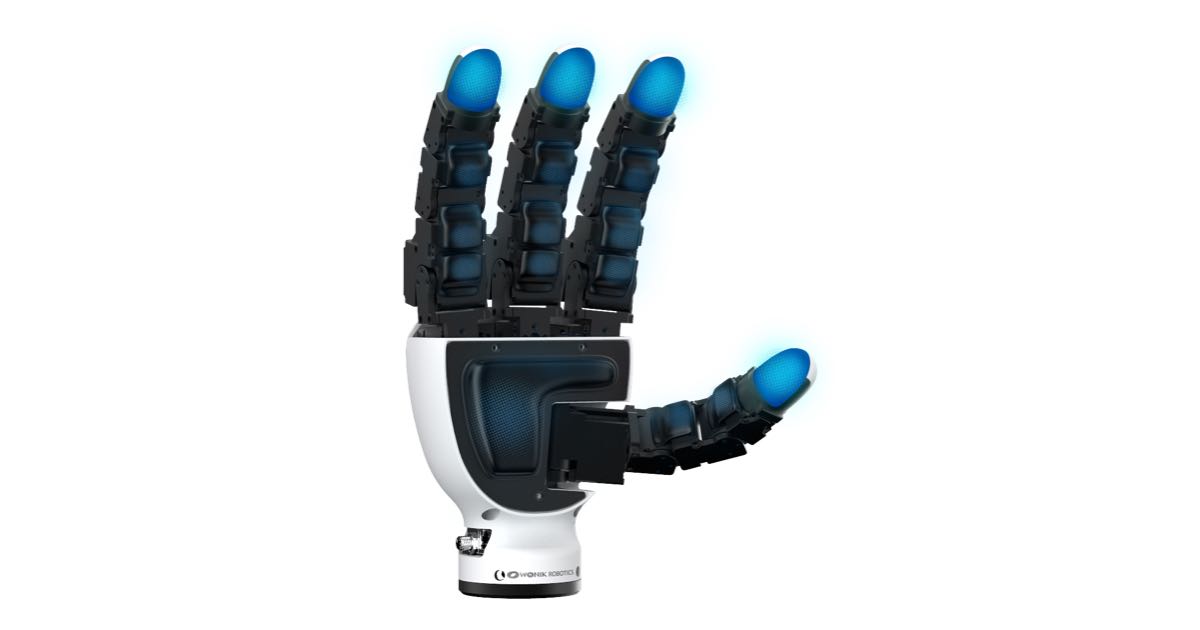
That is why this particular company got picked. Wonik’s Allegro Hand is a four-fingered hand with 16 torque-controlled joints that has quietly become a research standard. Nvidia and Meta both use it, and it ships as a default robot asset in Nvidia’s Isaac Sim, so researchers can train manipulation in simulation before touching physical hardware. Since 2024, Wonik has been co-developing a next-generation Allegro Hand with Meta that folds in the Digit 360 tactile sensor — roughly 18 sensory capabilities including vibration and thermal detection, with an on-device AI chip.
What stands out here is the feedback loop. The hand is cheap enough for labs to standardise on, standardisation produces training research, the training research makes the hand more valuable. It is the same flywheel that made the Unitree Go2 the default research quadruped.
The odd gap in South Korea’s robotics story
South Korea has the world’s highest robot density — 1,220 industrial robots per 10,000 employees, per IFR’s World Robotics 2025, well ahead of Singapore’s 818. Yet its share of global humanoid production sits at around 1%. The country automated factories brilliantly and then, for the most part, sat out the humanoid gold rush its neighbours started.
Seoul is trying to fix that with money at both ends. The Wonik package is the second confirmed investment under the Ministry of Trade, Industry and Energy’s M.A.X. Frontier Project targeting physical AI sectors. Three days before the FSC announcement — August 24 — the Second Fiscal Management Strategy Council committed KRW 2.3 trillion (about $1.66 billion) through 2030 to build a full-stack domestic humanoid industry, plus another KRW 2.8 trillion for field testing across manufacturing, agriculture, logistics, ports, defence and elder care. The plan includes the government buying 1,080 humanoid robots for universities and state institutes, and a target of lifting core-component localisation from 45% to 80%.
Read those two moves together and the strategy is blunt: Korea’s car-parts makers are watching EV powertrains shrink their business, and Seoul wants them retooled into precision robotics suppliers before that gap becomes a dependency.
An honest caveat
Money committed is not hands shipped. The Wonik facility is a plan and the KRW 150 billion state tranche is convertible preferred stock, not a completed build. The government’s own bottleneck analysis is a tacit admission that Korea currently imports the difficult parts. And Meta’s participation in the hand co-development says something about the balance of power: the tactile-sensing IP at the sharp end is American.
Still, when the government identifies a bottleneck, funds the company already supplying Nvidia and Meta, and buys thousands of robots to anchor demand, that is about as coherent as industrial policy gets. For researchers who have been training on a simulated Allegro for years, the practical detail is simple — the physical version of the standard hand just got a lot more supply.
— CJ Murden, editor of Singularity.Kiwi. Former digital technologies teacher, author of AI-focused books. Writing with a New Zealand focus.