The Guardian published an analysis on August 29 of the World Humanoid Robot Games that closed in Beijing three days earlier, and it made an argument worth sitting with: the most revealing thing about China’s robot Olympics was not the records. It was that China let the failures stream live to millions.
This site has covered the Games from the opening records through the 8.64-second 100m final and the closing verdict. What the Guardian adds is a question about intent, and the framing is careful — it reports an interpretation, not a fact.
The case that the crashes were the message
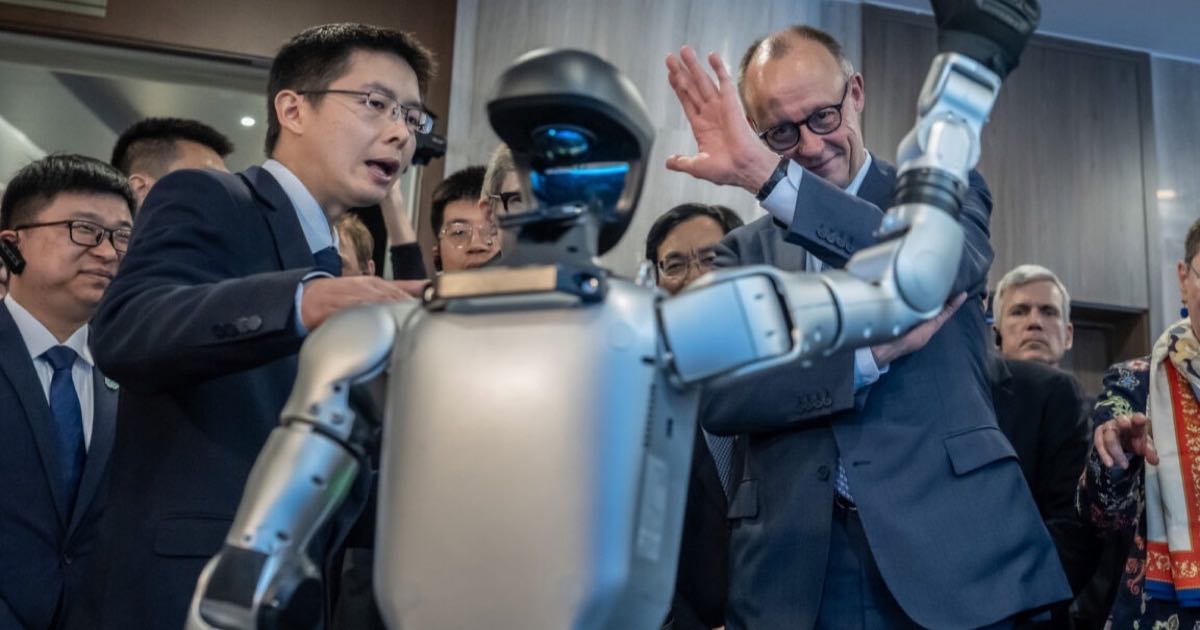
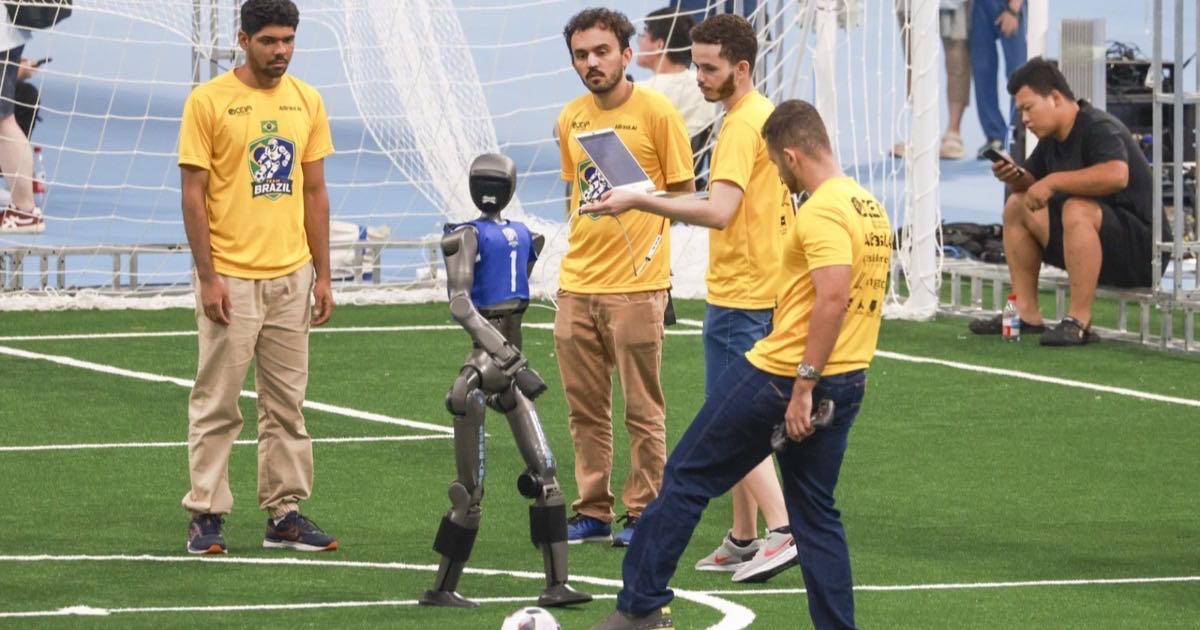
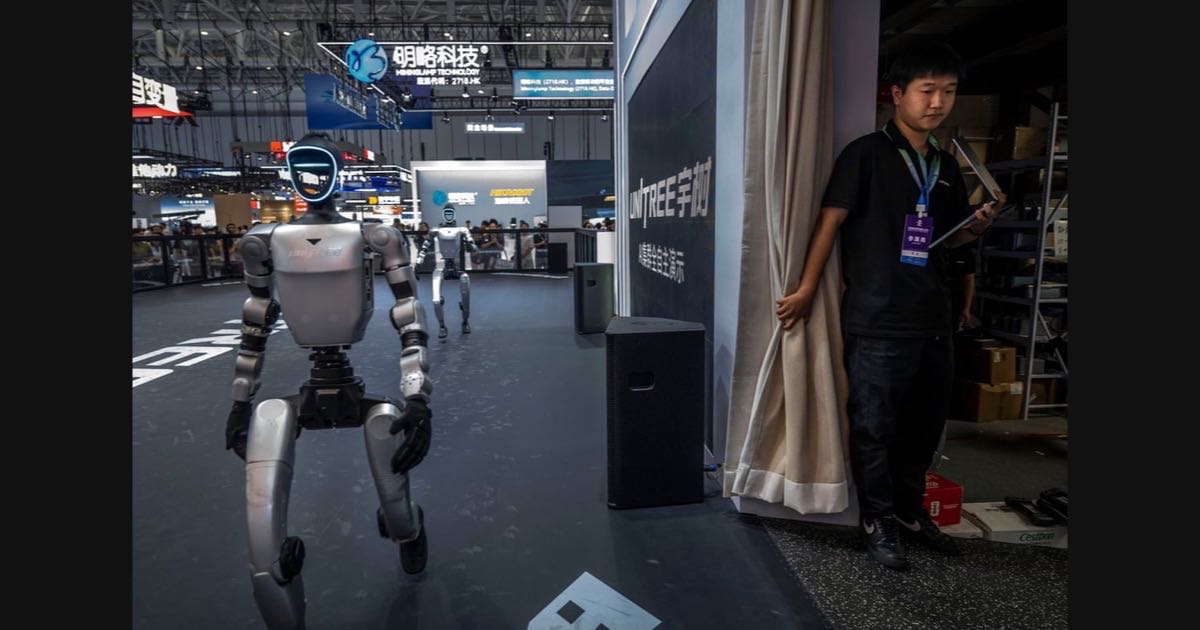
More than 2,056 humanoids from 666 mostly Chinese teams competed over five days at the National Speed Skating Oval. Robots knocked each other out in free combat. One sprinter ran faster than Usain Bolt and then slammed into a padded wall in a shower of sparks — footage that circulated globally precisely because it looked like a blooper reel.
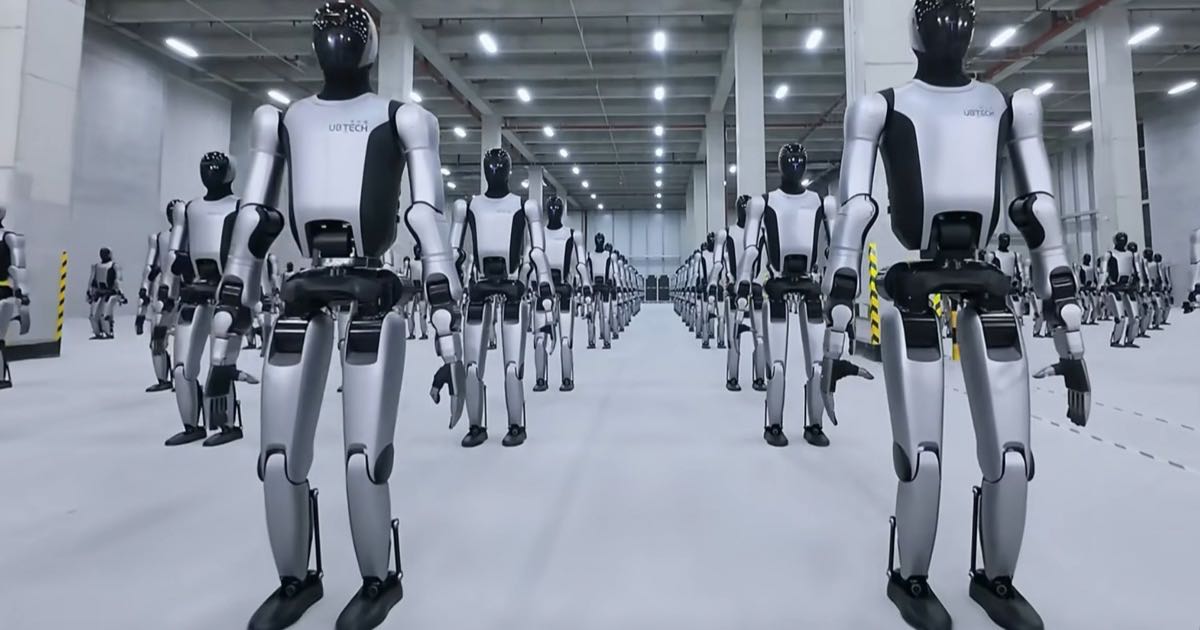
Why would a country running a showcase broadcast that? The Guardian’s framing: China could afford to be candid because of scale. Last year it produced 12,800 humanoids, about 90% of the global total, according to the Mercator Institute for Chinese Studies. When you dominate production, showing the gaps between your robots and perfection reads as confidence rather than weakness — and it sets expectations for buyers that are calibrated, not inflated. American rivals, notably Tesla’s Optimus, which is reported to have finally entered production this month, have taken the opposite approach: months of carefully staged demos.
There is also a competitive logic. The Games give China’s intensely crowded domestic robot industry a hard deadline and a public scoreboard, the same “survival of the fittest” dynamic Beijing has used in solar panels and EVs. Two thousand robots auditioning in front of the state is a sorting mechanism as much as a spectacle. The event also functioned as a global shop window weeks before the Xi-Trump summit, where technology supremacy is expected to top the agenda.
What stands out to me is how different this marketing physics is from anything Silicon Valley runs. A Western startup whose demo robot faceplants kills the video. A Chinese maker with Unitree-style scale posts it, and the comment section turns the robot into a character. Sympathy is a strange thing to farm from a malfunction, but the Guardian documents viewers reporting unexpected empathy for a robot struggling through the 400m obstacle course — and returning the next day to watch more.
The part that should concern nobody’s comfort level
The Guardian does not editorialise this lightly: the games sat inside a five-year plan that commits China to “the practical application of humanoid robots” and exploration of embodied AI in roles with labour shortages or high-risk environments — which, as the piece notes, likely includes war, especially against the backdrop of a shrinking workforce and rising military ambitions. International observers quoted in the piece described the engineering progress as “staggering” and, in one quote, “fascinating, and honestly, a little scary.”
That sits alongside the honest reading of the failures: robots that can sprint in a straight line but cannot slow down, robots that broke at the waist mid-race, and scenario events where only a minority of teams completed the tasks. Both things are true. The trajectory is the number that matters: the 100m went from 21.50 seconds in 2025 to 8.64 this year.
For the rest of the world the useful takeaway is not fear, it is calibration. China is selling humanoids at prices its competitors have not matched — around RMB 100,000 for EngineAI’s entry unit — and it is now marketing them with their failure modes attached. Buyers get a truer picture from Beijing’s candour than from most Western launch events. That is an uncomfortable advantage, and it did not happen by accident.
— CJ Murden, editor of Singularity.Kiwi. Former digital technologies teacher, author of AI-focused books. Writing with a New Zealand focus.