The humanoid robot boom is about to collide with the other shortage of the decade. Market research firm Counterpoint Research projected on 11 October that global DRAM demand from the humanoid robot industry will jump more than 20-fold by 2030 — from roughly 8,300 terabits this year to about 172,000 terabits. Average memory per robot more than doubles over the same window, from 19GB to 39GB, as robots take on more autonomous sensing and decision-making. Korea’s ChosunBIZ carried the same projections with a sharper angle for the chip industry: after HBM for AI data centres, robots are forecast to be the next structural demand engine for Samsung Electronics and SK hynix.
Why robots eat memory differently from chatbots
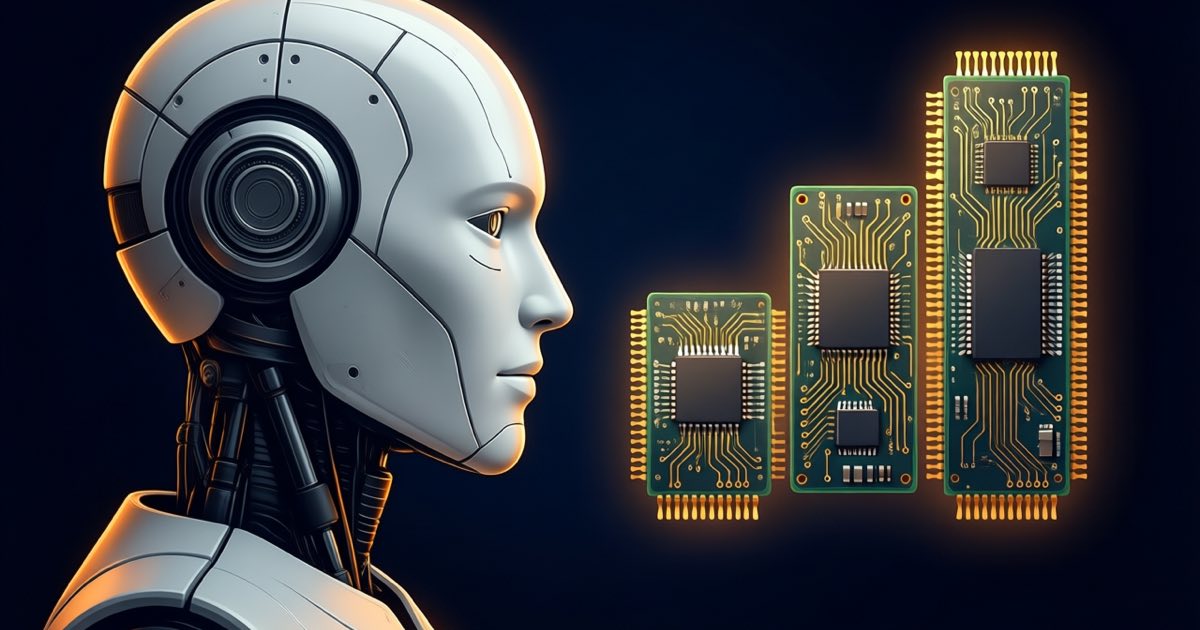
A warehouse of thinking servers draws DRAM at scale, but a robot has a constraint data centres don’t: it runs on a battery and carries its brain in its chest. Counterpoint expects that to pull demand toward low-power DRAM (LPDDR) and high-capacity NAND flash — the same memory classes your phone uses, not the exotic HBM stacked into GPU racks. Humanoid robots process camera and sensor streams in real time to plan their own movement; as the onboard models get more capable, the memory needed to hold and move that data grows with them.
The chipmakers have been saying this out loud. Micron CEO Sanjay Mehrotra used his 30 September earnings call to predict that humanoid robots will eventually want memory on par with Level 4 autonomous vehicles — “over 200GB of memory and several terabytes of storage” each. Against current 2030 shipment forecasts of 250,000 to well over a million humanoids per year, robots-as-memory-customers stops being a rounding error fast.
The second wave arrives before the first one recedes
What makes this projection land differently in late 2026 is timing. The memory market hasn’t recovered from wave one: AI data centre demand has already pushed RAM prices up hard enough that NZ electronics prices are rising and killed the cheap smartphone DRAM tier outright. A 20-fold robot demand curve means the expected relief around 2027–28 — as new fabs come online — gets competing bids from a customer class that didn’t exist in the last planning cycle. Micron is telling investors supply stays tight through 2027 and 2028 before robots scale.
For New Zealand the transmission mechanism is consumer prices, not chip diplomacy. Phones, laptops and GPUs imported into a small market feel global DRAM pricing swings quickly — the April 2026 memory crisis story was a local electronics-price story first. If Counterpoint’s robot curve even half-materialises, the 2027 “memory price relief” that shoppers and PC builders are waiting for gets pushed out again.
The confidence interval nobody quotes
The honest caveat: this is a 2030 forecast built on 2026 adoption rates for a technology that did not ship at consumer scale two years ago. Counterpoint itself puts today’s global humanoid installations in the low tens of thousands of units, and the same research family had AGIBOT’s shipments around 9,700 units mid-year. A 20-fold DRAM multiplier assumes robots leave the pilot stage in groceries, warehouses and factories more or less on schedule — the outcome Walmart’s own rollout suggests is anything but smooth.
But the direction matters more than the digits. A second structural demand source means memory pricing stops being a data-centre story and becomes a general computing story — with the bill, as usual, landing on the smallest devices first.
Sources: SBS News · ChosunBIZ · MSN syndication · GadgetReview on Micron’s earnings comments