A RAM kit that cost $150 in July last year now costs $850 at a Tauranga electronics store. Phones are up as much as 30%. Entry-level laptops have risen 10-20%. The cause, according to NZ retailers and industry groups, is the global AI boom — and its insatiable appetite for the same memory chips that go into every phone, tablet, and laptop on the planet.
🔍 THE BOTTOM LINE
The AI infrastructure buildout is not just consuming electricity and GPUs. It is draining the global supply of DRAM and NAND flash — the memory components inside every consumer device. NZ retailers and consumers are now seeing the bill, and the people least able to absorb it — low-income households, schools, community groups — are the ones feeling it first.
What Is Happening to Memory Chip Prices?
What are memory chips? Memory chips — specifically DRAM (dynamic random-access memory, the RAM in your phone and laptop) and NAND flash (the storage in your phone, SSD, and USB drives) — are the commodity components inside virtually every computing device. They are manufactured at massive scale by a handful of companies: Samsung, SK Hynix, and Micron dominate DRAM; the same trio plus Kioxia and Western Digital dominate NAND.
AI data centres need staggering quantities of both. Training a large language model requires hundreds of gigabytes of high-bandwidth memory (HBM) per GPU, and HBM is manufactured on the same production lines as conventional DRAM. When Samsung and SK Hynix shift wafer capacity to HBM for Nvidia and AMD AI accelerators, the supply of standard DDR4 and DDR5 RAM for consumer electronics shrinks. The same dynamic applies to NAND — AI inference servers need fast storage, and the production capacity that would have gone into phone and laptop SSDs is being redirected.
According to 1News reporting, the result is a supply squeeze that is flowing through to retail prices in New Zealand with remarkable speed.
The Tauranga Store Where a RAM Kit Went from $150 to $850
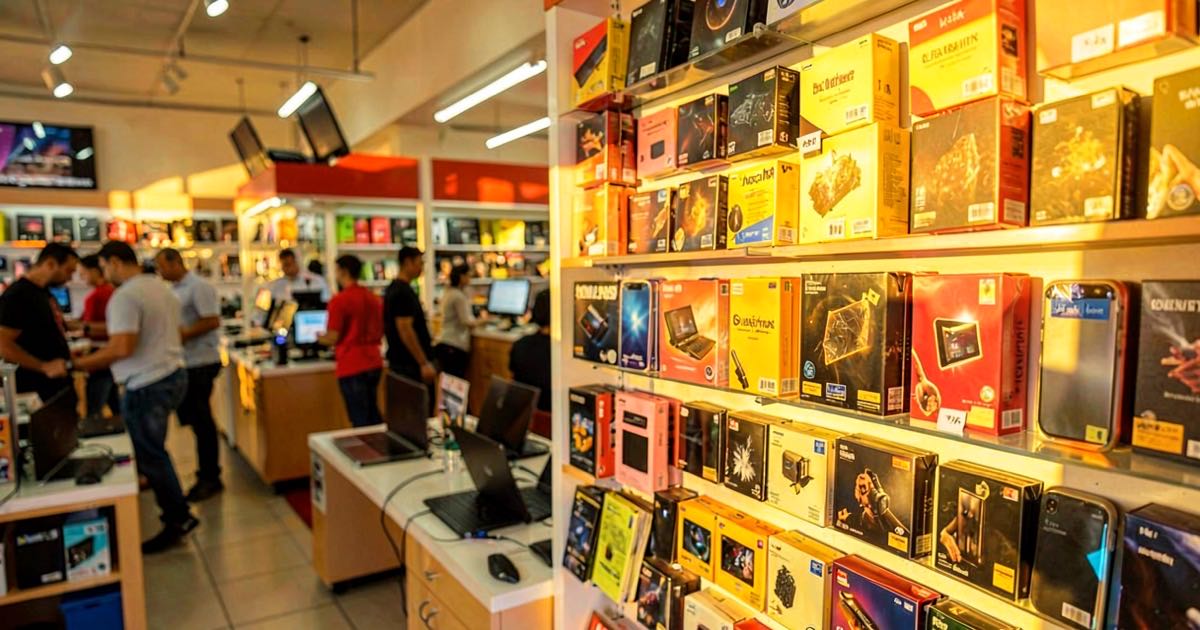
Ben Maxwell, founder of Compulsion Tech in Tauranga, gave 1News a concrete number that cuts through the abstraction of global supply chains. A memory kit that cost $150 in July 2025 now costs $850 — a 467% increase in 12 months.
“A customer might have built a computer for $2000 a few years ago and the RAM might have only cost them $200 at the time,” Maxwell told 1News. “To replace that computer with new memory it might be $800 in RAM for the same amount. They’re asking, ‘Why would I replace the whole computer when I can just replace a few parts?’”
This tracks with what we reported in our coverage of the AI-driven DRAM crisis and the broader chip shortage reshaping the semiconductor industry. But those stories were about the supply side. This is the demand side arriving at the counter — a person in Tauranga being told their upgrade will cost four times what it did last year.
Phones Up 30%, Laptops Up 20% — and Rising
Craig Young, chief executive of the Technology Users Association, told 1News the chip shortage is hitting household electronics across the board.
“We’re seeing phones at the high level going up anywhere up to 30%. Entry level laptops are going anywhere up between 10 and 20%,” he said.
Young framed the increases as a cost-of-living issue, not a tech issue: “We all need them for our lives, for our work, and for our schools and for our kids. So that’s going to increase the cost of being able to participate in life, but also in education.”
Kris Dempster-Rivett, chief executive of Digital Future Aotearoa — a charity that distributes refurbished devices to communities in need — said suppliers are warning of further increases. At the same time, people are holding onto their electronics longer, which reduces the pool of donated devices.
“We have a waiting list of whānau and community groups that have requested devices. We can’t service that need at the moment,” Dempster-Rivett said.
Why AI Data Centres Are Eating the Chip Supply
The mechanism is straightforward. AI training and inference require enormous memory bandwidth. Nvidia’s H100 and Blackwell GPUs each pair with 80-192GB of HBM3 or HBM3e memory. A single AI data centre rack can contain more HBM than tens of thousands of smartphones. When Samsung, SK Hynix, and Micron allocate their finite wafer capacity to HBM — which sells at far higher margins than consumer DRAM — the supply of conventional memory components tightens, and prices rise.
This is not a temporary spike. The major memory manufacturers have publicly signalled that HBM will dominate their capacity expansion plans through at least 2028. Every new AI data centre that comes online — whether it is a hyperscaler facility in the US or a local proposal in New Zealand — locks in years of memory demand that competes directly with consumer electronics for the same silicon.
The Repair Economy Response
One unintended consequence: NZ consumers are pivoting to repair and upgrade rather than replace. Fraser Webb, director of Auckland electronics workshop Good Tech, told 1News that more people are choosing to fix their existing devices.
“Some people just don’t realise that there’s lint in the port or that the battery is dying, and these things are being replaced really easily,” Webb said.
Maxwell at Compulsion Tech described the same shift: customers are replacing individual components rather than buying new machines, because the memory price alone makes a full replacement uneconomic.
This is, in a small way, a positive outcome. Longer device lifetimes mean less e-waste and lower lifetime costs for consumers who can repair. But it also means the people who cannot afford repairs — or whose devices have failed beyond repair — are priced out of the market entirely.
❓ FAQ
Why are memory chips more expensive now? AI data centres use enormous quantities of high-bandwidth memory (HBM), which is manufactured on the same production lines as the DRAM and NAND flash in consumer devices. When memory makers shift capacity to HBM for AI accelerators, the supply of consumer-grade chips shrinks and prices rise.
How much more are NZ consumers paying? According to the Technology Users Association, high-end phones are up up to 30% and entry-level laptops are up 10-20%. A Tauranga retailer reported a specific RAM kit going from $150 to $850 in 12 months.
Will prices come back down? Unlikely in the short term. Memory manufacturers have signalled that HBM will dominate their capacity expansion through 2028. As long as AI infrastructure demand continues, consumer memory prices will remain elevated.
What can consumers do? Repairing and upgrading existing devices — replacing a battery, adding more storage, cleaning a charging port — is now significantly cheaper than buying new. Community organisations like Digital Future Aotearoa are trying to bridge the gap for low-income households, but face a shortage of donated devices.
🔍 THE BOTTOM LINE
The AI boom has a consumer price tag, and in New Zealand it is arriving at the checkout. A 467% increase in RAM costs is not a marginal adjustment — it is a structural shift in what computing costs for ordinary people. The same technology that is generating breakthroughs in language, vision, and robotics is, through sheer demand for silicon, making it harder for a family in Tauranga to buy a laptop for their kid. The repair economy is absorbing some of the shock. But for the households already on the wrong side of the digital divide, AI is not just transforming the future — it is making the present more expensive.