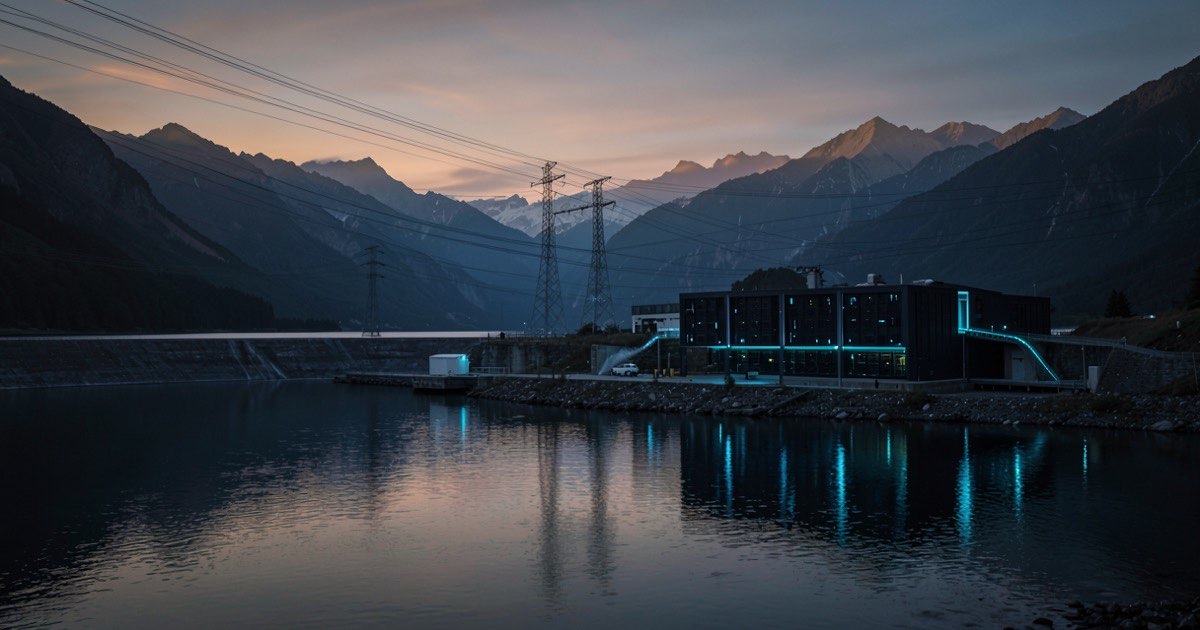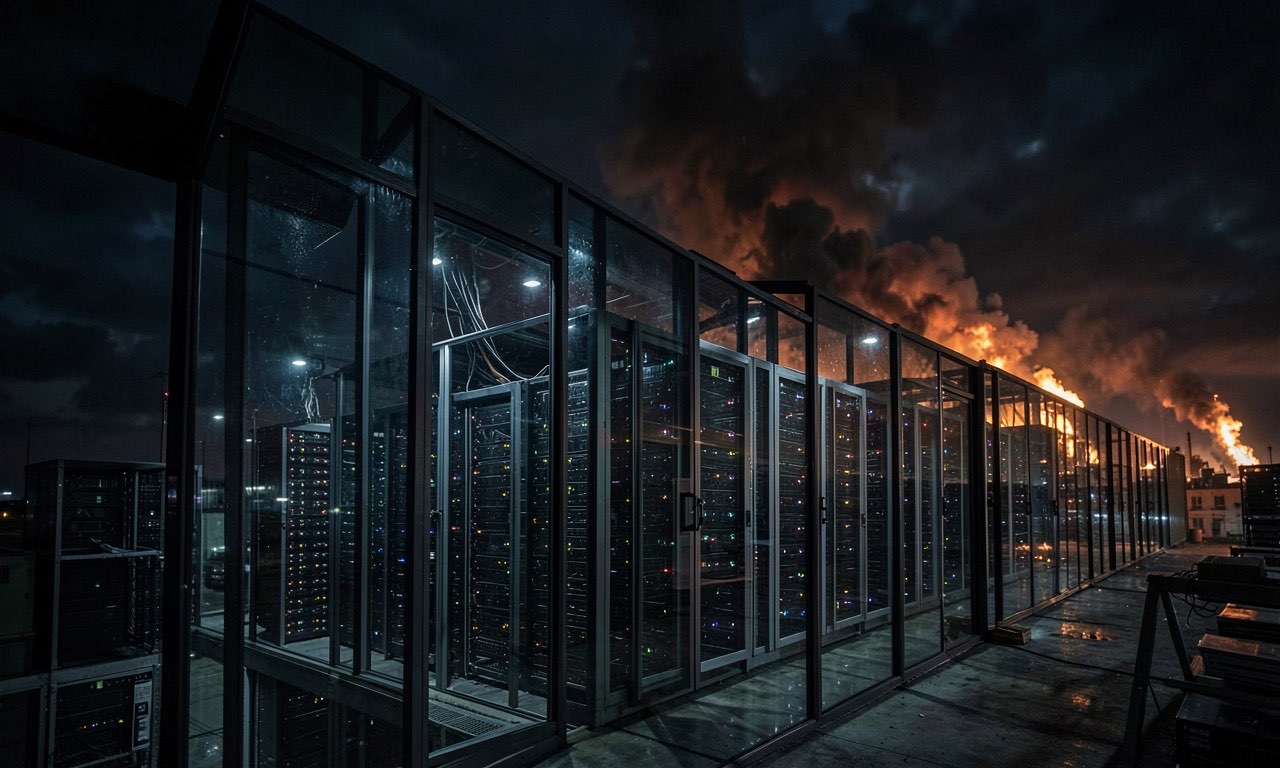
Iran’s Islamic Revolutionary Guard Corps claims it has destroyed Amazon’s central data infrastructure in Bahrain with cruise missiles. The claim, reported by Fars News on July 21, may be propaganda — but the doctrine behind it is real, and it reaches New Zealand.
What happened? The IRGC said it struck AWS infrastructure in Bahrain with “several cruise missiles” in retaliation for a US attack on Iran’s under-construction Darkhovin nuclear facility. This is not the first time — Iran hit AWS facilities in Bahrain and the UAE in March, knocking services offline. CNBC reports that the ceasefire between the US and Iran has collapsed, with 10 consecutive nights of US strikes on Iranian targets, oil above $90 a barrel, and Houthi militants declaring a maritime embargo against Saudi Arabia.
Here’s the detail that matters: The Register notes that AWS’s Bahrain region (me-south-1) has been offline for months — since the initial conflict in February. Iran may be claiming to “destroy” a facility that’s already been destroyed. But that’s not the point. The point is the doctrine.
🔍 THE BOTTOM LINE
Data centers are now strategic military targets. Iran has explicitly designated 18 US tech companies — including Amazon, Microsoft, Google, Nvidia, Intel, Cisco, Oracle, and Palantir — as legitimate targets, citing their support for US military operations. When cloud infrastructure becomes a military target, every country that depends on foreign-owned compute is exposed. New Zealand is heavily dependent on foreign-owned compute for AI workloads.
The Oil Crisis Analogy
When oil supply contracts during a conflict, the biggest consumers get priority. The US, China, and India secure their supply first. Small countries get squeezed out or pay a premium. We saw it in the 1970s oil crisis, in COVID vaccine distribution, in the semiconductor shortage.
The same logic applies to compute. If cloud capacity becomes scarce or contested — through physical attacks, military prioritisation, or geopolitical sanctions — the largest customers and the home country’s defence needs get served first. Small countries get rationed last.
It’s already happening in the Middle East. AWS waived all charges for UAE customers in March — because they also couldn’t serve them. Snowflake and Red Hat told customers to failover to other regions. Airbus is reportedly leaving AWS entirely. The businesses that got hurt weren’t US defence contractors. They were regional banks, startups, and government services in the Gulf. The small players got disrupted first.
The Doctrine Shift
Iran’s argument is straightforward: US tech companies support US military and intelligence operations. Amazon Web Services hosts Pentagon workloads. Microsoft Azure runs classified military networks. Google Gemini is deployed in Pentagon classified environments. Palantir’s Maven system is now core US military infrastructure. In Iran’s framing, if these companies are part of the war machine, their infrastructure is a legitimate target.
This is a doctrine shift with global implications. It doesn’t stop at the Middle East. Any country hosting US cloud infrastructure — Australia, Singapore, Japan, Germany — is now potentially in the crosshairs of any adversary that adopts the same logic. And the logic is contagious. If Iran can declare Amazon a military target, so can any future adversary.
What This Means for New Zealand
New Zealand has no sovereign AI compute infrastructure at scale. While data center investment is growing — including planned facilities in Southland and existing hosting capacity — there are no domestic GPU clusters designed for AI workloads at the scale businesses now require. Most NZ businesses running AI workloads use AWS Sydney (ap-southeast-1) or AWS Singapore. The country is heavily dependent on US-based cloud providers who could — under US law and by treaty obligation — be required to prioritise US government and military needs over a NZ business running its inventory on AWS.
The chain of risk is direct:
- Physical risk: If a Sydney data center became a target — and under Iran’s doctrine, it could theoretically be designated one — NZ businesses could lose access to their AI tools, customer data, and core systems. Not because NZ is targeted, but because we share infrastructure with a combatant nation.
- Prioritisation risk: Even without a strike, if the US military were to commandeer cloud capacity for defence or intelligence operations, commercial customers in smaller markets could be throttled. The same way oil gets diverted to military use during wartime.
- Data sovereignty risk: If NZ business data sits on US-owned infrastructure in Australia, and the US government were to invoke national security powers to access or restrict it, what is NZ’s legal position? Nobody has tested it. The answer is likely: not much we can do.
- Sanctions cascading: If the US sanctions a country and cuts off cloud access, any NZ business operating in or trading with that country could lose its infrastructure overnight. We’ve already seen this with US export controls on AI chips. Cloud access is the next potential vector.
The Government Gap
As we reported in May, half of APAC governments are building sovereign AI infrastructure. NZ’s blueprint didn’t even mention it. We also explored whether NZ could become a data center safe haven — geographically isolated, renewable-powered, politically stable. That idea looked speculative then. Bahrain makes it look urgent.
The questions the NZ government should be answering:
- Access guarantees: Should NZ negotiate bilateral agreements with the US and with cloud providers directly to guarantee commercial access during conflicts? Australia has defence procurement agreements that implicitly cover this. NZ doesn’t.
- Sovereign compute: Should the government fund a national GPU cluster or partner with a provider so critical AI workloads don’t depend entirely on a Sydney data center that could be deprioritised?
- Critical infrastructure classification: Should cloud services be classified as critical national infrastructure, like electricity and water? Because functionally, they are. A modern business without cloud access is as crippled as one without power.
- Data sovereignty laws: If NZ data sits on US-owned infrastructure in Australia, and the US government invokes national security powers over it, what are NZ’s legal rights? Currently unclear. Currently untested. Currently a risk.
The Treasury and MBIE haven’t publicly engaged with any of this. But the AI infrastructure question is arguably more urgent than it appears. It’s not about future risk — it’s about a conflict happening right now, with a doctrine that explicitly targets the infrastructure NZ depends on.
The Broader Pattern
This is not just about Iran. The US-Iran conflict is the current example, but the doctrine — cloud infrastructure as a military target — is permanent. Once established, it doesn’t go back in the box. Every future adversary now has precedent for targeting data centers. Every future conflict will include a cyber or kinetic component aimed at cloud infrastructure.
As we argued in The Sovereign AI Build, NZ has a genuine opportunity here. Renewable energy, political stability, geographic isolation, and a small enough scale to build sovereign compute without competing with superpower budgets. The Southland data center concept — powered by Manapōuri hydro, serving as a neutral safe haven for AI compute — is not a fantasy. It’s a hedge against exactly this kind of risk.
But hedges need to be built before the risk materialises. Bahrain shows what happens when they’re not.
Somebody’s Already Building
While the government hasn’t moved, someone in Nelson already has. Krupesh Desai, a NZ citizen living in Australia, is running a solar-powered AI inference server in Nelson — fine-tuned on his own methodology, embedded in a sovereign data governance platform. He built it through a network of like-minded people: a consulting group, a delivery team, and a sovereign-hardware partner in Nelson, all bootstrapped.
His words, from a LinkedIn exchange about sovereign AI, cut to the core of what’s at stake:
“The safe choice was only ever safe because nothing had gone wrong yet.”
“Inertia is the one you can’t out-work alone.”
“Direction at the top, capability at the bottom. That’s the appetite you mentioned, and it’s the missing piece.”
“Someone has to build, and someone has to be in the room while the rules get written.”
That last line is the point. Krupesh isn’t waiting for policy. He’s running real AI inference on NZ soil, powered by NZ sunlight, on his own terms. It’s not a government-scale initiative — but it doesn’t need to be. It proves the concept the government hasn’t engaged with: that sovereign AI compute is achievable in New Zealand, built by people who decided to start rather than wait. These are exactly the people the government should be talking to — practitioners already building, not consultants theorising about what might be possible. The gap isn’t capability. NZ has renewable energy, geographic isolation, and people willing to build. The gap is inertia.
Bahrain shows what happens when the safe choice stops being safe. Nelson shows what happens when someone stops waiting.
❓ FAQ
Did Iran actually destroy an Amazon data center? The claim is unverified. AWS’s Bahrain region has been offline since February, so Iran may be striking an already-destroyed facility. CNBC was unable to independently verify the strike. But the IRGC’s declared doctrine — designating US tech infrastructure a military target — is real regardless of whether this specific attack hit anything new.
Why does a Middle East conflict affect NZ? Most NZ businesses running AI workloads use cloud infrastructure owned by US companies (AWS, Microsoft, Google) hosted in Sydney or Singapore. If those providers were required to prioritise US military needs during a conflict, or if those data centers became targets, NZ could lose access to its AI tools and core business systems.
What is sovereign compute? Computing infrastructure — particularly GPU clusters for AI — that a country owns and controls within its own borders, not dependent on foreign cloud providers. Australia, Singapore, Japan, and most large APAC economies are investing in it. NZ currently has no equivalent at scale, though data center investment is growing.
Is NZ data at risk on foreign cloud? Legally, it’s unclear. If NZ business data sits on US-owned infrastructure in Australia, US national security powers could potentially give the US government access or control over that data. NZ has no tested legal framework to prevent this.
🔍 THE BOTTOM LINE
Iran just made the case for sovereign AI infrastructure louder than any policy paper ever could. Data centers can now be designated military targets. NZ has no sovereign AI compute at scale, no access guarantees, no critical infrastructure classification for cloud, and no government plan. But someone in Nelson is already running solar-powered AI inference on his own terms. The gap isn’t capability — it’s inertia. Bahrain shows what happens when the safe choice stops being safe. The government doesn’t need to build a superpower-scale AI industry — it needs to ensure that when the next conflict potentially contracts global compute supply, New Zealand isn’t the last in line.
📰 Sources
- CNBC — Iran says it attacked Amazon infrastructure in Bahrain
- The Register — Iran says it’s struck offline AWS facility in Bahrain… again
- IRNA — Iranian missiles destroy US firm Amazon’s data center in Bahrain
- Times of India — Iran’s IRGC claims it has destroyed Amazon’s central data hub in Bahrain
- Data Center Dynamics — IRGC claims fresh hit on AWS data center in Bahrain
- Tom’s Hardware — Amazon data center in Bahrain struck by Iranian cruise missiles
- Euronews — Iran’s IRGC claims attack on Amazon’s main data hub in Bahrain
- CNBC — Iran threatens Nvidia, Apple and other tech giants with attacks (April 2026)
- Wired — Iran Warns 18 US Tech Firms Will Be Targeted
— CJ Murden, editor of Singularity.Kiwi. Former digital technologies teacher, author of AI-focused books. Writing with a New Zealand focus.