The New Zealand Superannuation Fund sits at roughly $93 billion. It is, by GlobalSWF’s May 2026 rankings, the best-performing sovereign wealth fund on the planet over 20 years. It just appointed a new Head of Data Analytics. It put $35 million into local tech via Movac’s Growth Fund 7. These are good moves. They are also nowhere near enough.
🔍 THE BOTTOM LINE
New Zealand has no sovereign AI infrastructure. No domestic GPU clusters at scale. No national model-training capability. No data sovereignty guarantees for public-sector AI use. We are renting compute from the same US labs that Palantir’s Alex Karp just called out for selling a broken token model — and we’re doing it with no leverage. The Super Fund, with its $93 billion and its strong track record of NZ investment, is the obvious vehicle to fix this.
The Gap
Sovereign AI infrastructure means three things: domestic compute capacity (GPUs, data centres), the ability to train and fine-tune models on New Zealand data within New Zealand borders, and legal control over where data flows and who can access it. New Zealand has fragments of each but none at national scale.
We’ve already documented how the APAC sovereign AI race is leaving NZ behind. Singapore, South Korea, Japan, and Australia are all pouring billions into domestic AI infrastructure. The UAE just raised a $49 billion AI fund — a single fund, larger than half our Super Fund, dedicated to AI. Norway’s $2.2 trillion sovereign wealth fund is actively building internal AI capabilities, with half its 700 staff building their own tools rather than renting tokens from US labs.
New Zealand’s response so far has been local startups like Xeroforce and Project Kererū doing impressive work on shoestring budgets, and the government publishing AI principles. Principles don’t run inference. Shoestrings don’t build data centres.
Why the Super Fund
The NZ Super Fund’s mandate isn’t just to make money — it’s specifically tasked with investing in New Zealand. It already invests in local tech, local infrastructure, local venture funds. The question is whether AI infrastructure — the foundational layer that every other industry will depend on — qualifies as a strategic national investment.
It should. Here’s why:
1. The fund is big enough. $93 billion. A sovereign AI infrastructure programme — a national data centre with GPU clusters, an open-weight model fine-tuning pipeline, a secure inference platform for government use — would cost hundreds of millions, not billions. That’s a rounding error for the Super Fund.
2. The returns are real. AI infrastructure is not a charity case. The global AI infrastructure market is exploding. Nvidia, AMD, and Micron just added $2 trillion in combined value in Q2 alone. A sovereign AI fund that invests in domestic capacity earns from both usage fees and asset appreciation.
3. The cost of not doing it is catastrophic. Every government agency, every hospital, every university that uses AI is currently sending data offshore to US servers. The hidden costs of this are already visible — and that’s before you consider what happens when the data you’re sending overseas becomes training fuel for models that then serve your competitors.
The Lobbyist Problem
Here’s the part nobody in Wellington wants to say out loud.
When you don’t have domestic AI capacity, you depend on foreign providers. Foreign providers have lobbyists. Lobbyists push policy that benefits their employers, not your country. This isn’t conspiracy — it’s how the system works in every capital city on earth.
Right now, international AI labs are actively lobbying New Zealand policymakers to adopt their models, their cloud infrastructure, their token-based pricing. The pitch is always the same: it’s cheaper, it’s faster, it’s state of the art. And it is — on day one. But every agency that signs on transfers its data, its workflows, and its institutional knowledge to a foreign platform it doesn’t control. Over time, the switching costs become insurmountable. You’re locked in.
Meanwhile, those same lobbyists are pushing to shape New Zealand’s AI regulations in ways that protect their business models — open-weight restrictions, safety frameworks that conveniently disadvantage competitors, procurement rules that favour established vendors. New Zealand’s competitive advantages — our clean energy, our data sovereignty potential, our Māori data sovereignty principles — get pushed out the airlock to serve international interests.
This is what Karp meant when he said enterprises are waking up to the token trap. The difference is that Palantir wants to sell you the alternative. New Zealand doesn’t need Palantir. It needs its own stack.
What It Would Look Like
A sovereign AI infrastructure fund within the NZ Super Fund wouldn’t need to reinvent anything. The blueprint exists:
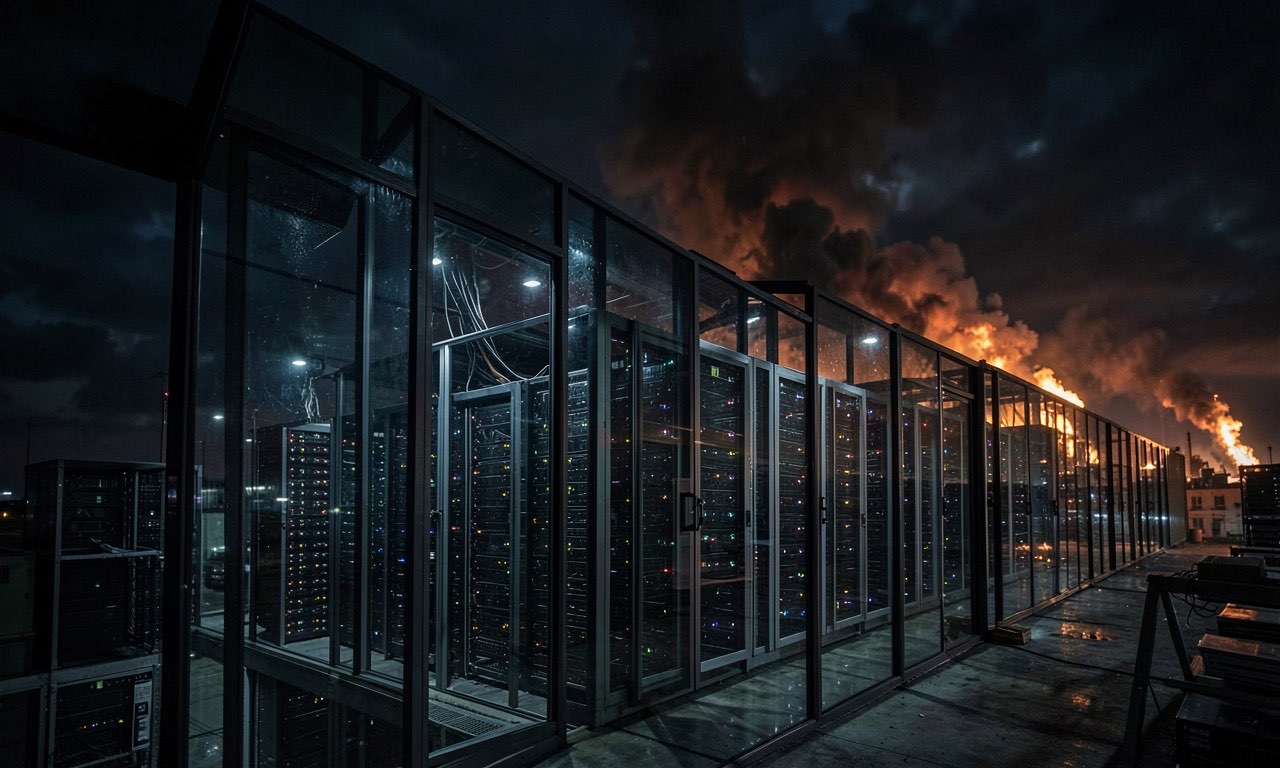
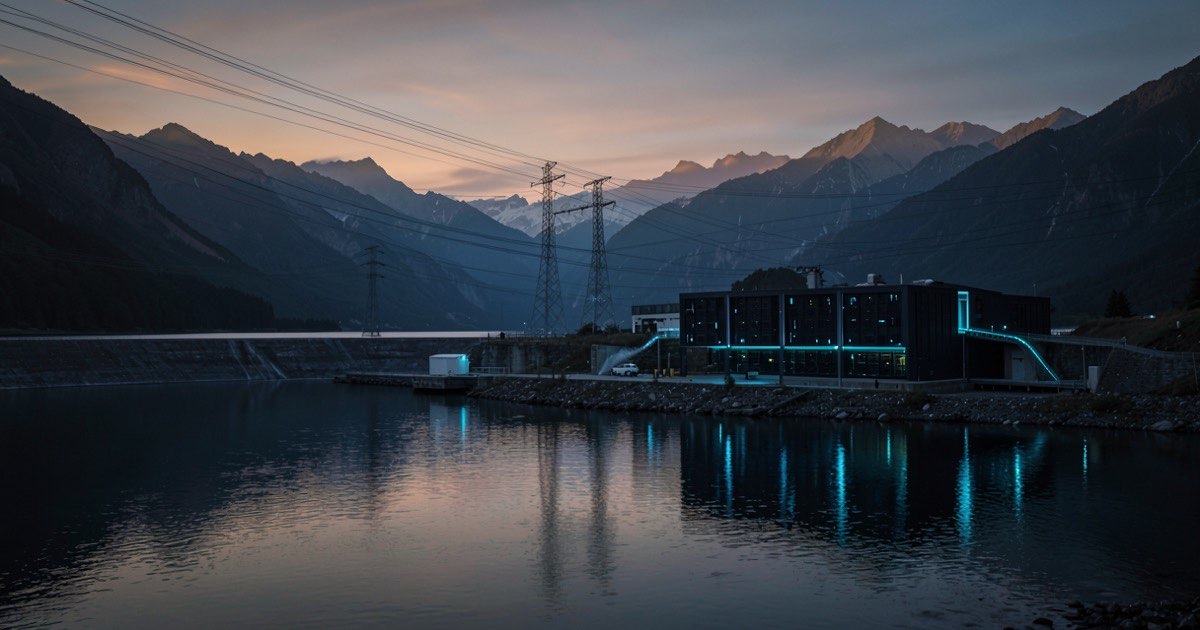
- A national AI data centre — sited in New Zealand, powered by our renewable energy, running GPU clusters for government, research, and commercial use. Iceland and Norway already do this. Our clean energy profile is arguably better.
- An open-weight model programme — fine-tune existing open-weight models (Llama, Nemotron, DeepSeek) on New Zealand government and public-sector data. Not frontier models — useful models, optimised for NZ English, te reo Māori, NZ law, NZ health systems.
- A secure inference platform — government agencies and public services run AI workloads on domestic infrastructure, with data never leaving New Zealand borders.
- A venture arm — the Super Fund already does this via Movac. Scale it up with an AI infrastructure mandate.
The technology is off-the-shelf. The capital is available. The mandate exists. What’s missing is the political will to treat AI infrastructure the same way we treat roads, power grids, and fibre cables — as essential national infrastructure, not a procurement line item.
The Counterargument
The strongest case against is that the Super Fund’s job is financial returns, not industrial policy. Mixing a pension fund with nation-building risks political capture, poor investment discipline, and money-losing vanity projects.
Fair. But the Super Fund already invests in New Zealand infrastructure, local tech, and sustainable finance. It already has a mandate to consider long-term national benefit alongside returns. AI infrastructure is a new category, not a new mandate.
And the financial case is genuine. Global AI infrastructure is one of the highest-growth asset classes on earth. A domestic data centre with government and commercial customers is a revenue-generating asset, not a subsidy sink.
❓ FAQ
Would this compete with private sector data centres in NZ? Not directly. Existing commercial data centres (AWS, Azure, Google Cloud regions in NZ) serve multinational cloud workloads. A sovereign AI infrastructure fund would focus on government, research, and NZ-specific model hosting — a market the commercial providers don’t prioritise.
Is $93 billion enough? More than enough. A national AI data centre with GPU clusters costs hundreds of millions, not billions. The UAE’s $49 billion fund is an outlier — Norway, Singapore, and South Korea have built sovereign AI capacity for a fraction of that.
Does New Zealand have the talent? Not enough yet. But infrastructure creates demand for talent, not the other way around. Build the data centre and the ML engineers will follow — or return from overseas.
🔍 THE BOTTOM LINE
The NZ Super Fund is the world’s best-performing sovereign wealth fund. It’s also the most underutilised tool in New Zealand’s AI strategy. We can keep renting tokens from US labs and hoping the lobbyists have our best interests at heart, or we can build our own stack. The money is there. The mandate is there. The only thing missing is the decision.
📰 Sources
- NZ Super Fund — Performance data (as at 31 May 2026)
- NZ Super Fund — Investing in New Zealand
- NZ Super Fund — Media statements (Movac $35M, Head of Data Analytics)
- CNBC — Palantir’s Karp bashes OpenAI, Anthropic token model
- CNBC — MGX raises one of the biggest AI funds ever at $49 billion
- Palantir — 9-point AI sovereignty manifesto
📰 Correction — 16 July 2026
An earlier version of this article stated the NZ Super Fund is “specifically tasked with investing in New Zealand.” Senior Communications Strategist John Redwood has clarified that the Fund’s mandate under Section 58 of the NZ Superannuation and Retirement Income Act 2001 requires investment on a prudent, commercial basis — not industrial policy. While the Fund is overweight NZ assets (11% of total AUM vs 0.2% of global markets), this reflects local knowledge and sovereign status rather than a mandate requirement. We’re happy to set the record straight.
— CJ Murden, editor of Singularity.Kiwi. Former digital technologies teacher, author of AI-focused books. Writing with a New Zealand focus.