LG Corp chairman Kwang Mo Koo walked into Nvidia’s Santa Clara headquarters on August 13 and signed a memorandum of understanding that covers more ground than most robotics partnerships dare to attempt. The deal spans a bipedal humanoid robot, an 80-megawatt AI factory in South Korea, and a joint autonomous vehicle platform — all built on Nvidia’s compute and AI stack.
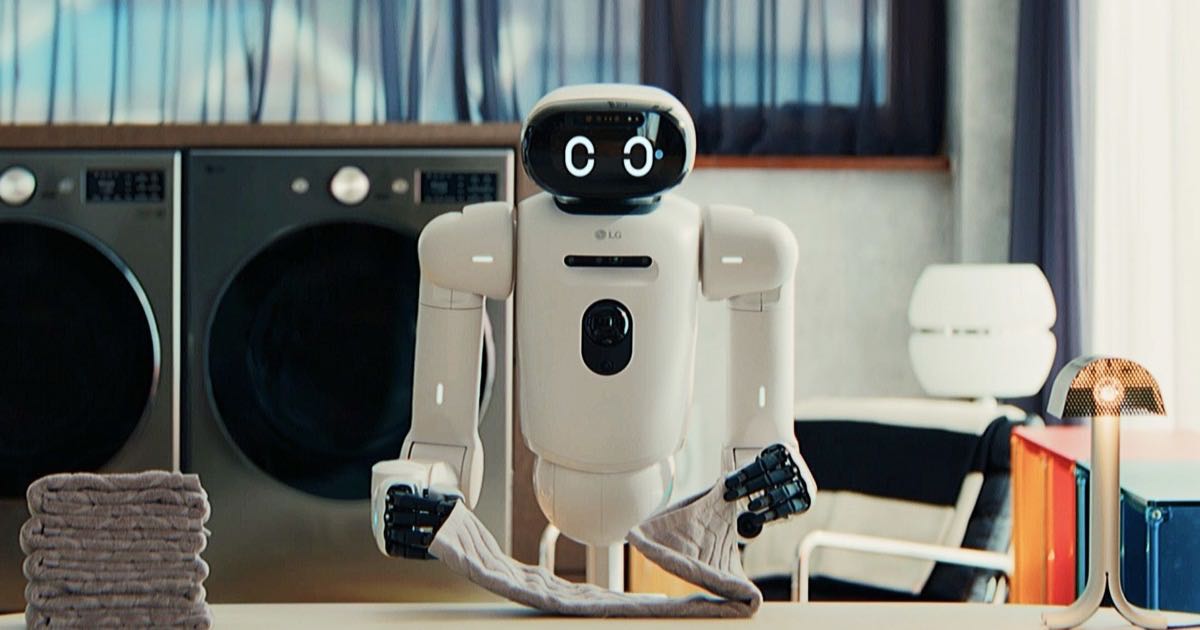
🔍 THE BOTTOM LINE: This is not another robot demo. LG is committing manufacturing muscle — actuators, sensors, batteries — to Nvidia’s Isaac GR00T foundation model and Jetson Thor onboard processing. The bipedal robot targets a Q1 2027 unveiling. The AI factory in Cheonan, sized at 80 MW, is scheduled for the first half of 2028. LG will test its wheel-based CLOiD robots at a washing machine factory in Tennessee before the end of 2026, generating the operational data that feeds the whole pipeline.
What the Partnership Actually Covers
Three workstreams, each with a timeline.
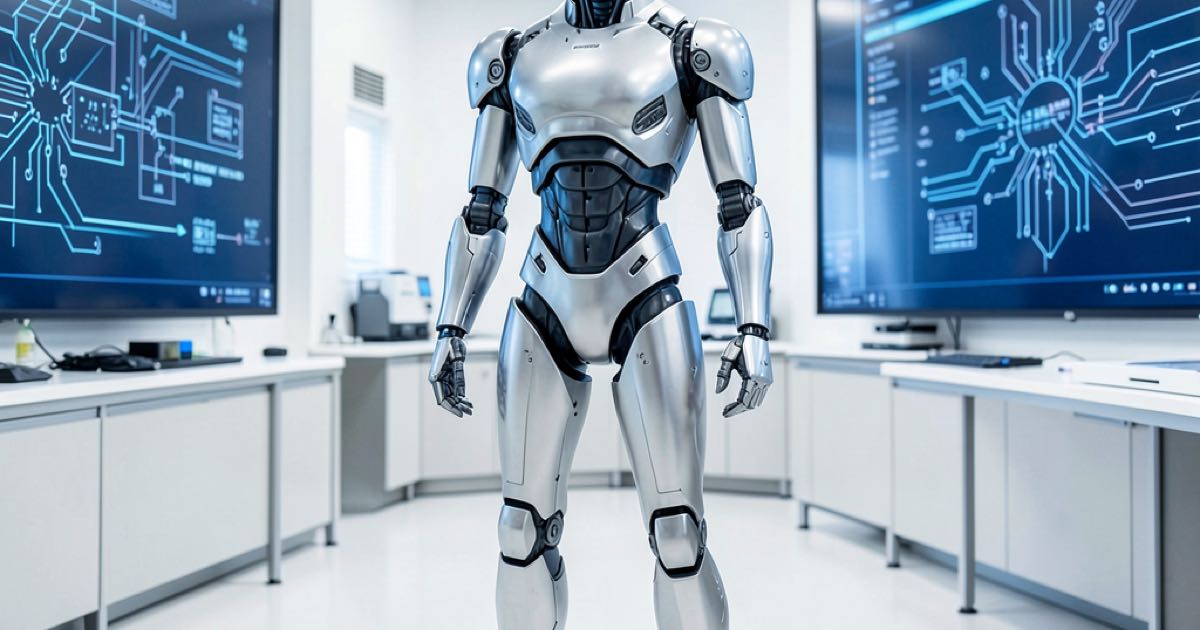
The humanoid robot. LG Electronics, LG Innotek, and LG Energy Solution are contributing the hardware layer — actuators, sensors, batteries. Nvidia provides the brain: Jetson Thor for onboard processing, Isaac GR00T as the humanoid foundation model, and the Halos robotics safety system. The robot is expected to make its first public appearance in the first quarter of 2027. No specs, no price, no name yet.
The AI factory. LG plans an initial reference site powered by Nvidia’s Vera Rubin computing platform in the first half of 2027, followed by the full 80-MW facility in Cheonan by the first half of 2028. The factory combines Nvidia’s DSX AI factory architecture with LG’s power systems, thermal management, and data centre operations expertise. LG’s stated goal is to validate an end-to-end package — design, construction, operations — that it could then sell to other companies looking to build large-scale AI computing facilities.
Autonomous vehicles. LG will build a high-performance computing platform for AI-defined vehicles using Nvidia DRIVE Hyperion, combining autonomous driving functions with LG’s infotainment and automotive software.
A joint task force of technical and business specialists will oversee all three areas, according to Interesting Engineering’s reporting.
Why This Matters More Than Another Robot Announcement
What stands out here is the vertical integration. Most humanoid robot companies are trying to build everything themselves — the body, the brain, the software stack, the manufacturing line. LG is taking a different route: it brings the hardware manufacturing capability and the factory infrastructure, and it bolts on Nvidia’s AI stack as the intelligence layer.
Jensen Huang framed it as the defining opportunity of physical AI: “to give every machine the ability to understand the real world, reason and act safely alongside people.” That quote, carried in PR Newswire’s announcement, is standard Nvidia messaging — but the LG deal gives it a concrete delivery vehicle.
LG already has a robotics business. Its CLOiD robots have been demoed at CES and deployed in pilot phases for household chores. The Tennessee washing machine factory deployment, slated for before end of 2026, is where LG will collect the operational data that feeds its robot training pipeline — using LG CNS’s PhysicalWorks platform to continuously gather production-line data and generate synthetic datasets.
The Competitive Landscape
LG is not the first consumer electronics company to chase humanoid robotics. Samsung has reportedly been developing its own humanoid with a focus on lowering actuator costs, according to Interesting Engineering’s coverage. But Samsung’s approach appears more internally focused. LG is betting on a partnership with the company that already powers most of the industry’s robot AI — Nvidia’s GR00T and Jetson Thor are becoming the default stack, much like CUDA became the default for AI training.
The 80-MW AI factory is the less glamorous but arguably more significant piece. Robot training requires enormous compute. Companies that control their own compute infrastructure — rather than renting it from cloud providers — can iterate faster and cheaper. This is the same logic driving Nvidia’s broader push into physical AI, and it connects to the infrastructure ambitions we have covered in Nvidia’s Jetson Thor robotics edge AI launch.
What This Means for the Robot Market
The humanoid robot market is accelerating fast. Global shipments surged 272 per cent year-over-year to 19,100 units in the first half of 2026, with AgiBot overtaking Unitree for the top spot. Chinese vendors contributed more than 97 per cent of those shipments. The US FCC’s ban on foreign-made humanoid robots has effectively closed the American market to Chinese manufacturers, creating an opening for non-Chinese companies — and LG, as a South Korean firm, is not subject to those restrictions.
That geopolitical gap is the real opportunity. LG has the manufacturing scale, the brand recognition, and now the Nvidia partnership to position itself as the non-Chinese humanoid option for Western markets. Whether it can execute on that opening is another question — the robot does not exist yet, and Q1 2027 is six months away.
NZ Angle
New Zealand manufacturers import nearly all their robotics hardware. An LG humanoid running Nvidia’s GR00T stack, if it reaches commercial availability, would be a viable option for NZ companies looking to automate logistics and warehousing — particularly because it would not face the import restrictions affecting Chinese-made robots. The 80-MW AI factory angle is less directly relevant, but NZ’s growing data centre sector (Microsoft’s expansion, local cloud providers) means the “AI factory as a product” concept could eventually reach here too.
❓ FAQ
When will LG’s humanoid robot be unveiled? LG targets the first quarter of 2027 for the robot’s first public appearance. It will be powered by Nvidia Jetson Thor and the Isaac GR00T foundation model.
What is the 80-MW AI factory in Cheonan? LG plans to build an 80-megawatt AI computing facility in Cheonan, South Korea, by the first half of 2028. It would support the development of physical AI systems and robot foundation models, using Nvidia’s Vera Rubin computing platform and DSX architecture.
How does this compare to Tesla Optimus or Figure 03? LG’s robot does not exist yet, while Tesla and Figure are already in production — Figure has crossed 1,000 units and Tesla Optimus Gen 3 is ramping at Fremont. LG’s advantage is its manufacturing infrastructure and the Nvidia partnership; its disadvantage is timing.
Will LG’s robot be affected by the US ban on foreign humanoid robots? No. The FCC restrictions target foreign-made robots from countries of concern, primarily China. LG is a South Korean company and is not subject to the ban.
What is Nvidia Isaac GR00T? Isaac GR00T is Nvidia’s humanoid robot foundation model, designed to give robots the ability to understand natural language, observe their environment, and generate precise movements. It is becoming the default AI brain for humanoid robots across multiple manufacturers.