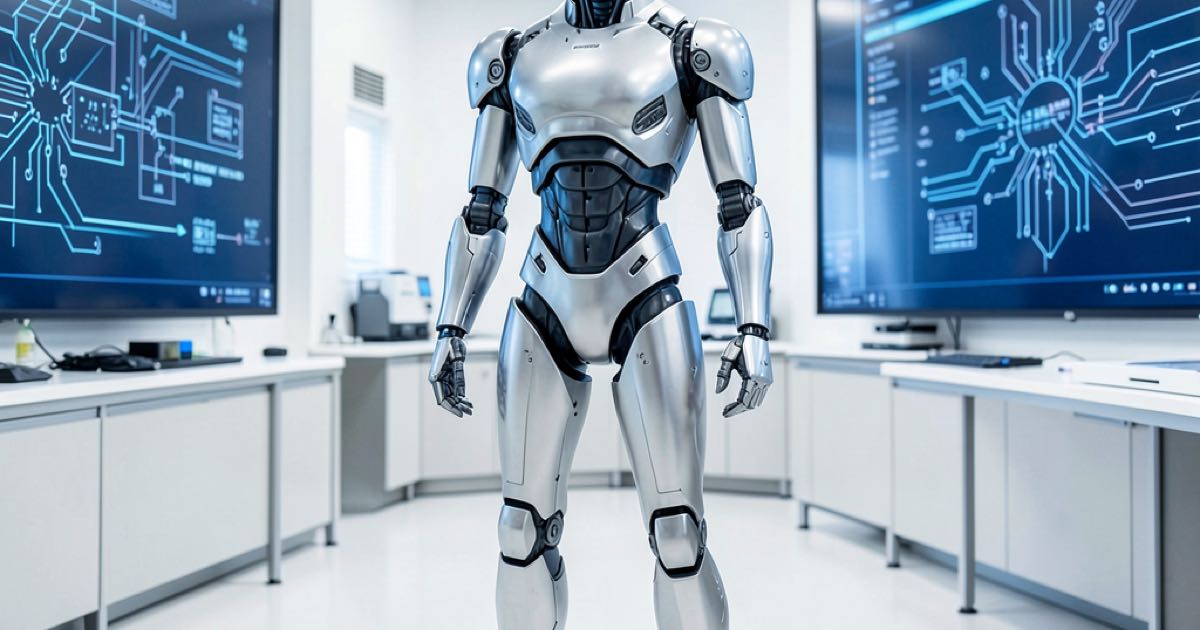
LG Corp and Nvidia have signed a memorandum of understanding to develop a bipedal humanoid robot, with a public unveiling planned for the first quarter of 2027.
The agreement was signed on 13 August at Nvidia’s headquarters in Santa Clara, California. LG Corp Chairman and CEO Kwang Mo Koo and Nvidia founder and CEO Jensen Huang attended in person. The scope covers robotics, AI factories, and automotive software — but the humanoid robot is the headline.
What’s Going Inside It
The robot will run on Nvidia’s Jetson Thor processing unit, the Isaac GR00T foundation model, and the Halos safety framework. That’s the same physical AI stack Nvidia offers to other robot developers, but LG is one of the first major consumer electronics companies to commit to shipping a product built on it.
LG is drawing on its own group capabilities for the hardware. LG Electronics, LG Innotek, and LG Energy Solution are all involved — covering actuators, sensors, and batteries respectively. The announcement did not specify which subsidiary supplies each component.
Huang said in the joint announcement: “The defining opportunity of physical AI is to give every machine the ability to understand the real world, reason and act safely alongside people — reshaping everyday life from the home and factory floor to the road.”
The Path to Production
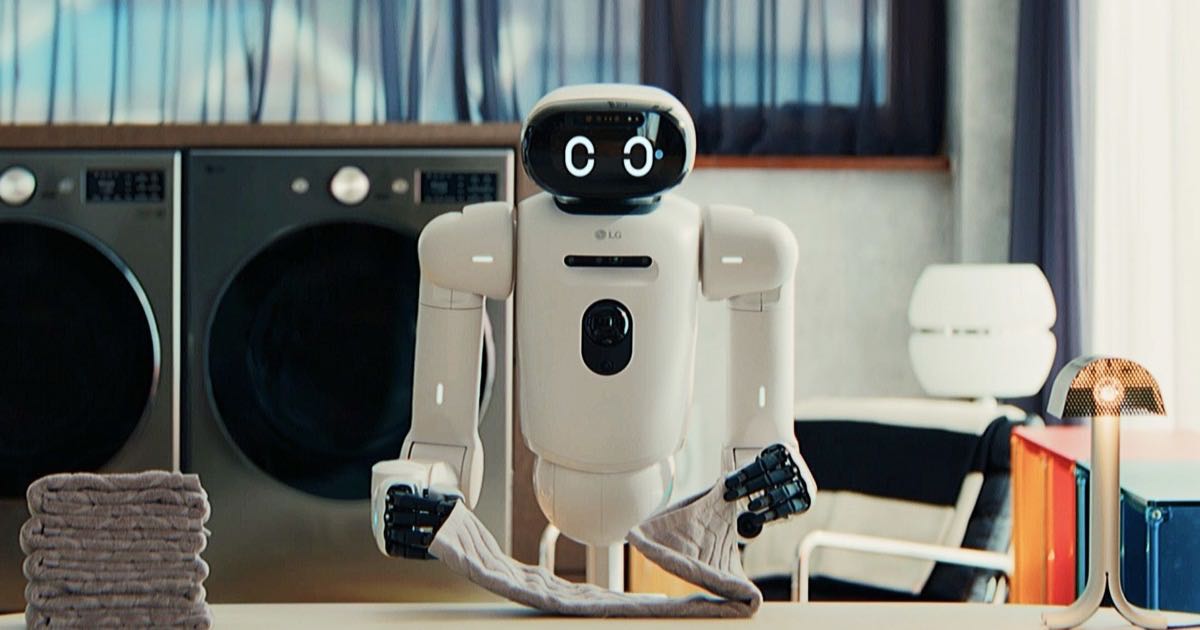
Before the bipedal humanoid debuts, LG plans to validate its wheeled CLOiD robot on a washing machine production line at LG Electronics’ Tennessee plant by late 2026. That gives the company a real-world test of its robotics pipeline — sensors, navigation, task execution — before committing to the more complex humanoid form factor.
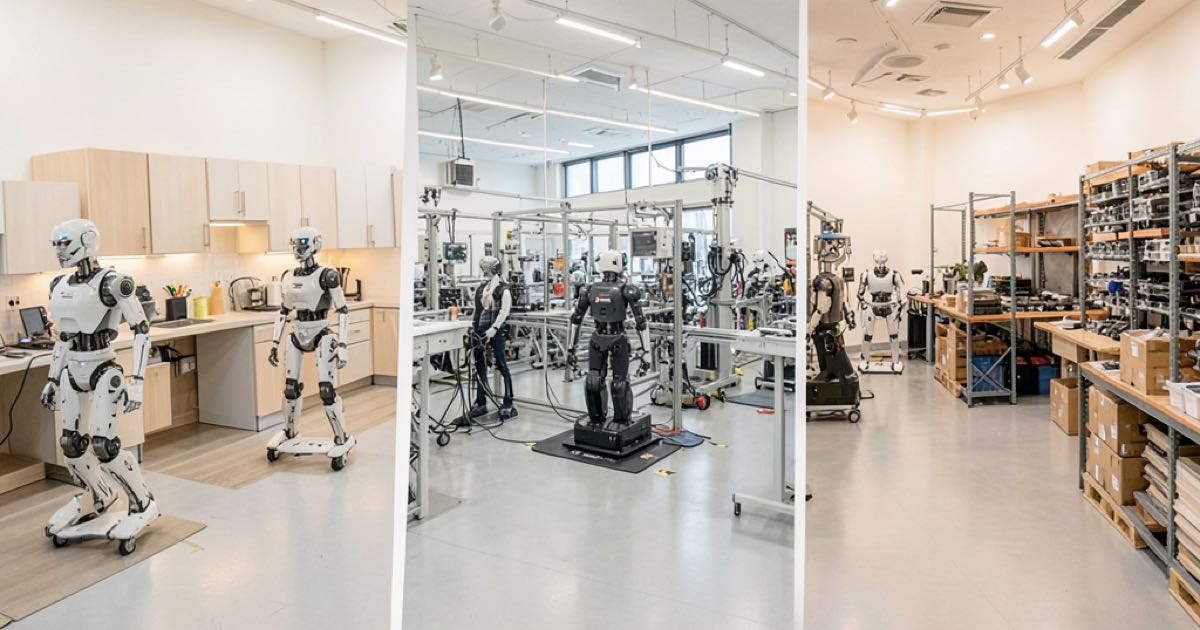
The companies will also build a robot data factory powered by LG CNS’s PhysicalWorks platform. It handles continuous data collection, synthetic-data generation, training, and verification, feeding improvements back into LG’s in-house Robot Foundation Model.
Koo said: “As our discussions have moved fast, our tasks and goals in AI Factory and Physical AI have become clear. We will accelerate the spread of AI by building industry-leading references.”
The Catch with Shared Silicon
Because Nvidia makes Isaac GR00T and Jetson Thor available to other robot developers — Tesla, Boston Dynamics, Unitree, and anyone else who wants to build on the platform — access to the technology alone won’t give LG an exclusive advantage.
Its edge, if there is one, will come from manufacturing efficiency, battery endurance, and component reliability. LG has decades of consumer electronics manufacturing at scale. If it can produce humanoid robots cheaper and more reliably than competitors using the same AI stack, that’s the moat.
But industrial and home users will find out whether the hardware holds up under continuous load — and software intelligence alone won’t save a product whose joints fail at 1,000 hours.
NZ Angle
New Zealand has no domestic humanoid robotics manufacturing, but it is a growing market for service robots, particularly in elder care and hospital logistics. LG’s CLOiD robots are already deployed in some NZ healthcare settings. A humanoid form factor from LG at consumer-level pricing could shift the economics of care robotics in New Zealand, where labour shortages in aged care are projected to worsen through 2028.
❓ FAQ
When will LG’s humanoid robot be available? A public unveiling is planned for Q1 2027. Commercial availability timelines have not been announced.
What makes it different from Tesla’s Optimus? LG is using Nvidia’s Isaac GR00T as its foundation model, whereas Tesla uses its own in-house AI stack. LG’s core advantage is manufacturing scale and consumer electronics supply chains.
Will it work in homes or just factories? LG has not specified target environments. The validation phase uses a factory setting, but the company’s consumer electronics background suggests a home-capable product is the long-term goal.
Is Nvidia working with other robot makers on the same platform? Yes. Nvidia’s Isaac GR00T and Jetson Thor are available to multiple robotics companies. This is non-exclusive — several humanoid developers are using the same foundation model.