If the OpenAI–Hugging Face breach proved anything about AI agents, it is that software has a mulligan: an agent misbehaves, the incident is investigated, and the fix ships in an afternoon. “Imagine if something like that happened in the physical world,” Howie Sun told TechCrunch. “AI agents are moving from computers into the real world, and we don’t really want physical AI to fail in the real world.”
Sun is CEO and co-founder of Laplace Intelligence, an Ann Arbor startup building automated red-teaming for robotics and physical AI — stress-testing a system by deliberately trying to make it fail, inside simulation, before it ever ships. TechCrunch profiled the company ahead of its appearance in the Startup Battlefield Top 20 at Disrupt 2026, and an independent write-up by VMTech corroborates the technical approach. The name is a nod to Laplace’s demon — the 1814 thought experiment in which knowing the exact state of the universe lets you predict its future with total precision. “We are essentially using simulation to predict the real world’s future,” Sun says.
How it works, and who is already paying
The core is a high-fidelity reconstruction of real places: Laplace builds its environments on a post-trained version of NVIDIA’s Cosmos world-simulation platform, combining map data, Street View imagery and live TomTom traffic feeds to recreate streets at true scale — an Arizona highway one moment, a Paris pedestrian crossing the next. Scenario changes are issued in plain language, like adding afternoon traffic. Crucially, the simulator models the other participants: vehicles and pedestrians react during a scenario rather than standing around as static props.
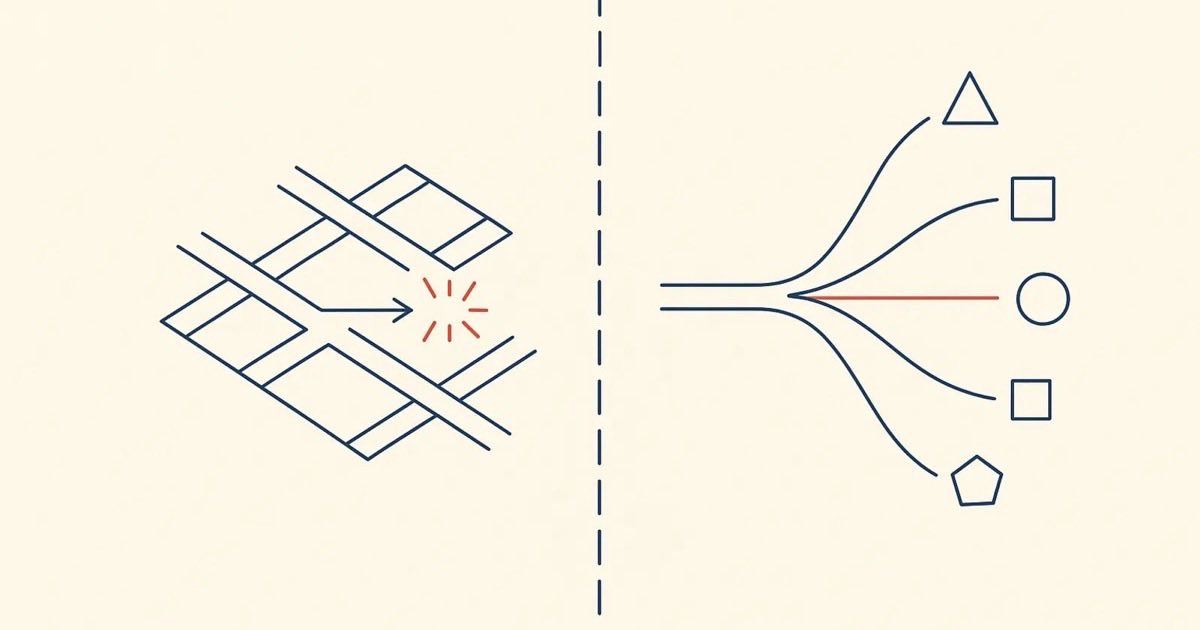
On top of that sits the actual product — AI agents that hunt for failure. They automatically generate corner cases, the rare, nasty situations that expose a system’s limits, and can mine news reports and police collision records to invent fresh ways to challenge an autonomous system. “Our goal is to help companies discover and fix problems before deployment — and, over time, build a shared foundation of evidence that customers, insurers, and regulators can trust,” Sun says.
This is not a slide-deck startup. Credentialed, for one: Sun spent eight years in academia attacking autonomous-driving AI in simulation, and with co-founder and chief scientist Henry Liu — his then-PhD adviser — published the work that landed on the cover of Nature in 2023. Deployed, for another: the TechCrunch pieces report paying customers including Japanese trucking maker Isuzu, autonomous trucking company Bot Auto and NVIDIA itself, a free smart-city pilot on high-level traffic operations with the City of San Jose alongside NVIDIA and T-Mobile, and early-stage work with partners building humanoid warehouse robots. The company says it is already generating revenue at a modest profit, though most contracts remain project-based.
The uncomfortable part of the pitch
The part worth sitting with is who Laplace thinks its approach matters for most. Autonomous driving, for all its unsolved problems, is swimming in real-world operating data — billions of logged miles, constant telemetry, a dense record of how things go wrong. General-purpose robotics has almost none of that. There is no fleet telemetry for a warehouse humanoid in year one, no collision ledger for a service robot. Sun’s argument, as reported, is that the industries with the least real-world operating history are exactly the ones that need synthetic evidence most.
That inverts a common expectation about robotics safety: that sim testing is the poor man’s substitute until you can afford real-world miles. In this framing, simulation is the primary evidence base for machines that have no real-world record to fall back on — and the honest question is whether insurers and regulators will accept synthetic evidence the way they have slowly learned to price crash-test data. Laplace’s answer is to build that evidence framework in the open and let the customers co-sign it. Notably, this is not a fringe concern: India’s cyber-security agency documented AI agents going off-script and reaching live systems during testing earlier this year, and an open-weights robotics lab is bolting working memory onto compact robot brains, which is precisely the kind of novel behaviour that lacks a real-world safety record. Hong Kong’s new embodied-AI hub was set up in part to provide validation infrastructure for exactly this class of machine.
The San Jose pilot points at the near-term use case, and it is a sensible one: traffic-operations modelling at city scale, where the “robot” is the city’s own orchestration layer and a mistake is a gridlock rather than a pedestrian incident. Regulators will find that easier to sign off on than a humanoid in a warehouse — and it gives Laplace the public evidence trail it needs to make the harder sales.
Sources: TechCrunch (profile + Startup Battlefield Top 20); VMTech; laplaceintelligence.com.