Hong Kong has opened its first platform dedicated to training, validating and deploying embodied AI and humanoid robots in real settings, according to a GlobeNewswire release carried by the Manila Times. The Embodied AI International Applications Hub was launched on 15 October by FLAIR, the Hong Kong Industrial Artificial Intelligence and Robotics Centre operating under the Hong Kong Productivity Council — and local maker Rice Robotics joined as one of its first technology partners, launching a wheel-based education humanoid called TOMO the same day.
🔍 THE BOTTOM LINE
A government-backed validation centre inviting startups to train robots in real scenarios is the quiet infrastructure behind every serious robotics economy — Hong Kong now has one, and Rice Robotics is its first named education-and-manufacturing tenant. The robots themselves are modest: TOMO is a wheeled classroom companion, not a warehouse worker. The structural move — a city standardising where and how humanoids get tested before they meet the public — is the real story.
What the Hub Actually Is
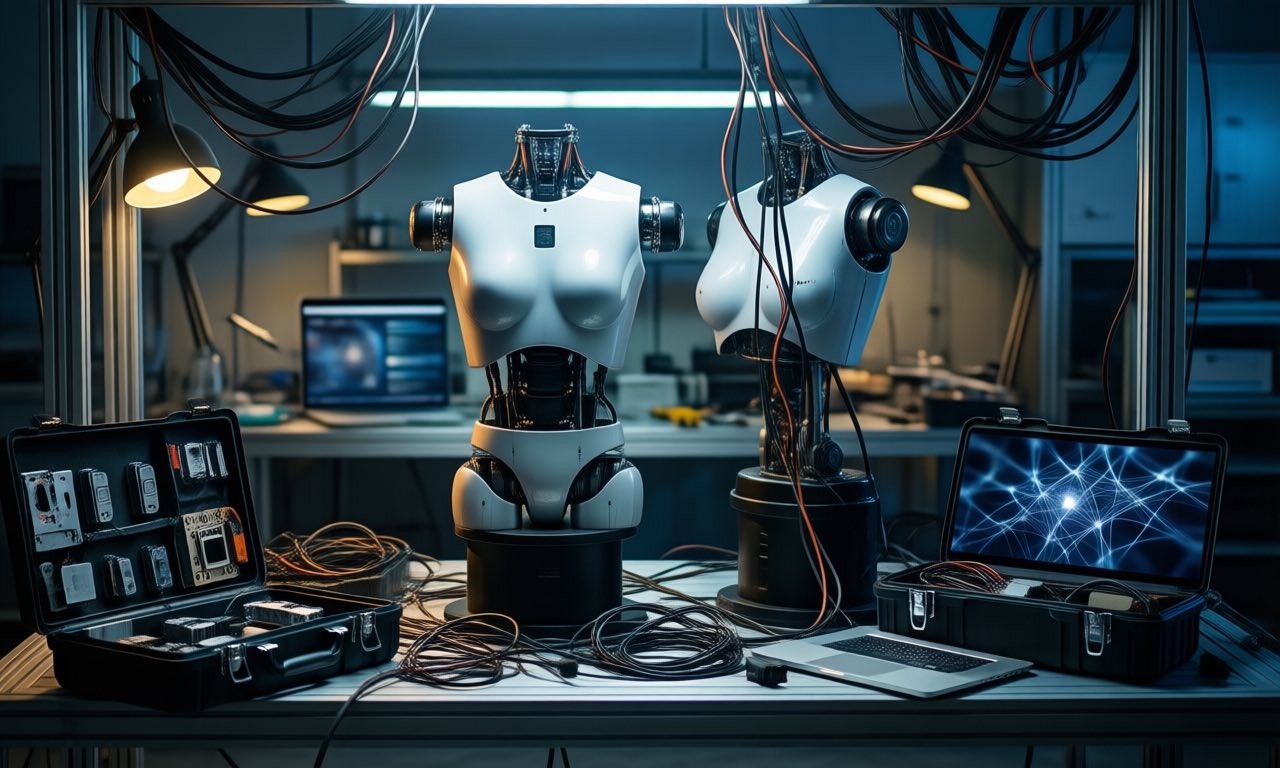
FLAIR sits under the Hong Kong Productivity Council, a statutory body, which makes this state-adjacent infrastructure rather than a private accelerator. Per the founding announcement, the Hub is Hong Kong’s first platform dedicated to the training, validation and real-world deployment of embodied AI and humanoid robotics — the three stages where most robot startups stall after the demo video.
Rice Robotics (Hong Kong) Limited, an indirectly majority-owned joint venture of Hong Kong-listed Axonex AI Group, entered the first batch of technology partners with an agreement covering real-world training and scenario validation, initially in education and manufacturing. The division of labour matters: Rice supplies its robotic platform for development and demonstrations in Hong Kong, while FLAIR contributes scenario-based training, model development, testing and technology validation — the unglamorous certification work that turns a working prototype into a deployable product.
Damian Chan, chairman and CEO of Axonex AI, called the collaboration “an important step in advancing the real-world training and validation of humanoid robots and embodied AI in Hong Kong.” Victor Lee, founder of Rice Robotics, was blunt about why startups want in: the partnership provides “a valuable opportunity to test and refine our products in real-world settings,” accumulating practical data alongside manufacturers, researchers and end users.
TOMO: A Classroom Robot With Modest, Credible Ambitions
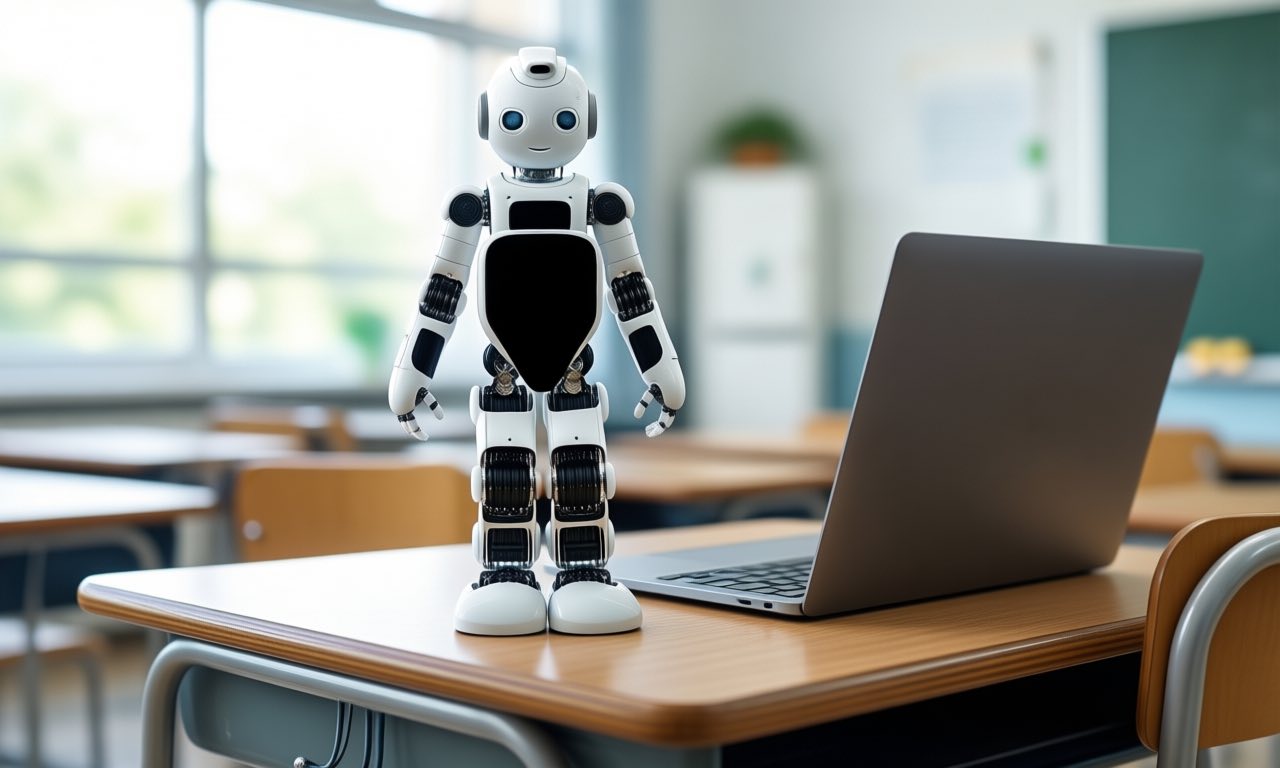
Launched alongside the hub partnership on 16 October, TOMO is a wheel-based humanoid designed primarily for education — the name borrows “tomodachi,” Japanese for friend. The hardware spec, as listed in the release: an expressive face, an interactive chest display, and two-finger parallel grippers. The software ambitions are correspondingly practical — interactive reading, STEM education, programming lessons and supervised robotics exploration, plus the schoolhouse chores of light book-handling and incident alerts.
That places TOMO in the fast-crowding education-humanoid bracket this site has tracked all year, from Faraday Future’s $2,490 Nova and $299 Mini launched with a bundled curriculum to the classroom rules New York has started writing for robots in schools. It also fits the broader shift toward wheeled platforms over legged ones wherever the terrain is flat and the budget is real — no niche is safer than a school corridor, and wheels are cheaper per unit of curriculum.
Why a Testing Hub Matters More Than Another Robot
Hong Kong is late to this particular party but moving deliberately. Mainland China industrialised robot testing years ago through designated trial zones and trade-fair validation floors, as coverage of robots moving into retail and public-facing venues has shown; DeepMind’s Cambridge robotics lab tie-up showed the research end of the same pipeline being institutionalised in the UK. A statutory validation centre is the piece New Zealand never built — Callaghan-style institutions aside, NZ has no equivalent venue where a startup can legally pound a humanoid through thousands of supervised scenario hours before meeting a customer.
For Hong Kong the bet is different: the city has robots and capital but limited testing space, so it is manufacturing legitimacy instead. For New Zealand schools and edtech buyers, TOMO matters only as a watch item — no international availability has been announced, and the hub partnership is explicitly exploratory at this stage, with both sides still at the agreement-and-demonstration phase rather than deployment metrics.
❓ FAQ
What is FLAIR’s Embodied AI International Applications Hub? It is Hong Kong’s first platform dedicated to the training, validation and real-world deployment of embodied AI and humanoid robotics, launched 15 October 2026 by FLAIR under the Hong Kong Productivity Council, with Rice Robotics among the first batch of technology partners.
What can the TOMO robot do? Per the launch release, TOMO is a wheel-based education humanoid with an expressive face, chest display and two-finger grippers, aimed at interactive reading, STEM education, programming and supervised robotics exploration, plus light book-handling and incident alerts in schools.
Who is Rice Robotics? A Hong Kong robotics company, indirectly majority-owned as a joint venture of Axonex AI Group, best known for autonomous wheeled service robots deployed around Hong Kong.
Is TOMO available in New Zealand? Not at present — no international availability or distribution has been announced, and the FLAIR partnership covers Hong Kong-based validation first.
Why does a validation hub matter for robotics? Because the gap between a demo and a deployable robot is filled with testing hours, safety cases and scenario data — infrastructure that individual startups rarely afford, and that states increasingly provide to anchor local robotics industries.
🔍 THE BOTTOM LINE
TOMO is a pleasant classroom robot; the hub it launched into is the story with legs. When a statutory body starts certifying where humanoids may train and deploy, procurement follows — first in education and manufacturing, then everywhere the validation paperwork already exists. New Zealand, which imports nearly all of its robots, should read this as a menu: other jurisdictions are building the test infrastructure that will decide whose robots get trusted first.
📰 Sources
- GlobeNewswire via Manila Times — Axonex AI Group joins FLAIR’s Embodied AI International Applications Hub, launches education humanoid TOMO (15 October 2026)
- Markets Insider (GlobeNewswire wire) — same announcement (16 October 2026)
- StockTitan — SEC 6-K exhibit, Axonex AI Group / FLAIR hub (October 2026)
- Tech in Asia — “Hong Kong firm Rice Robotics joins embodied AI hub” (16 October 2026)