“If wheels can get the job done, do we really need two legs?” That question, from X Square Robot senior engineer Yang Li, hung over the World Robot Conference in Beijing last week. It is the question the humanoid robotics industry has been avoiding.
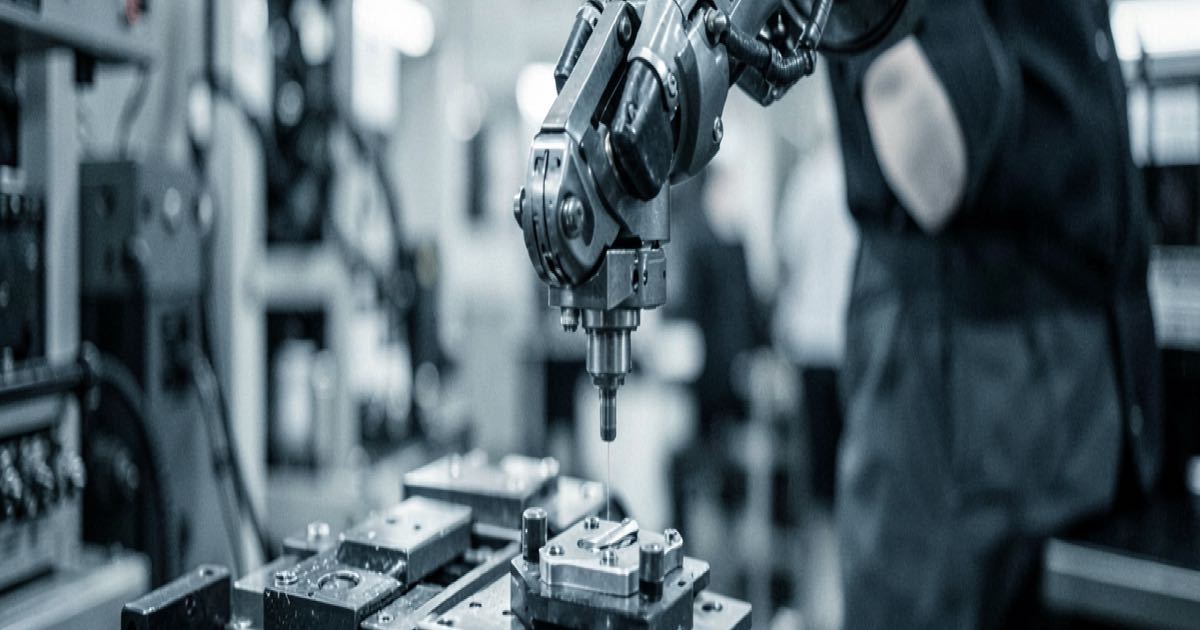
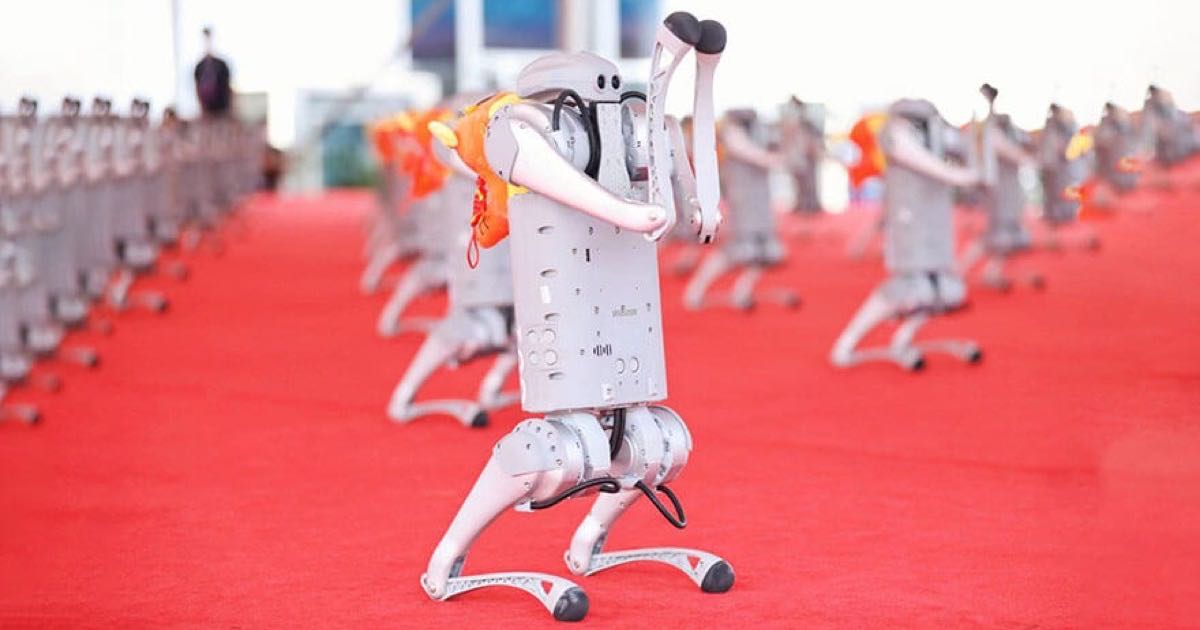
The WRC’s exhibition halls told two stories. At Unitree’s packed booth, bipedal robots played table tennis and squared off in fighting matches. The crowds were thick. The cameras were rolling. But elsewhere, robots on wheels were sorting parcels, loading production lines, and moving materials — quietly, without spectacle, doing the kind of work that pays for itself.
The South China Morning Post reported that the industry is seeing a shift from flashy demonstrations to real-world deployment. Humanoid robots remain the crowd favourites. Wheeled machines are gaining the ground that matters.
The Sorting Test
X Square Robot brought data. During a controlled one-hour test, its two-armed WALL-B model sorted 1,816 packages. The company said that outperformed the bipedal Figure 03 — from US-based Figure AI — which averaged 1,248 parcels an hour.
That is a 45 per cent advantage for the wheeled platform. It is also a single-company test using the competitor’s publicly reported numbers, not an independent benchmark. But the comparison captures the argument: industrial users care about payload, reliability, and return on investment. They do not care whether the robot has legs.
Wheeled platforms have inherent advantages in warehouse and factory settings. They are more stable, cheaper to build, easier to maintain, and consume less power than bipedal systems. The trade-off is mobility — wheels cannot climb stairs or navigate uneven terrain. In a structured industrial environment, that trade-off is irrelevant.
The Brain Is the Real Battleground
The form factor debate misses a larger point. Unitree founder Wang Xingxing told the WRC that AI models have become the company’s biggest area of investment in terms of both capital and personnel. The company’s prospectus earmarked 2.02 billion yuan (US$300 million) for intelligent robot model research and development — nearly half of its planned IPO raise.
The competition is shifting from the body to the brain. Generalization — the ability to complete tasks in unpredictable environments rather than performing scripted movements — is the bottleneck. Wang said that could be solved in two or three years if progress is fast.
That timeline is company-sourced optimism. But the resource allocation tells a story. If the AI model is the hard part, the hardware form factor is a secondary decision. A wheeled robot with a great model outperforms a bipedal robot with a mediocre one.
What the World Humanoid Robot Games Revealed
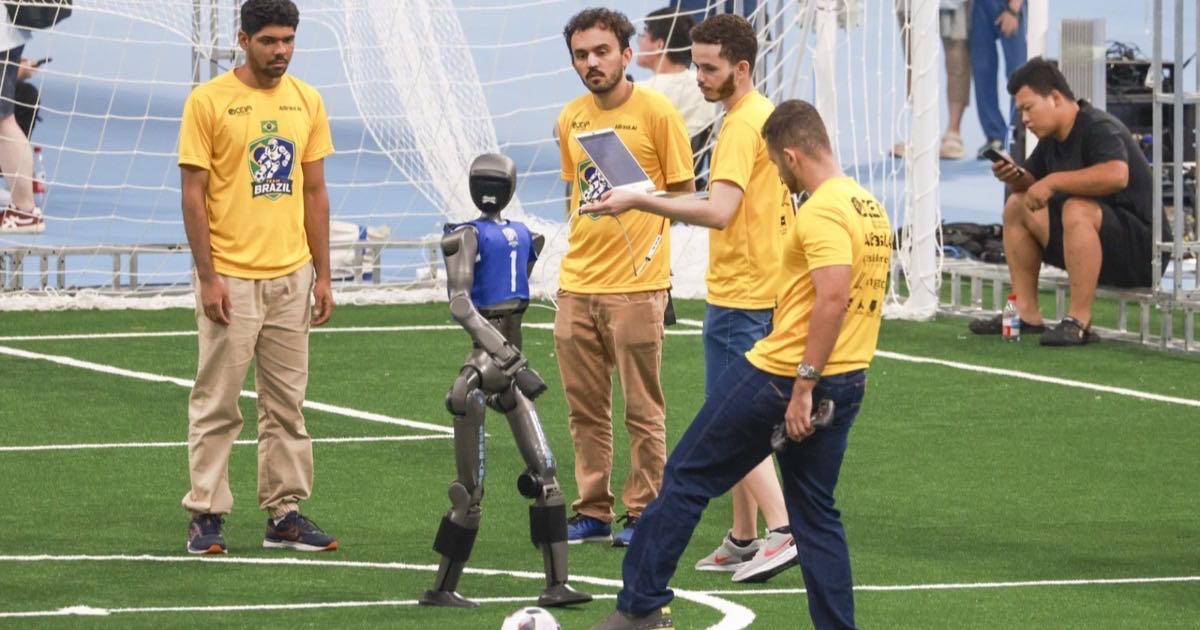
The timing is instructive. The WRC ran alongside the World Humanoid Robot Games, where robots competed in 51 events ranging from sprints to cable-plugging. Reuters reported that while two robots ran faster than Usain Bolt’s 100-metre world record, the more revealing tests came when robots encountered “small imperfections of the physical world: a cable at the wrong angle, an object just out of reach, a shifting package or a missed step.”
Lumos Robotics CEO Yu Chao told Reuters the games could help improve hardware, but the longer-term value depends on real-world problem solving. “Only when it can work in those end scenarios does it have real value,” Yu said. “Simply running and jumping does not improve efficiency.”
That is the same argument the wheeled-robot crowd is making, from a different angle. The spectacle is impressive. The deployment is what pays.
The Pragmatic Turn
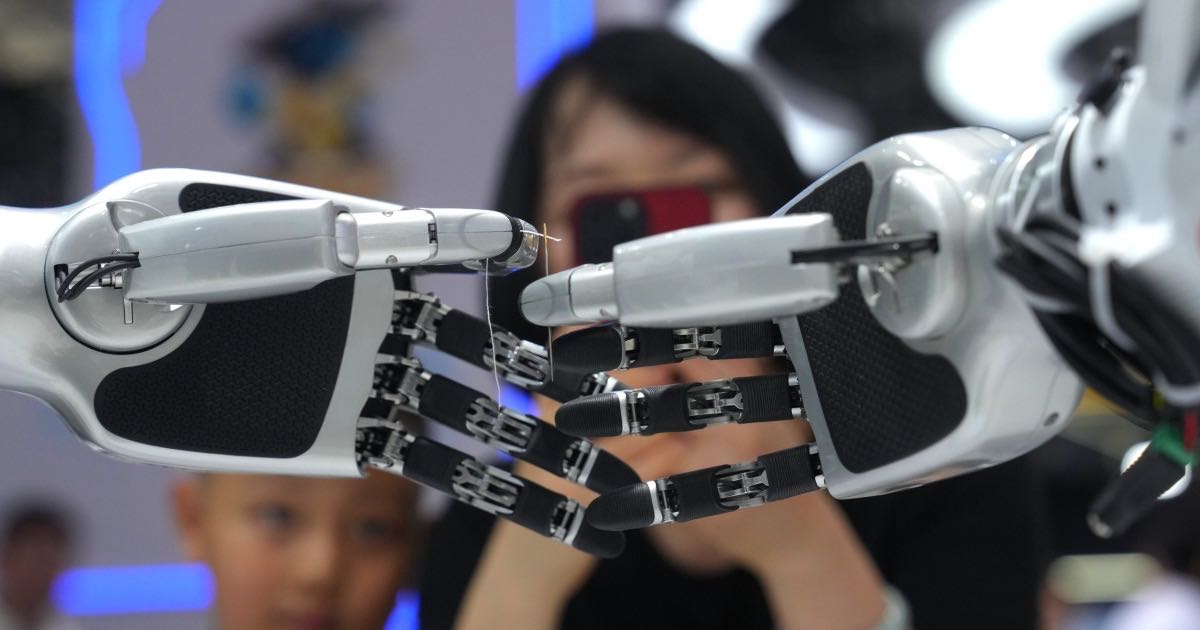
AI2 Robotics, another Chinese start-up at the WRC, had a wheeled robot making coffee and ice cream for visitors. The machine used different end effectors — a gripper on one arm, a dexterous hand on the other — for different jobs. It was not trying to look human. It was trying to be useful.
This pragmatic turn reflects where the money actually flows. Goldman Sachs estimates that wheeled robots were expanding rapidly in industrial and commercial settings because their greater stability made them a practical choice for manipulation and embodied-AI applications. The investment bank’s view, cited by SCMP, aligns with what the exhibition floor showed: the humanoid form factor captures attention, but wheeled designs capture contracts.
None of this means bipedal humanoids are going away. Tesla’s Optimus, Figure’s 03, and Agility’s Digit are all designed for environments built for humans — stairs, doorways, workstations. That use case is real. But it is narrower than the hype suggests, and it is not where the near-term industrial volume sits.
The honest read from Beijing is that the industry is bifurcating. Humanoid robots for human environments. Wheeled robots for everything else. The question Yang Li asked at the WRC is not rhetorical. It is a business decision, and increasingly, the answer is no.