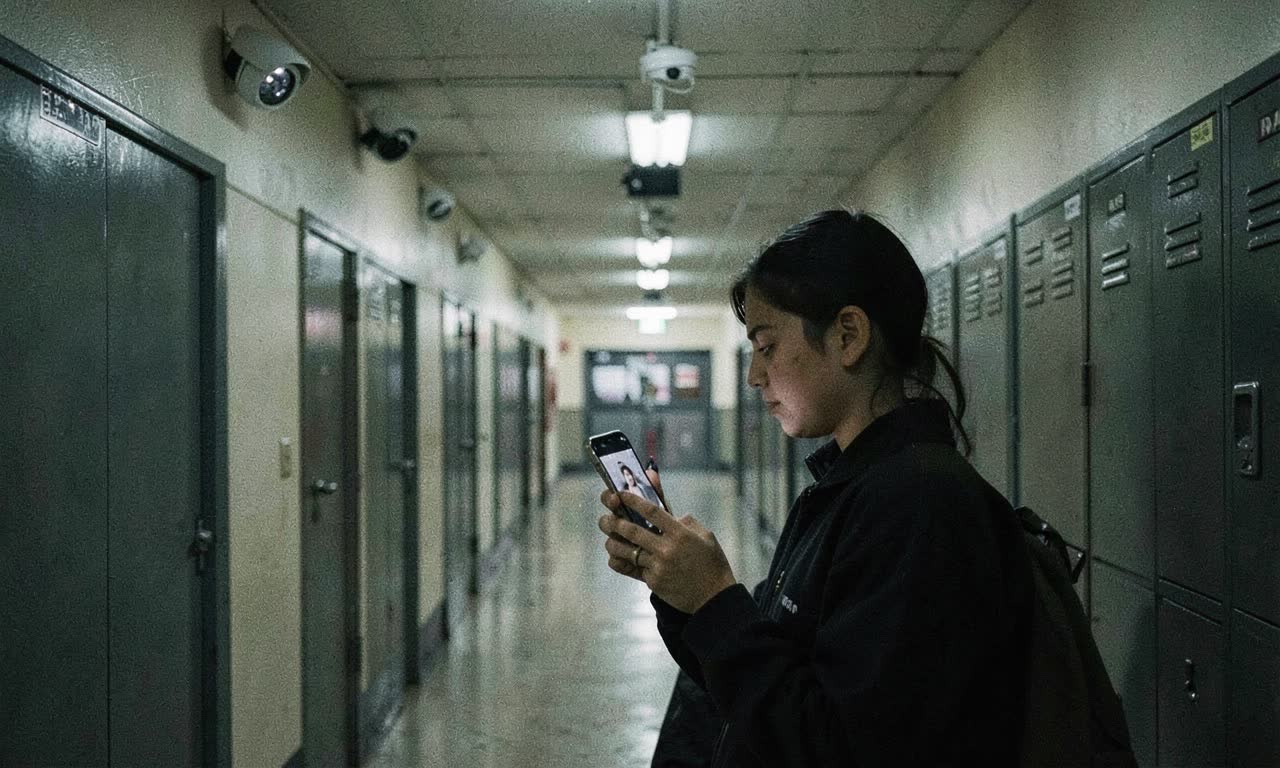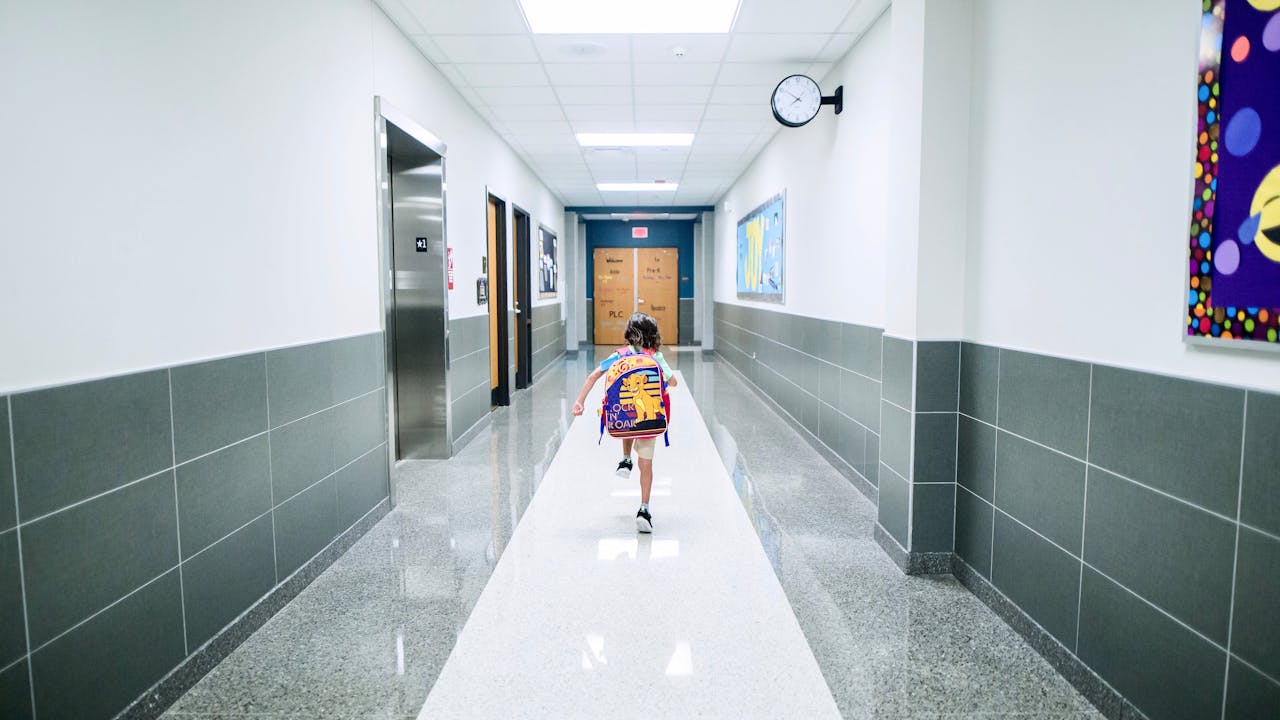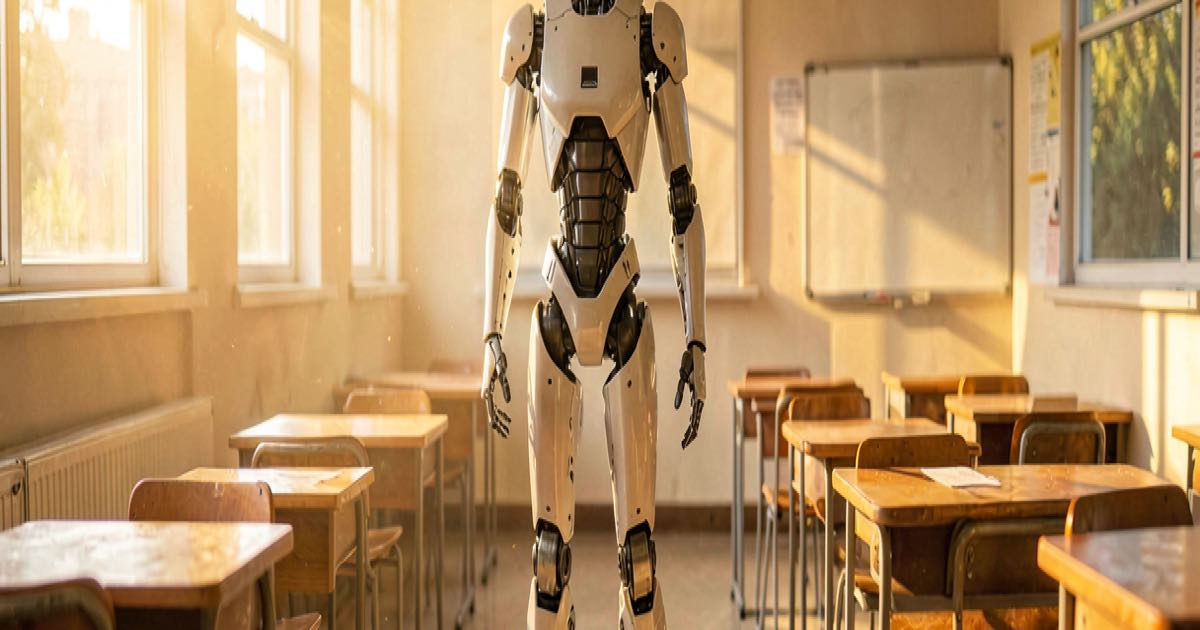
A school district in western New York was weeks away from putting a humanoid robot in a classroom. Now state senators want to make sure that never happens again.
Senate Bill S10671, introduced August 1, would prohibit New York school districts and charter schools from using AI-powered humanoid robots to perform the responsibilities of a teacher — delivering instruction, tutoring students, or grading work. It’s believed to be the first legislation of its kind in the United States.
The bill didn’t come from a policy white paper or a think tank. It came from a New York Focus investigation published July 14, which revealed that Salamanca City Central School District had partnered with a company called Realbotix to bring a humanoid robot named “Sally” into a high school classroom this fall. Sally has lifelike silicone skin, long hair, and a range of upper-body movements and facial expressions. She was going to be a teaching assistant.
What happened at Salamanca
The plan was small in scale — one robot, one district, one pilot programme. But the backlash was immediate.
Parents formed groups. The state teachers union called for strict limits on AI and screen time in schools. New York City Public Schools Chancellor Kamar Samuels announced an educational technology purchasing freeze until the system finalised guidance on technology procurement.
On July 24, state Education Commissioner Betty Rosa sent the district a letter expressing concern about “the effect that a humanoid robot may have within a high school classroom.” Hours later, Salamanca put the project on hold while it worked through student data privacy agreements with the state.
That was before the bill. Now the legislature wants to close the door entirely.
The bill and what it would do
Senate Bill S10671 would require every school district and charter school in New York to adopt a written policy prohibiting AI-enabled humanoid robots from performing the responsibilities of a teacher. That includes classroom instruction, one-on-one tutoring, and grading.
Senate Education Chair Shelley Mayer, who introduced the legislation, said she was shocked by Salamanca’s “glaring mistake of judgment.”
“As someone who cares about kids and education and how we learn — not just academically, but socially — that all requires human interaction,” Mayer told New York Focus. “This is absolutely replacing a human being with a machine for instruction and other functions of education, and it shouldn’t be marketed to any school in the United States.”
Senator Kristen Gonzalez, a co-sponsor, pointed out that there is no research on how AI-powered robots affect the social and emotional development of children. “Clearly, it will take many bills before our school districts are acting appropriately,” she said.
The legislature will consider the bill when it reconvenes in January.
The company pushes back
Realbotix CEO Andrew Kiguel told New York Focus that the technology is intended to assist educators, not replace them. He questioned the bill’s timing.
“What concerns us about [the bill] is that it appears to have been introduced without anyone involved having seen the technology in action or evaluated a live pilot,” Kiguel said. “The Salamanca project that prompted this bill has not even been deployed. Making a sweeping statewide prohibition on that basis, before any facts or evidence exists, is a premature step.”
Kiguel said he welcomes the chance to demonstrate the technology with legislators “so policy can be based on knowledge, not assumption.”
There’s a reasonable point buried in there. Banning a technology before it’s been tested in the context where it would be used is a strong step. But the counterpoint is equally reasonable: schools are not sandboxes. The subjects are children, and the downside of getting it wrong — a generation of students who learned to interact with a machine instead of a person — is not the kind of thing you fix with a post-pilot evaluation.
The bigger picture: AI in schools is already a fight
The New York bill is one front in a much wider battle over AI in education.
Earlier this summer, the New York State Senate and Assembly both unanimously passed Gonzalez’s legislation to restrict AI chatbots from interacting with minors when they contain certain unsafe features. That bill is awaiting the governor’s signature. Gonzalez said the measure would have required Salamanca to ensure its AI-powered avatar programme was safe for children and did not encourage emotional attachments with minors.
The national teachers union has called for screen bans and AI limits in schools. The New Jersey school district ban on AI for elementary students is already in effect. And Norway announced a near-total ban on generative AI in elementary schools effective this month.
The pattern is clear: schools are moving faster than regulators, parents are pushing back, and lawmakers are responding with legislation that ranges from targeted (New York’s humanoid robot ban) to sweeping (Norway’s generative AI ban).
What stands out here
What’s striking about the New York case is the specificity. This isn’t a broad “ban AI in schools” bill. It’s a ban on humanoid robots specifically — physical machines with faces and expressions designed to mimic human presence in a classroom. That’s a narrower question than “should students use ChatGPT,” and it’s a more uncomfortable one.
A chatbot is a tool. A humanoid robot in a classroom is a social actor. Children form attachments to faces. They learn social cues from the humans around them. Putting a silicone-skinned robot in that role isn’t just a technology decision — it’s a developmental one, and the research base for it is effectively zero.
Mayer’s framing is worth taking seriously: “This is as personal as it gets for parents and teachers. People like myself, who’ve fought tooth and nail to get funding for all these schools, want to know where this money is going. And if it is going to for-profit tech companies, there needs to be far greater scrutiny.”
❓ FAQ
Would this bill ban all AI in New York schools? No. It specifically targets AI-enabled humanoid robots performing teacher responsibilities — delivering instruction, tutoring, and grading. AI tools like chatbots, automated grading systems, and educational software are not covered by this bill, though separate legislation (Gonzalez’s chatbot bill) addresses those.
Has any school actually deployed a humanoid robot teacher? No. The Salamanca pilot was paused before deployment. The bill is preemptive — it would prevent districts from going down the path Salamanca started.
What does Realbotix say about the bill? CEO Andrew Kiguel said the bill is premature because no one has seen the technology in action or evaluated a live pilot. He offered to demonstrate the technology with legislators.
Does New Zealand have similar rules? New Zealand does not have specific legislation on humanoid robots in schools. The AI Forum’s AI Blueprint for Aotearoa recommends voluntary guidelines rather than binding rules. NZQA has published guidance on assessment in the age of AI but does not address humanoid robots.
📰 Sources
- New York Focus — New Bill Would Ban Humanoid Robots in Schools
- New York Focus — Salamanca school district robot teacher report
- New York Focus — Robot teacher plan paused
- Chalkbeat — NYC Public Schools tech purchasing freeze
- The Guardian — New York school district halts humanoid robot plan
- NY State Senate — Bill S10671
- NYSUT — Teachers union AI and screen time limits