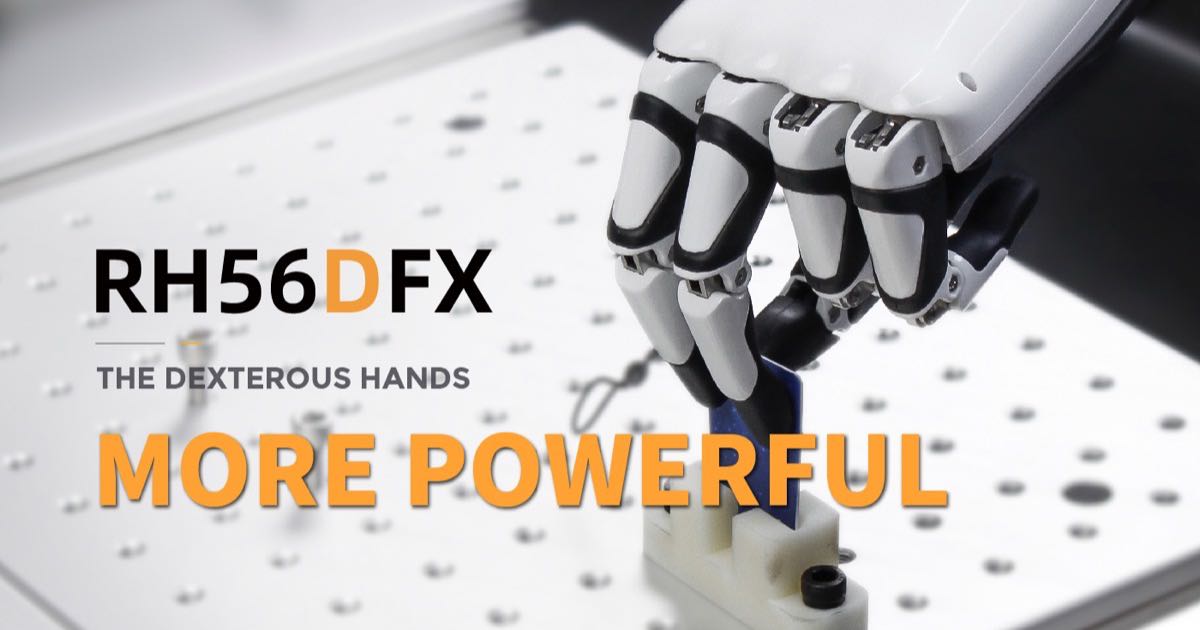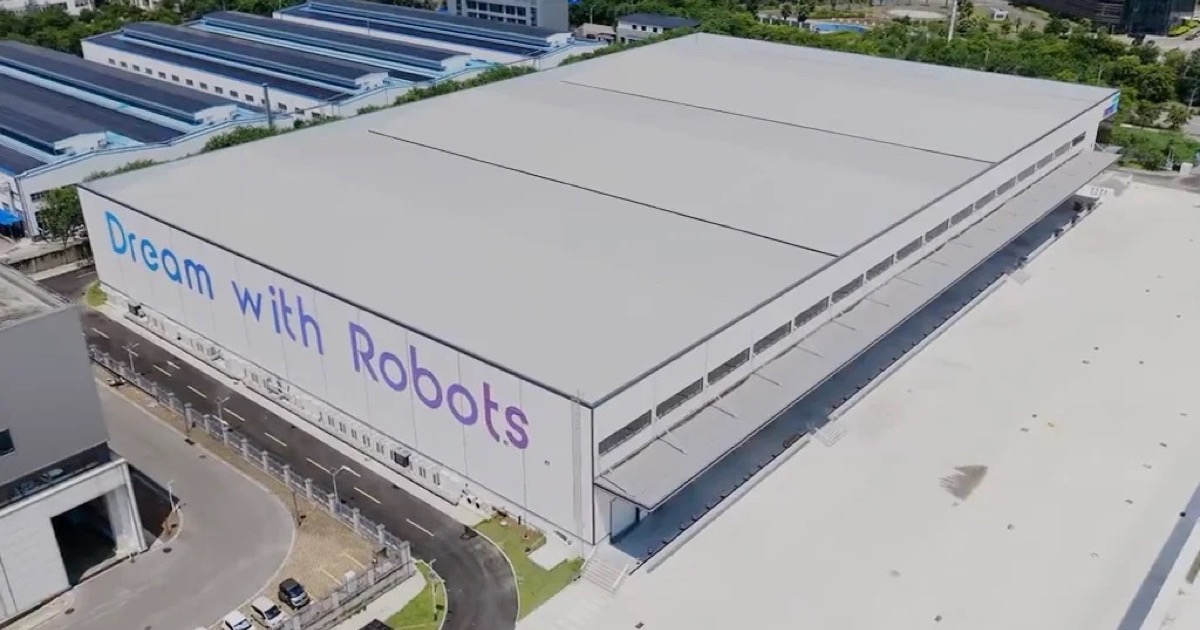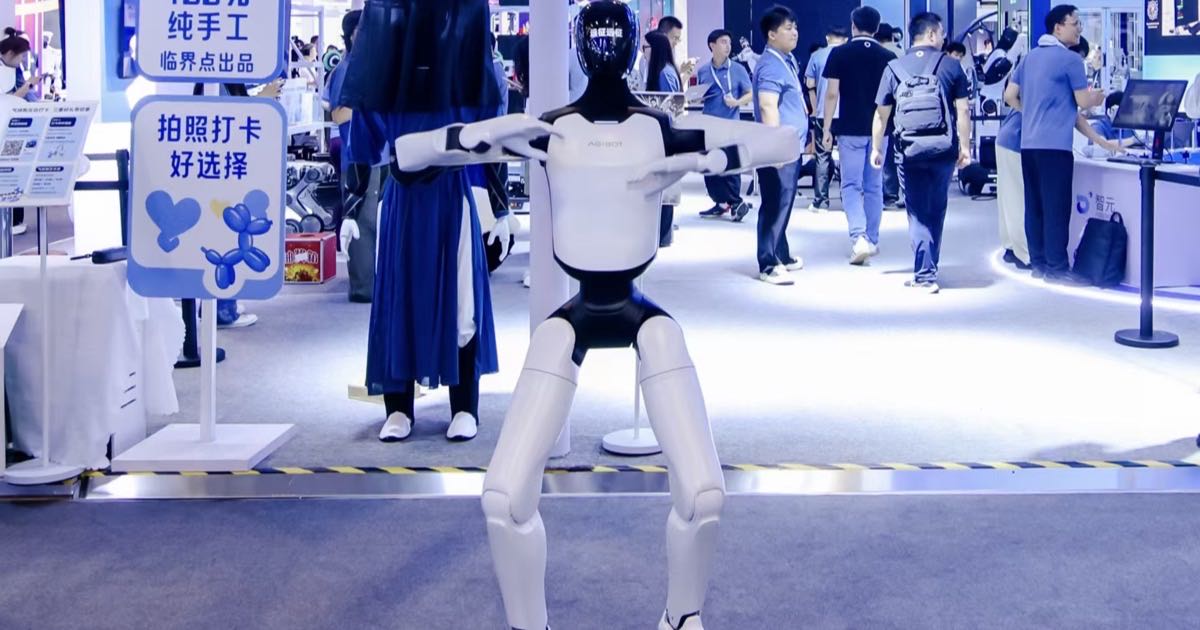
Mitsubishi Motors has signed a deal with Tokyo robotics startup Highlanders to mass-produce humanoid robots at 1,000 units per month starting in 2027, using an idle engine plant in Kyoto. It is one of the first times a carmaker has committed its own manufacturing infrastructure to building humanoids rather than merely testing them on the factory floor.
Tesla has already begun converting its Fremont production lines — previously used for the Model S and Model X — for Optimus humanoid manufacturing, with a stated target of one million units per year. Mitsubishi’s move is more modest in scale but notable for a different reason: it is a tier-two automaker with less capital and less hype, making a pragmatic bet on repurposing capacity that the EV transition has left idle.
The move shifts the conversation from whether humanoids can work to whether the unit economics pencil out at volume — and whether the companies that spent a century building combustion engines can pivot those same lines to produce robots instead.
What the Deal Actually Covers
Mitsubishi Motors and Highlanders signed a Memorandum of Understanding on July 9 to co-develop humanoid robots for Mitsubishi’s own manufacturing facilities, with mass production to follow at the Kyoto plant. The partnership covers two tracks running in parallel.
First, Mitsubishi will deploy Highlanders’ existing humanoid robots inside its own factories — welding, logistics, and engine assembly tasks — to accumulate operational data and deepen its expertise in humanoid robotics. Second, the automaker will apply its mass-production engineering, quality assurance, and mechatronics control capabilities to explore manufacturing Highlanders’ robots at scale. Production could begin as early as 2027 in currently unused buildings at the Kyoto plant.
Mitsubishi has already invested in Highlanders and plans additional capital as the partnership develops.
Why 1,000 Per Month Matters
Most humanoid robot deployments in 2026 are measured in dozens, not hundreds. BMW is testing Figure 03 robots at Spartanburg. Agility Robotics has Digit units working in Amazon and GXO warehouses. Tesla is targeting 100,000 Optimus bots a year — but that is a future goal, not a current output.
1,000 units per month is 12,000 per year. That figure, if achieved, would represent industrial-scale production that goes beyond pilot quantities and into territory where procurement decisions become real for other manufacturers. As Assembly Magazine noted, this is not a proof-of-concept — it is a manufacturing capacity commitment.
The target also signals something about how Mitsubishi sees the market. A tier-two automaker — not Toyota, not Honda, not Nissan — is the one making this bet. Mitsubishi has less to lose and more to gain from being early. Its Kyoto plant has spare capacity because the internal combustion engine market is shrinking. Repurposing it for robots turns a liability into an asset.
Who Is Highlanders?
Highlanders is a University of Tokyo spinout founded in May 2023 by Hiroya Masuoka. The company builds both humanoid and quadruped robots, and describes its core technology as the “Kepler” world model — a foundation model for physical intelligence built around a real-world data flywheel. Every deployed robot becomes a sensor, feeding operational data back into the model to improve performance.
The company claims 5,000-plus contacts and pre-orders across automotive, logistics, and manufacturing use cases. Whether those convert to actual sales at 1,000-per-month volume remains to be seen, but the pipeline exists.
Highlanders is one of several Japanese robotics startups emerging in a country that has both the manufacturing expertise and the demographic pressure to drive humanoid adoption. Japan’s workforce is shrinking, and the government has floated a national strategy to deploy 10 million robots by 2040. Mitsubishi’s bet on Highlanders is an early move in that larger story.
The Bigger Picture: Automakers Becoming Robot Makers
What stands out here is the pattern. Automakers are not just deploying humanoids — they are starting to build them. BMW uses Figure. Hyundai owns Boston Dynamics. And now Mitsubishi is partnering with Highlanders to manufacture robots on its own lines.
This matters because automakers already have the thing every robotics startup struggles to build: high-volume production engineering, quality control systems, and supply chain logistics. A car company that can produce a million vehicles a year has the tooling, the vendor relationships, and the factory-floor knowledge to scale robot manufacturing in a way that a venture-funded startup simply cannot.
The risk is the opposite of what you might expect. The question is not whether Mitsubishi can build 1,000 humanoids a month — it is whether anyone wants to buy 12,000 humanoid robots a year at a price that makes the math work. China’s humanoid robot rental market is already exposing the gap between production ambitions and actual deployment demand. The robots work in demos. In real factories, the tasks are messier, the integration is harder, and the return on investment is less obvious.
NZ Angle
New Zealand’s manufacturing sector is small and specialised — food processing, agricultural machinery, boutique manufacturing. The companies that could benefit from humanoid robots here are not car plants but warehousing operations, logistics hubs, and agricultural processors.
If Mitsubishi hits its 2027 target and humanoid prices come down with volume, the calculus changes for NZ manufacturers who currently cannot justify the capital cost. A robot that costs $50,000 and works two shifts a day in a warehouse is a different proposition from a $200,000 prototype that needs constant supervision. Volume production in Japan could make humanoids accessible to mid-sized NZ firms within three to five years, not the decade that early pricing suggested.
❓ FAQ
What is Mitsubishi building? Humanoid robots developed with startup Highlanders, initially for use in Mitsubishi’s own factories for welding, logistics, and engine assembly. The company may sell units to other manufacturers if production scales as planned.
When does production start? Mitsubishi and Highlanders are examining the feasibility of commencing production in early 2027 at the Kyoto plant. No firm start date has been announced.
How does this compare to Tesla’s Optimus? Tesla is targeting 100,000 Optimus units per year — roughly 8,300 per month — but that is a stated goal, not a confirmed production line. Mitsubishi’s 1,000 per month is smaller but backed by an existing factory being repurposed now.
Who is Highlanders? A University of Tokyo robotics spinout founded in 2023, building humanoid and quadruped robots with a “world model” AI foundation called Kepler. The company claims 5,000-plus pre-orders and contacts across industrial sectors.