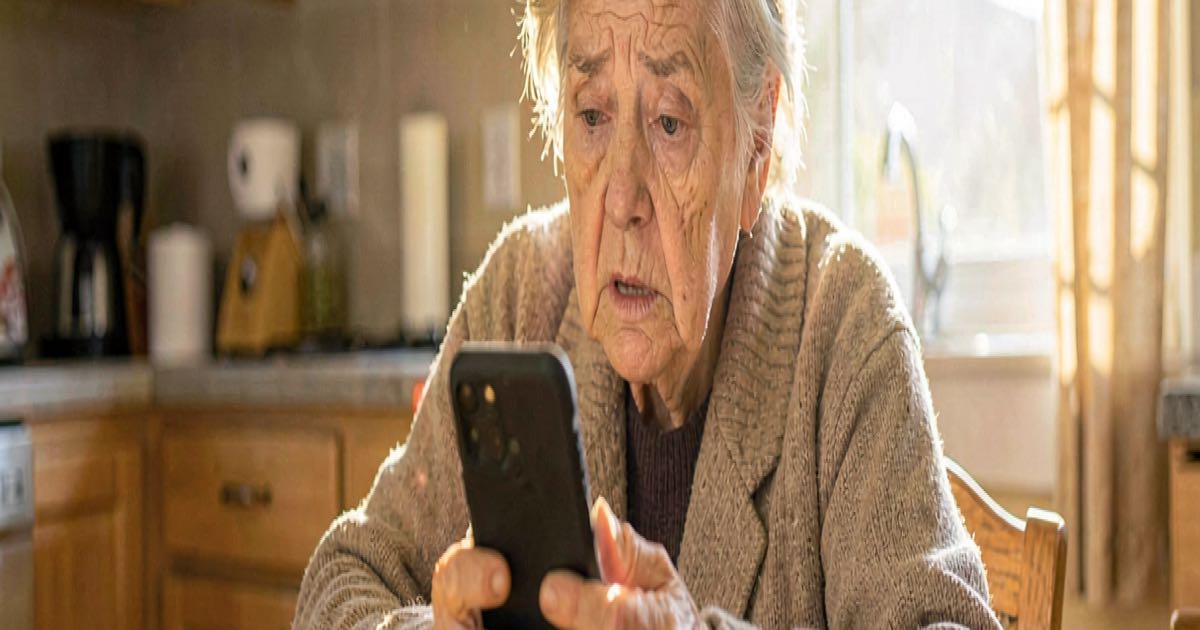
Deborah Del Mastro answered a phone call in May from a man who said he had kidnapped her daughter. He put a crying woman on the line. The voice sounded exactly like her daughter’s.
For five and a half hours, Del Mastro drove around the San Francisco Bay Area, transferring money to Mexico. She sent $5,400 before the caller claimed her daughter had been released at a Walmart. She called her daughter directly. She was at work. She was fine.
The voice on the phone had been cloned with AI.
Del Mastro, 64, told her story to the Senate Special Committee on Aging on July 30. The hearing, titled “The AI Deception Machine: Deepfakes, Chatbots, and the New Frontier of Senior Fraud”, laid out a problem that is growing faster than anyone expected.
The numbers
Senator Rick Scott, the Republican from Florida who chairs the committee, said Americans over 60 reported losing $7.7 billion to scams in 2025. A bipartisan committee report released the same day linked $893 million in losses to AI-enabled scams across more than 22,000 complaints.
The projection is worse. Matthew Ferraro, a former homeland security cybersecurity adviser, cited Deloitte research estimating that generative AI could help drive U.S. fraud losses to $40 billion by 2027, with older adults bearing a disproportionate share.
Those are reported losses. The actual figure is likely higher because most fraud goes unreported.
Not new scams. Industrialised ones.
Paul Benda, executive vice president for risk, fraud, and cybersecurity at the American Bankers Association, offered the sharpest framing of the hearing: generative AI is not replacing traditional scams. It is “industrializing them.”
“What once required significant time, skill and resources can now be done quickly, cheaply and at scale,” Benda told the committee.
The mechanics are straightforward. Criminal networks use public records, breached accounts, social media, obituaries, and commercial data brokers to identify likely victims. AI translates messages, removes the grammatical mistakes that once exposed fraud, and sustains conversations with many targets at once. A scammer who could previously manage three or four marks at a time can now manage dozens.
The emotional machinery hasn’t changed. Criminals still rely on love, fear, shame, and urgency. What has changed is their ability to manufacture the evidence those emotions trust — a loved one’s voice, a doctor’s face, a bank’s phone number — and to do it faster than victims, banks, platforms, or law enforcement can respond.
The deepfake doctor
Dr. David Amron, a dermatological surgeon at the Roxbury Institute in Beverly Hills, described a different kind of stolen trust. Scammers took footage from his YouTube channel and combined it with an AI-generated likeness and voice of a colleague, celebrity images, and copied media logos to create advertisements for a supposed “miracle” lipedema cream.
Some patients bought the product before learning the endorsement was fabricated. Amron’s staff reported the ads to Meta, domain registrars, and search engines. Each removal was followed by another version. The campaign persisted for 11 days and later resurfaced.
“The video was disturbingly realistic,” Amron told the panel. “Scammers used actual footage from my YouTube channel and combined it with fully integrated AI-generated likenesses of my voice and my colleague.”
What the Senate is considering
The hearing produced several bipartisan proposals: a single ReportScams.gov portal, expanded law enforcement training and cryptocurrency tracing, and a national anti-scam strategy.
Benda urged Congress to create a national fraud prevention office, impose stronger customer verification duties on telephone providers, and require online platforms to verify advertisers and rapidly investigate impersonation complaints.
The Consumer Federation of America’s Ben Winters argued that public education cannot substitute for accountability by companies positioned to prevent fraudulent ads and abusive voice-cloning services from reaching consumers. He pointed out that the FBI’s Recovery Asset Team can freeze roughly half the money at risk when cases reach it quickly — but only 642 of more than 201,000 elder fraud complaints in 2025 entered its freeze process. Less than half of one percent of the $7.7 billion reported lost was frozen.
Sens. Kirsten Gillibrand and Mark Kelly sent a letter to leading AI companies asking what steps they are taking to protect older Americans from AI-enabled fraud. Meta did not provide a comment. OpenAI and Anthropic had not responded.
What this means for New Zealand
New Zealand isn’t immune to any of this. The same AI tools that clone voices and fabricate video in the U.S. are available globally. Westpac NZ called Meta “missing in action” over social media deepfake scams in April. The NZ National Cyber Security Centre has warned about the same patterns — voice cloning, impersonation, AI-generated phishing — affecting New Zealanders.
The Senate hearing’s $40 billion projection is U.S.-specific, but the technology is not. New Zealand’s fraud reporting infrastructure is less centralised than the proposed U.S. model, and the scale of the problem here is less measured. That doesn’t mean it’s smaller per capita.
Karaitiana Taiuru, a New Zealand researcher on digital rights, has documented deepfake harms in the NZ context and called for specific legislation. The government’s Deepfake Digital Harm and Exploitation Bill submission process is underway.
Ferraro offered a simpler defence than any legislation: families should establish a private code word for emergencies and verify unexpected requests through a known telephone number rather than the number that initiated the contact. Hearing a familiar voice is no longer enough.
❓ FAQ
How does AI voice cloning work? AI models can clone a voice from a few seconds of audio — often taken from social media, voicemail greetings, or public videos. The cloned voice can then say anything the operator types. The technology is widely available and costs very little.
Is this happening in New Zealand? Yes. Westpac NZ has publicly called out Meta over deepfake scams targeting New Zealanders. The NZ National Cyber Security Centre has issued warnings about the same patterns. NZ does not have a centralised fraud reporting system comparable to what the U.S. Senate is proposing.
What can families do right now? Establish a private code word for emergencies. If someone calls claiming to be a family member in trouble, ask for the code word. Verify through a known number, not the number that called you. If a voice sounds right but the situation feels wrong, trust the situation.
Are banks doing anything? Banks are increasingly using analytics to flag unusual transfers, but human judgment remains critical when a customer appears frightened, secretive, or coached by someone on the phone. The ABA’s Benda stressed that the relationship between banker and customer can be as important as any algorithm in these moments.
📰 Sources
- Spectrum News — Senate committee looks to stop AI-enabled fraud against older adults
- Biometric Update — Senate hearing warns AI is industrializing fraud against older Americans
- Senate Special Committee on Aging — Hearing: The AI Deception Machine
- 1News — Westpac says Meta “missing in action” over deepfake scams
- Karaitiana Taiuru — Deepfake harms and new legislation