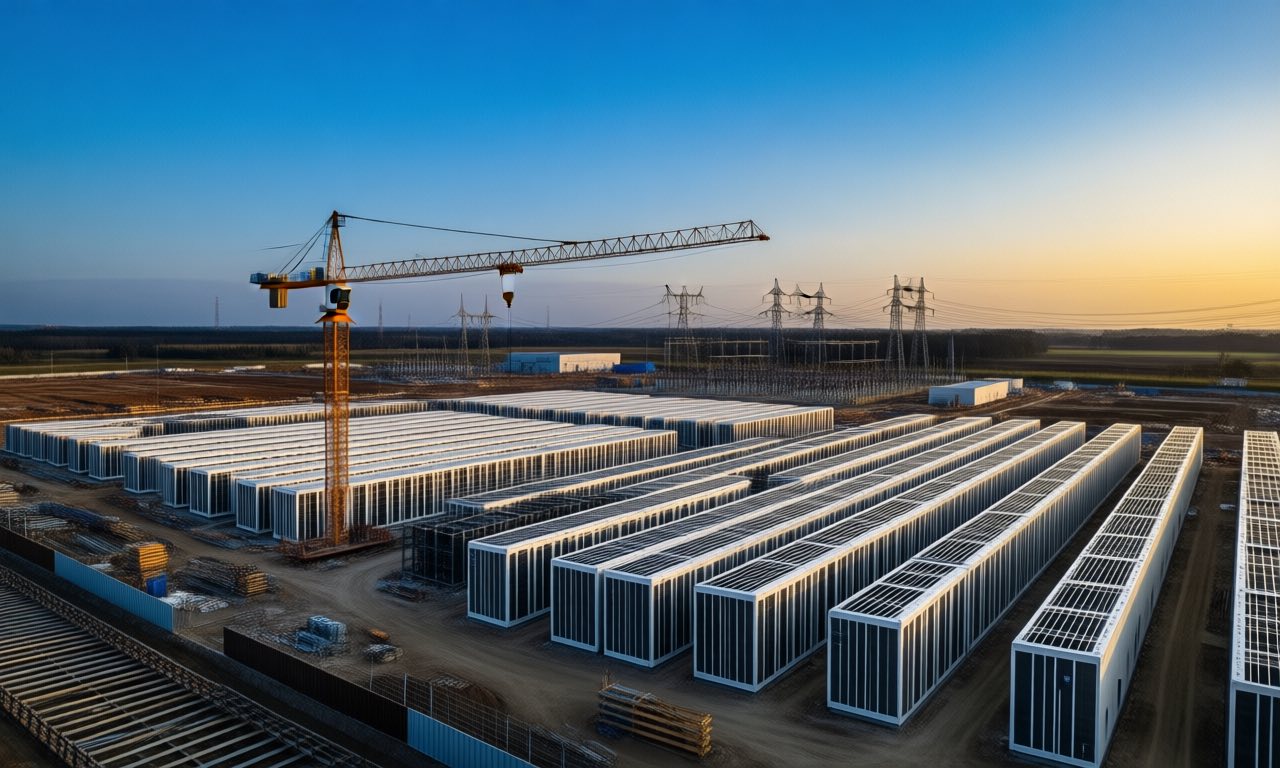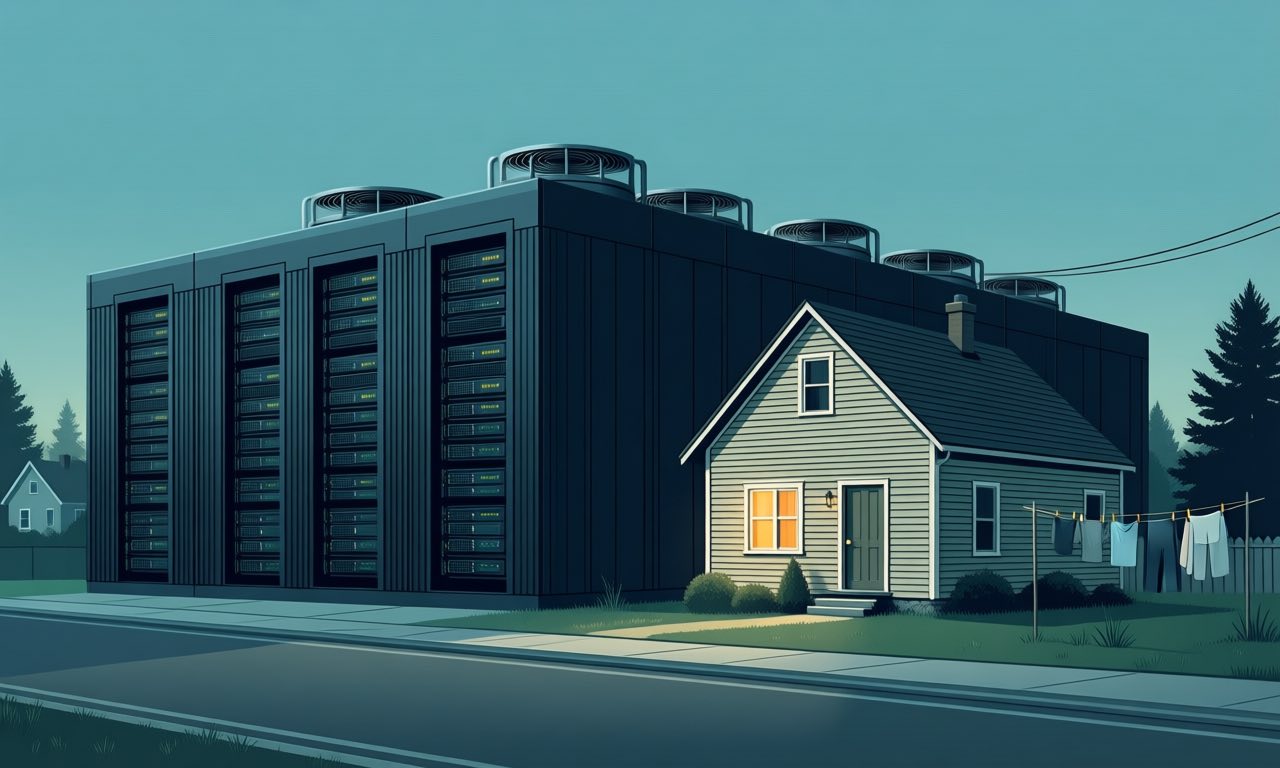
American voters have turned on the physical machinery of the AI boom. A new CNBC All-America Economic Survey finds 63% of registered voters oppose an AI data center within 10 miles of their home — just 13% support one — while 52% want advanced AI development paused until Congress passes safety regulations, CNBC reported on October 24. Gallup had already measured the sentiment in March, finding 71% of Americans oppose data-centre construction in their local area — a higher opposition level than for nuclear power plants in the same survey, Gallup’s own write-up shows.
🔍 THE BOTTOM LINE
The AI build-out has become a land-use fight, and land-use fights are won locally. A public that was told AI is a jobs story or a China story is answering with zoning objections, power-bill complaints and a 52% pro-pause majority — and both US parties are now running from the facilities they once courted. The gap between “keep developing AI” and “not here” is the widest it has been since the boom started, and neither party has found the political settlement that closes it.
What the two polls actually say
CNBC surveyed 1,000 registered voters nationwide from October 14 to 18 (half-sample of roughly 500 for the proximity question, margin of error ±4.38 points). The topline: 63% oppose a data center within 10 miles of home, 13% support; Democrats lead the opposition at 80% against, but even among MAGA supporters — 55% of whom want development to continue while Congress regulates — only 29% want a data center nearby. And the pause question breaks the usual partisan script: nationwide, 52% favour pausing advanced AI development until Congress passes safety regulations, versus 32% who want to push ahead to keep pace with China. Seventy percent of Democrats want the pause; opposition to the build-out is one of the few places independent and crossover voters agree.
The politics are moving: when voters were asked their top concern if Republicans keep Congress, 18% cited a failure to regulate AI and data centers — statistically tied with the military situation in Iran and ahead of deportations (15%), health-insurance subsidy cuts (10%) and tariff extension (5%). Even among voters who want Republicans to retain control, 17% cited weak AI and data-centre oversight, second only to prices, CNBC found.
The politicians are running — in both directions
The recalibration is visible in the campaign record. In Ohio, Senator Jon Husted once helped announce a $10 billion AWS expansion and called AI facilities “crucial to America’s economic superiority”; now in a tight race against Democrat Sherrod Brown, he is promoting stalled legislation that would make large facilities cover their own grid and generation costs rather than pass them to residential ratepayers, per CNBC. In Texas, Governor Greg Abbott — who hailed the state as an “epicenter of AI development” less than a year ago — halted data-center permits pending grid and water reviews and called for ending state tax incentives. And President Trump himself posted this week that data-center developers should pay host communities a financial “dividend” and generate their own power — a subsidy-and-compensation patch for a problem he pushed as a national-security race.
The National Republican Senatorial Committee warned AI companies in August that data-centre backlash was threatening Husted’s race, calling the issue a midterm “sleeper” that could sour politicians nationwide on future projects — as CNBC notes, Axios reported at the time. The industry’s answer remains the standard one: the Data Center Coalition’s Dan Diorio pointed CNBC to jobs, investment, tax revenue and operators “paying for the energy we use.” Commentary has already moved past communications: a Fortune essay in August argued the industry’s problem “is larger than communications — America needs a new bargain,” Fortune’s Mark Drapeau wrote.
The pattern behind the numbers
Put the polls side by side and the sequence is hard to miss. Gallup’s March survey measured broad local opposition — 71%, including 48% “strongly opposed” — before most voters had connected data centres to their power bills. CNBC’s October survey finds the same opposition, now tied to the vote: a third of voters name weak AI/data-centre oversight among their top concerns for the next Congress. On this site we have tracked the same curve internationally — Australians fighting AI factories town by town, the backlash escalating through anti-AI protest actions, and Climate Week captured by the industry it was meant to scrutinise — plus a poll in May showing 64% of Americans saying AI is moving too fast. The pause majority was already there in October’s AP-NORC data; CNBC’s number confirms it.
For New Zealand the lesson lands early. Our grid and water consents are tested by hyperscaler proposals — and our politics has not yet had the “not in my electorate” moment that Ohio and Texas are living through. The US data suggests that moment arrives not when the server halls open but when the first power bill and the first consent hearing land — and by then the subsidy bargain is already set. If New Zealand wants the data centres without the backlash, the bargain — who pays for lines, water, and the community costs — has to be written before the consent, not after the story.
❓ FAQ
What share of US voters want AI development paused? Per CNBC’s October survey, 52% of registered voters want advanced AI development paused until Congress passes safety regulations; 32% prefer continuing to keep pace with China. A May AP-NORC poll found 64% think AI overall is developing too fast.
Do voters oppose data centres more than nuclear plants? Gallup’s March survey found 71% oppose data-centre construction in their area versus 53% who oppose a nuclear plant — the highest local-opposition level Gallup has recorded since it first asked about nuclear in 2001.
Are only Democrats driving the opposition? No. Democrats oppose nearby data centres at 80%, but only 29% of MAGA supporters want one within 10 miles, and 27% of voters say neither party would handle the issue better — the anxiety cuts across the electorate.
🔍 THE BOTTOM LINE
A 52% pause majority is not a fringe position — it is the same majority that says no to the infrastructure. The industry can build faster than it can persuade, and 2026 is the year that discrepancy showed up in the polls. Whatever bargain settles this — dividends, grid-cost rules, licensing-style revenue sharing for host communities — will be set by politicians who watched Ohio, not by the companies who assumed the China frame would hold.
📰 Sources
- CNBC All-America Economic Survey (24 October 2026)
- Gallup (survey of March 2-18, 2026; report 13 May 2026)
- Axios (August 2026, NRSC “sleeper” warning)
- Fortune commentary (25 August 2026)