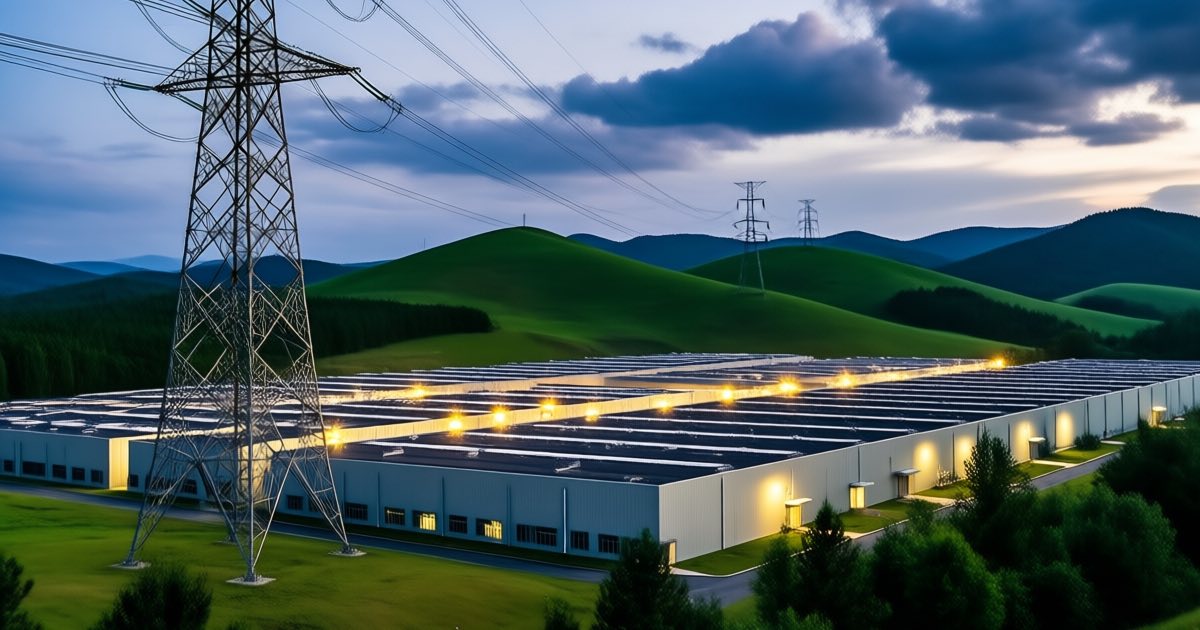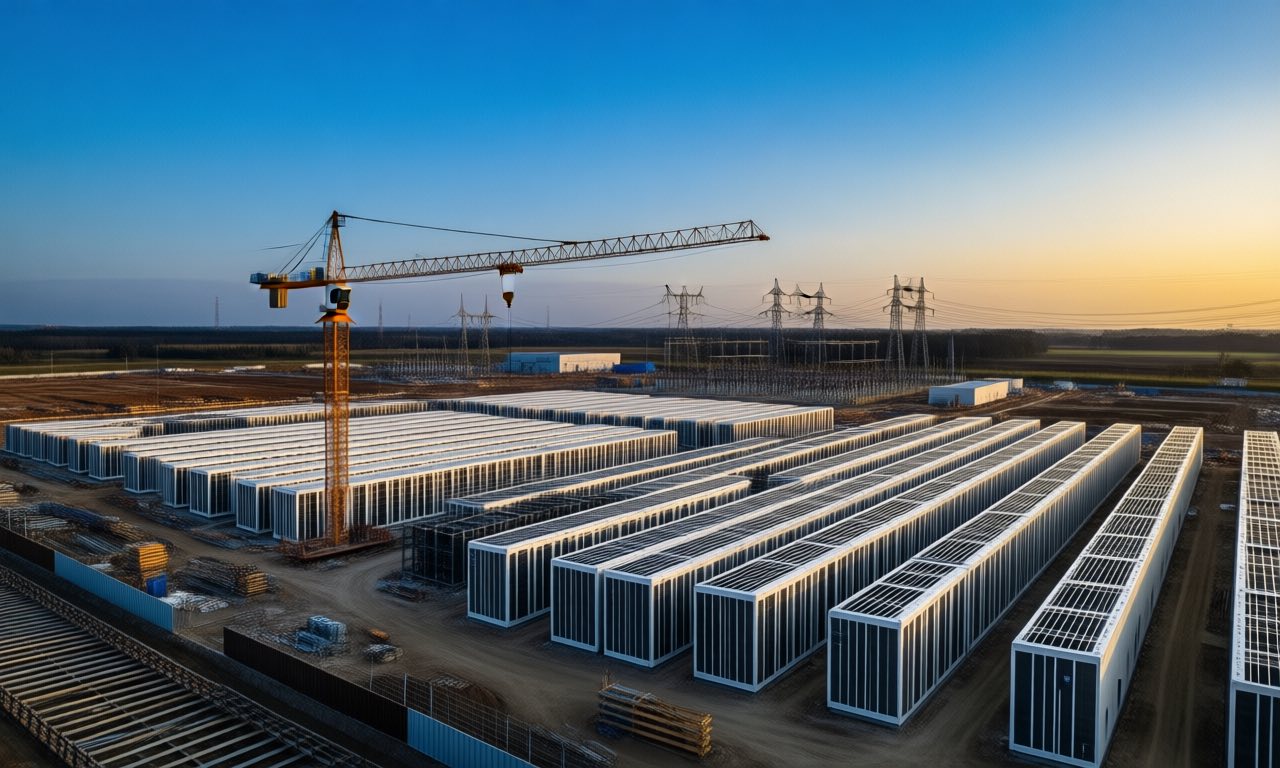
A thread from researcher Herbert Ong went past 10,000 views overnight NZ time with a claim that sounds like satire: SpaceX is now building gigawatt-scale AI data centres in about five months. The attached video shows why anyone half-paying attention believes it — because Elon Musk put the numbers out himself on September 24 — quoted directly in the video the thread carries — and they are wilder than the tweet. We pulled the video, read the underlying sources, and checked the arithmetic. The story holds — with two caveats the viral version omits.
🔍 THE BOTTOM LINE
Musk’s own September 24 post describes Colossus 1 holding 230,000 GPUs, Colossus 2 holding 550,000, and three more 220,000-chip GB300 batches going fully operational across “next week,” November, and — “if we get lucky” — late December. That is primary-source, first-party documentation of gigawatt-scale capacity arriving in months. The build-speed disruption is real and accelerating. What the tweet adds on top — exact lease pricing, the nicknames, the financing thesis — ranges from sourced commentary to unverified.
The primary source: Musk’s own numbers
The video in the viral post shows a presentation quoting Musk’s September 24 post directly, and the figures are worth staring at:
- Colossus 1: 150k H100, 50k H200, 30k GB200 — 230,000 GPUs operational
- Colossus 2: 110k GB200 and 440k GB300 — 550,000 Blackwell-class chips
- Then: “Another 220k GB300 will be fully operational next week and another 220k in November. If we get lucky, yet another 220k GB300 by late December.”
Each 220k batch of GB300s is roughly a quarter-gigawatt-scale tranche of silicon arriving operational — on a weeks-long cadence, described offhand. The NextBigFuture analysis (Brian Wang, 7 October) frames what this makes SpaceX: not a rocket company that does data centres as a side quest, but the world’s fastest-scaling AI-infrastructure vendor — “mass produced AI data centers” as the product itself, monetised faster than anyone else’s equivalent build-out. The tweet’s nicknames for the new sites (“Mini Hard,” “Macro Harder,” a play on Memphis’s hard-rock fast-builds) trace to Wang’s coverage, which we could not independently confirm at those exact site names — treat them as the tracker community’s shorthand rather than official designations.
What checks out, and what doesn’t yet
Checks out. Anthropic’s SpaceX commitments really did nearly double: from roughly $45B toward $84.5B, per Anthropic’s own prospectus as reported 29 September — around $2.3–2.5B per month, most of it cancelable on 90 days’ notice. Google’s SpaceX compute deal is real (we covered the $920M/month slice in September), and separate analyst estimates put per-gigawatt economics at roughly $12B (neocloud rental) to $100B (direct inference) per year. SPCX trades publicly, which is how a tweet gets to put a ticker on its thesis.
Not independently verified. The tweet’s “$60–61B per GW per year” lease pricing attributed to Deutsche Bank: we couldn’t source it — and note it sits oddly against the SemiAnalysis revenue-per-GW figures above, so it may be a different measurement basis (build cost vs annual lease). The claim that “Colossus 1 took Jensen a year for 100,000 chips” undersells Musk’s own record in the other direction: xAI built the 100,000-H100 Colossus in about 122 days, a fact that actually strengthens the speed-as-moat thesis — the point is that conventional builds take years, and even the reference fast-build is being lapped by what’s happening now.
Why speed is the moat
The freshest strategic read comes from Damien Klassen’s Nucleus Wealth analysis (23 August): the AI boom has been protected from itself by how slowly data centres got built — scarcity kept compute prices high, and conventional 20-30-year facilities are designed for reliability, not speed. If SpaceX can stand up capacity in a fraction of the time, “time” becomes the economic product: a good-enough data centre earning scarcity-era revenue for a few quarters will beat a perfect one arriving years late — until the flood arrives and the pricing power breaks. Klassen’s honest kicker applies to Musk’s targets too: build-time disruption is Musk’s demonstrated genius, and Musk-target optimism is his demonstrated habit. Both things are true; the September 24 post is the strongest evidence yet on the first one.
Where that leaves the rest of the industry: data-centre land and power are now the strategic assets, Anthropic has already bought a 300MW slice of Colossus capacity and kept expanding, and the protests are scaling too — anti-datacentre actions are going global as the sites get bigger.
What it means for New Zealand
Here is the scale, made local: New Zealand’s entire electricity system has a total installed generating capacity under 10GW — about 9,760MW as of the end of 2020, per the sector records (Wikipedia summary). Musk’s stated 10GW target for 2027 is, on its own, more generating capacity than the whole country operates. Nothing of this scale lands here — our Southland datacentre-haven story is about attracting small greener builds, not this league.
What reaches New Zealand is the price signal. Inference pricing is set in these mega-builds, and if 10GW of new supply actually lands in 2027, the price of intelligence falls with it — the cost war is already bleeding into list prices. For NZ’s export-earner thesis, that cuts both ways: cheaper intelligence is an input gift to small firms building on top, while anyone hoping to compete at the infrastructure layer has picked the wrong country and the wrong game. Yesterday’s sub-1-bit model compression and these gigawatt mega-builds are the two halves of the same 2027: intelligence getting radically cheaper at both ends — the pocket and the power plant.
❓ FAQ
What are “Mini Hard” and “Macro Harder”? Nicknames circulating in NextBigFuture’s tracking of SpaceX’s newest AI data centre sites — a reference to breaking ground on hard-rock sites at unusual speed. We could not verify them as official site names.
How many GPUs is SpaceX adding? Per Musk’s 24 September post: 220,000 GB300 chips going operational “next week,” another 220,000 in November, and potentially 220,000 more by late December — on top of ~780,000 already across Colossus 1 and 2.
Has Anthropic really doubled its SpaceX commitment? Yes per Anthropic’s prospectus as reported by NextBigFuture: up to $84.5B, roughly doubled from $45B, mostly cancelable with 90 days’ notice.
Is the $60–61B per gigawatt-year lease figure confirmed? No — attributed to Deutsche Bank research in the viral tweet but not independently verified; the widely-sourced per-GW estimates run $12B-$100B/year depending on the sales model.
Could this break AI compute pricing? It could help. Analysts argue the industry’s scarcity pricing survives only while supply is constrained; multiple GW-scale builds landing early in 2027 are the most credible overbuild risk to date.
🔍 THE BOTTOM LINE
The tweet oversold the analyst commentary and undersold the primary source. The number that matters is in Musk’s own post: three 220,000-chip tranches in a single quarter, half of them described as already scheduled. Data centre speed has become SpaceX’s second product, Anthropic’s $84.5B and Google’s rent cheques say the demand side believes it, and the one unverified figure in the viral version is also the least important. The thing worth watching is the endgame of Klassen’s analysis — every gigawatt that lands early is one that turns scarcity pricing into commodity pricing, and 2027 is when the calendar catches up with the hype.
📰 Sources
- X — @herbertong thread with presentation video, 9 October 2026
- X — Elon Musk post, 24 September 2026 (quoted in video)
- NextBigFuture — Biggest SpaceX Product and News Ever (7 October 2026)
- NextBigFuture — Anthropic Nearly Doubles Leasing from SpaceX (29 September 2026)
- Livewire Markets / Nucleus Wealth — SpaceX’s AI data centre bet (23 August 2026)
- SemiAnalysis — SpaceX: 10GW in 2027, why it’s real
- The Register — xAI’s 100,000-GPU Colossus (29 October 2024)