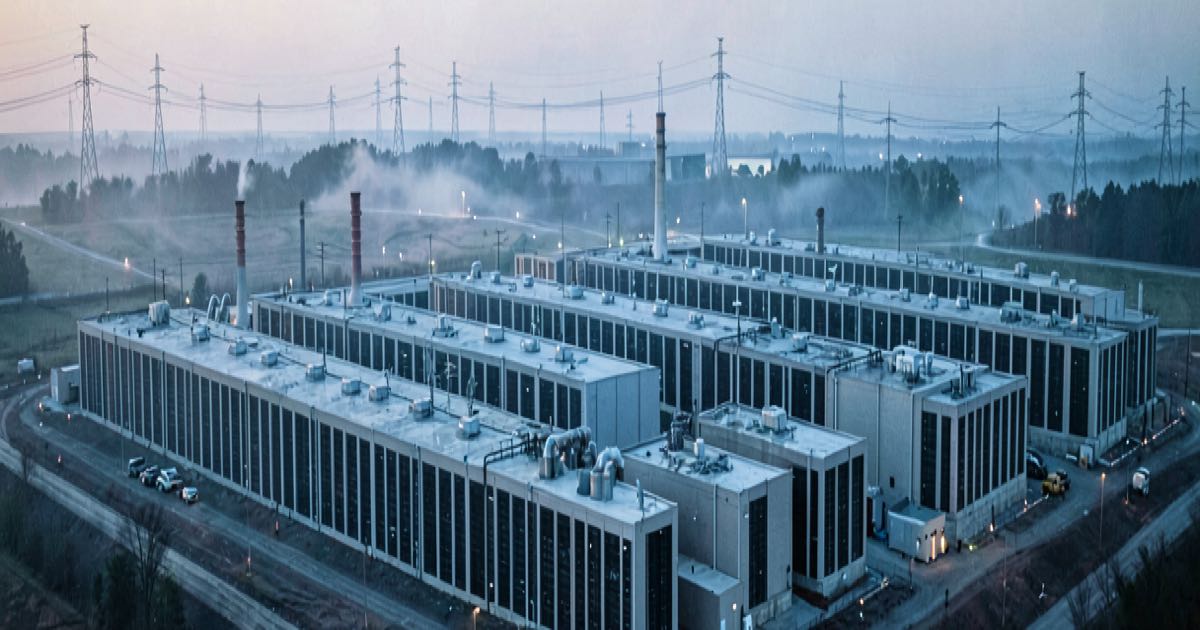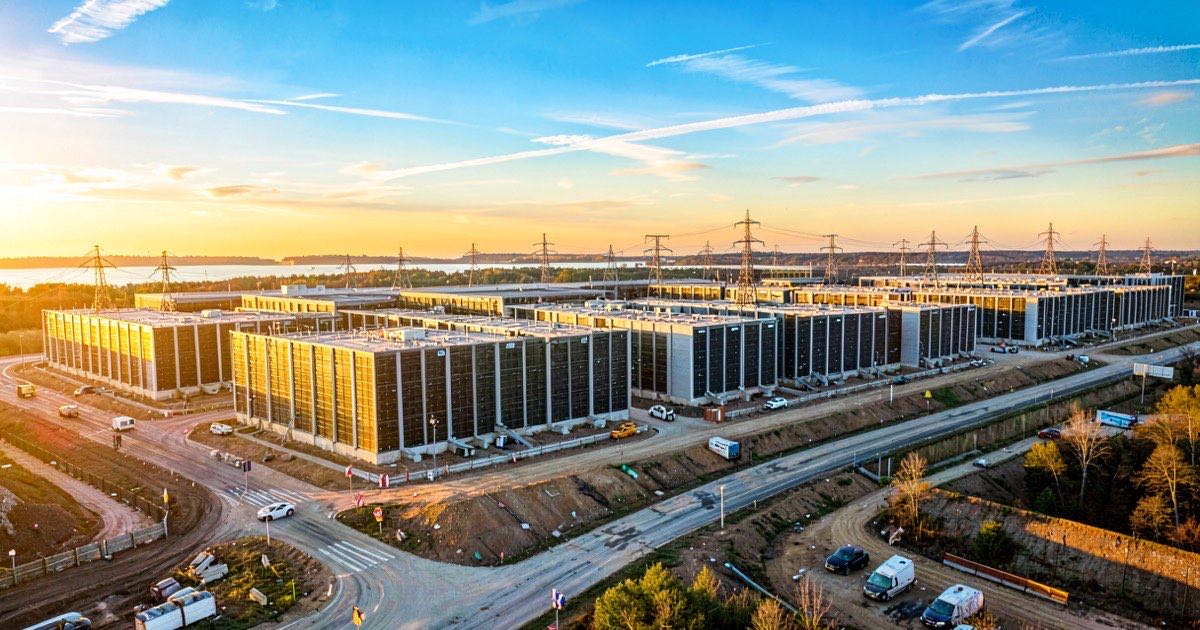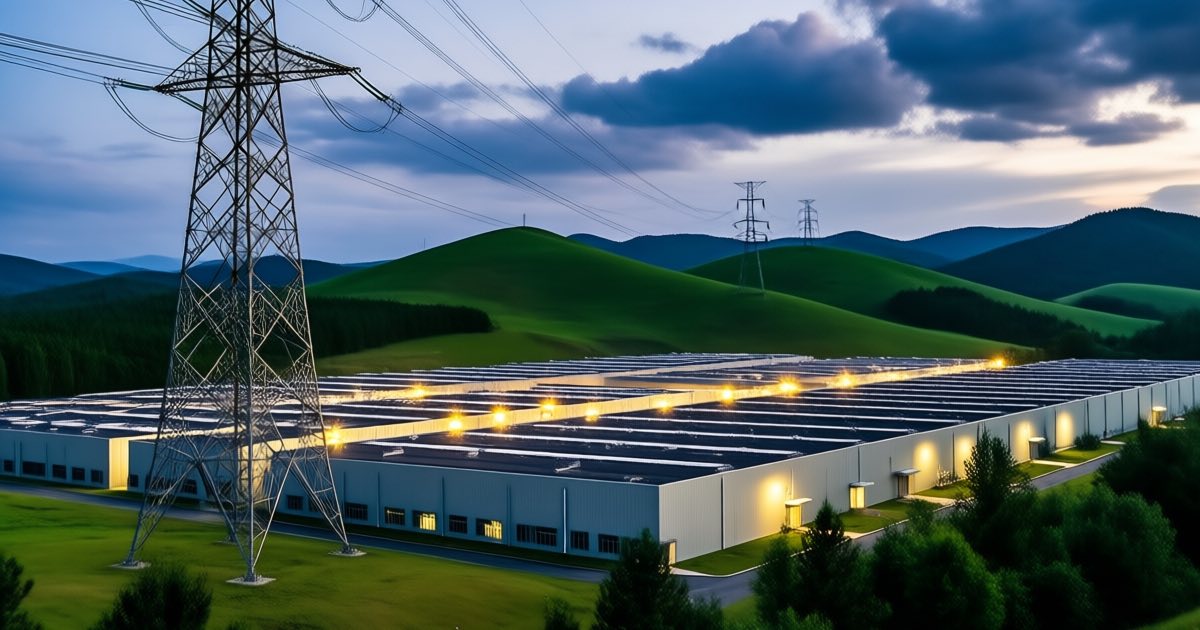
The three companies building the AI buildout’s most essential inputs — chips, cloud and, in Emerald AI’s case, the software that makes computing demand flexible — launched an alliance on 16 September to solve the industry’s least glamorous bottleneck: the electricity grid.
The AI Energy Management Alliance (AEMA) counts Google, Nvidia and Emerald AI as founding members, with 18 launch partners spanning the AI and energy industries — Anthropic, Analog Devices, National Grid, AES, RWE, Constellation and NRG among them. Its premise, per the launch release: as the United States builds data centre infrastructure, “the primary limiting factor for deployment is no longer capital or silicon; it is power.”
What “flexible” means here
A conventional data centre is a flat, static load — it draws the same power at 3am as at 6pm on the hottest day of the year, and grid operators must plan for its peak. A flexible one behaves more like a demand-response asset: AEMA’s framing describes data centres that shift workloads to off-peak hours, draw on colocated generation or storage, or cut consumption when the grid is under stress — “dynamically adjusting their power draw to provide relief during periods of peak grid stress.”
The numbers AEMA cites are large. Roughly half the power system’s capacity goes unused across a year, and the group claims moderately flexible data centres could unlock 100 gigawatts from the existing US system — enough, it says, to power 100 million homes. It cites demonstrations where data centre loads cut power consumption by a third in under a minute during emergency scenarios. New AI data centres currently wait five to seven-plus years for interconnection in key US markets, and AEMA argues each gigawatt of flexible AI load could avoid around $733 million in power-system costs.
The alliance says it will push for “technology-neutral, performance-based standards” — in Nvidia sustainability head Josh Parker’s words, standards that evaluate flexible data centres “on measurable grid reliability metrics” — plus standardised technical data and what it calls risk-adjusted interconnection pathways for facilities that can verify their flexibility. Crypto Briefing’s report adds that Emerald AI and Nvidia are already developing AI factories that respond to grid conditions in real time with energy partners, and AEMA’s job is to broaden that model across the United States.
Why the AI industry is suddenly negotiating with utilities
The context is the demand curve. The International Energy Agency puts global data centre consumption at 415 TWh in 2024 — about 1.5% of world electricity — and projects it more than doubles to around 945 TWh by 2030, with AI the dominant driver. In the United States, data centres accounted for about half of the increase in electricity consumption in 2025, and interconnection queues built for static loads have become the choke point. Grid stress is no longer a talking point; it is the reason proposed AI facilities sit in multi-year queues.
That is also why the membership list matters as much as the technology. Anthropic signing on means a frontier lab is publicly endorsing the idea that its training and inference load should be interruptible. Google’s energy-market innovation lead Tyler Norris framed it as turning data centres into “dynamic grid allies.” This is AI companies pre-empting the political fight: the fastest way to build is to be seen reducing demand when neighbours’ air conditioners are screaming.
The NZ lens: flexing versus consuming
New Zealand has a live version of this debate. The Datagrid proposal near Invercargill would draw a continuous 280 megawatts — about 6% of the national grid — and we’ve previously examined why its economics look difficult to defend. AEMA’s whole pitch is the opposite design philosophy: a data centre that can be a controllable, interruptible load rather than a fixed 280MW block. Whether any NZ proposal would offer that flexibility — and whether Transpower could value it — is a question the AEMA model makes fair to ask.
The alliance is also an indirect response to the buildout’s financing cycle: OpenAI has held early talks with investors about a fresh round at a reported $1.2 trillion valuation ahead of a planned IPO, the kind of capital raise that presumes power will be available at scale. Alliances like AEMA are how the industry tries to make that premise true. We’ve also tracked NZ’s own data-centre jobs and investment forecast, where the same power-constraint arithmetic shows up in local form.
The catch
None of this generates a new electron. Demand flexibility stretches existing capacity; it does not build generation or transmission, and grid operators still need to trust a data centre’s promise to curtail. AEMA’s own materials describe policy advocacy — with relationships at FERC, DOE and state regulators — as a core function, which signals how much of this is regulatory persuasion rather than engineering. The 100GW headline assumes a grid that can verify and reward flexibility in real time, at national scale, quickly. That is a bigger lift than a coalition launch.