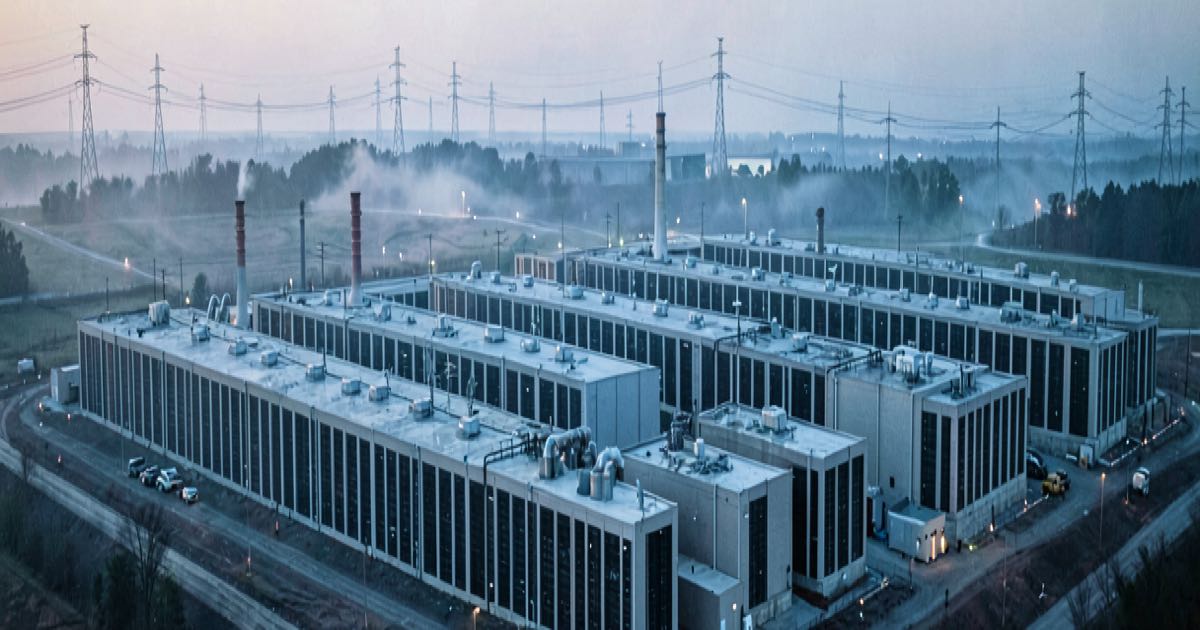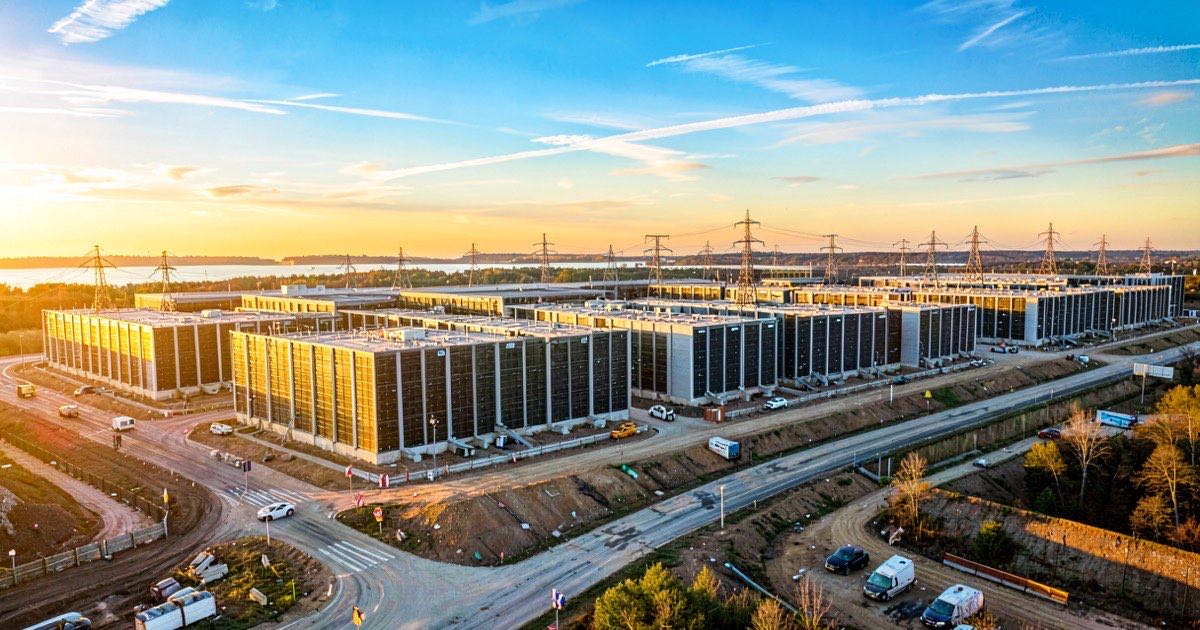
Nvidia is in discussions to provide a guarantee of roughly $250 billion to help OpenAI lease computing from a giant data centre project in Ohio, according to The Wall Street Journal. The talks, reported Sunday, would see Nvidia backstop the financing for a facility that could require as much as 10 gigawatts of power, a scale that makes it one of the largest single AI infrastructure projects ever proposed.
🔍 THE BOTTOM LINE
The chipmaker that sells the picks is now offering to guarantee the shovels. A $250 billion guarantee is not $250 billion in cash — it is a promise to cover obligations if the project or OpenAI falls short. But that kind of credit support shifts default risk from a single data centre to Nvidia’s balance sheet, and it signals that the AI buildout has moved from “who has the best chips?” to “who can fund and power the factories that run them?”
What the Deal Actually Involves
The WSJ reports that Nvidia’s guarantee would help OpenAI lease the Ohio site from SoftBank’s energy unit. The guarantee lowers lenders’ worries about repayment, making the financing cheaper and longer-term. Without it, a project of this scale would struggle to attract traditional infrastructure lenders — the numbers are simply too large and the revenue too speculative for conventional project finance.
The project’s total scope could approach $500 billion, according to one secondary report. The power allocation is effectively controlled by the US government and financed separately by Japan under a recent trade deal, with US Commerce Secretary Howard Lutnick involved in deciding which companies get access.
What is a financing guarantee? A guarantee is not a direct investment or a loan. It is a commitment from Nvidia to step in and cover payments if the primary borrower — in this case, OpenAI — defaults. It functions like a parent co-signing a mortgage: the bank lends more readily because a deep-pocketed entity is on the hook. For Nvidia, the risk is that the project fails and the guarantee is called.
Why Nvidia Would Do This
Nvidia has a structural incentive to keep OpenAI solvent and expanding. OpenAI is one of the largest buyers of Nvidia chips in the world. If OpenAI cannot secure compute, it cannot train models, and if it cannot train models, its demand for Nvidia hardware stalls. A guarantee that keeps the compute pipeline flowing protects Nvidia’s core revenue stream.
This is the same circular investment pattern that critics have flagged for months. Chipmakers fund AI companies, AI companies buy chips, and the cycle repeats. The Nikkei analysis compared the pattern to the Enron-style off-balance-sheet structures that preceded the 2001 collapse. Nvidia’s guarantee is not quite the same — it is a disclosed credit commitment, not a hidden special-purpose vehicle — but it deepens the entanglement between the supplier and the customer.
The Information’s reporting on AI financing adds context: Goldman Sachs’ global head of infrastructure finance said he is “looking for capital in every nook and cranny” to support an expected $7.5 trillion in AI-related spending over the next five years. Traditional data centre financing is not built for numbers like that.
The SoftBank Connection
The Ohio site is tied to SoftBank’s broader Stargate strategy, where the Japanese investment giant has been positioning itself as the intermediary between AI companies and the infrastructure they need. SoftBank’s energy unit would own the site and lease it to OpenAI. Nvidia’s guarantee sits on top of that arrangement.
This is not SoftBank’s first move in this space. The company has been renting AI compute capacity and building infrastructure relationships that go beyond simple equity investments. The Ohio project, if it proceeds, would be the most concrete manifestation of that strategy.
The Credit Risk Question
A $250 billion guarantee is not $250 billion in cash — but investors treat big guarantees like debt that might appear later. Even if nothing goes wrong, the commitment can reduce Nvidia’s financial flexibility, invite scrutiny from credit rating agencies, and raise the cost of funding for the guarantor.
Nvidia’s open-weights coalition with Microsoft shows the company is already expanding its political and strategic footprint in Washington. A $250 billion credit guarantee tied to a US-government-controlled power allocation puts Nvidia even deeper into the infrastructure policy arena. The company that started as a GPU designer is now a counterparty in US energy policy.
For context, Oracle’s credit downgrade to junk showed what happens when Wall Street starts questioning the debt profile of AI infrastructure investors. Nvidia’s balance sheet is stronger than Oracle’s, but a $250 billion contingent obligation is not trivial even for a company with Nvidia’s market capitalisation.
What This Means for the AI Industry
The deal, if it closes, would cement a pattern that is already becoming clear: the AI buildout is consolidating around a small number of firms that can simultaneously supply chips, provide credit, and navigate government power allocations. A startup cannot do what Nvidia is doing here. Even Microsoft, with its deep Azure infrastructure, has not publicly offered a guarantee of this scale.
That has implications for competition. If the largest AI projects require a chipmaker’s credit backing to get financed, the barrier to entry for new AI labs gets higher, not lower. The OpenAI IPO filing was supposed to give OpenAI independent access to public markets. A Nvidia guarantee suggests that even OpenAI, the most valuable AI company in the world, still needs a hardware partner’s credit to close the biggest deals.
NZ Angle
New Zealand’s sovereign AI ambitions — including the NZ Super Fund’s infrastructure investments — operate at a scale orders of magnitude below $250 billion. But the consolidation of AI infrastructure financing around Nvidia and a handful of US firms has a direct implication: if compute access becomes contingent on relationships with specific chipmakers and their credit guarantees, the cost of staying independent goes up. A country or company that wants to run frontier models without Nvidia’s backing will need to find alternative financing paths, and those paths are getting narrower.
❓ FAQ
Is Nvidia giving OpenAI $250 billion in cash? No. A guarantee is a promise to cover obligations if the project or OpenAI defaults. Nvidia is not writing a cheque. But the guarantee is a real liability on Nvidia’s balance sheet — if things go wrong, Nvidia could be on the hook for a significant amount.
Why would Nvidia take on that risk? Because OpenAI is one of its biggest customers. If OpenAI cannot access compute, it cannot train models, and its demand for Nvidia chips drops. The guarantee protects Nvidia’s revenue pipeline.
What is the Ohio data centre project? A massive facility — potentially requiring 10 gigawatts of power — that OpenAI would lease from SoftBank’s energy unit. The US government controls the power allocation, and Japan is financing the power infrastructure under a trade deal.
Does this mean smaller AI companies are shut out? Not directly, but it raises the bar. If the largest compute projects require a chipmaker’s credit backing, the barrier to entry for new labs increases. A startup cannot offer a $250 billion guarantee.
Has anything like this been done before? Nvidia invested $2 billion in CoreWeave, a cloud GPU provider, in early 2026. That was equity. This guarantee would be credit support at a scale roughly 125 times larger — a different category of financial commitment.
🔍 THE BOTTOM LINE
The WSJ report is still “talks,” not a signed deal. But the signal is clear: the AI buildout has moved from a technology race to a financing race, and the companies that can provide both the chips and the credit are the ones shaping who gets to compete. Nvidia’s willingness to put its balance sheet behind OpenAI’s compute needs is the strongest evidence yet that the next phase of AI will be decided by capital allocation, not model architecture.