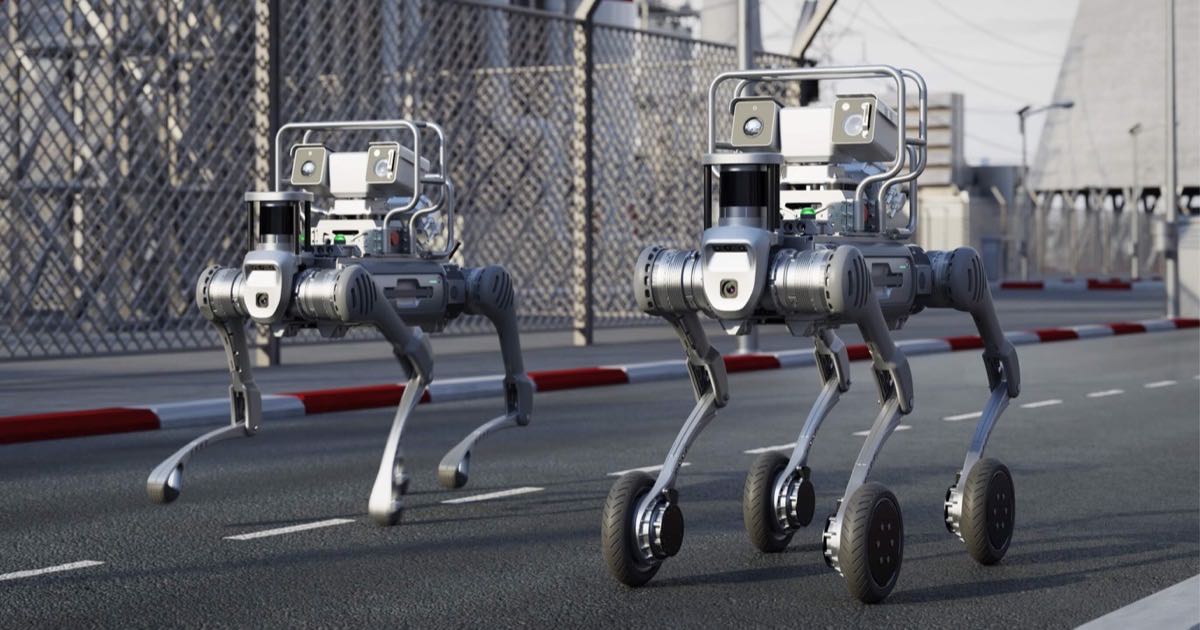
DeepSeek — the Hangzhou lab that undercut the entire AI industry on price — is close to leading a seed financing round worth tens of millions of dollars for Winverse AI, a months-old stealth startup building artificial intelligence for robots, according to Bloomberg, citing people familiar with the matter. The round, which also draws commitments from Meituan’s Long-Z Investments, would value Winverse at roughly $400 million after the investment. Bloomberg’s sources caution the deal is not final and terms could still change; DeepSeek, Long-Z and founder Hu Han did not respond to Bloomberg’s requests for comment.
Who is building it
Winverse was founded in 2026 by Hu Han, who previously led Tencent’s vision-language and embodied foundation model teams as lead scientist. Per Bloomberg’s reporting, Hu holds a PhD from Tsinghua University, has worked at Microsoft Research Asia and Baidu, and left Tencent as the company restructured its AI research operation to catch up with rivals including DeepSeek and Moonshot. The startup itself keeps a low public profile — its GitHub organisation shows just two repositories — though Yahoo Finance notes its funding page cites the same career history.
If the round closes as described, a $400 million valuation would put a months-old company in the same post-money bracket as specialised robotics-AI firms with years of runway. DeepSeek’s participation also matters for where its capital goes: the lab is close to raising at least $12 billion of its own ahead of a planned 2027 listing, money mainly earmarked for training models and data centres — and now apparently for seeding the company that might turn its models into robot intelligence.
The Unitree playbook, upgraded
This is not DeepSeek’s first robot bet, and the sequence is the tell. In August the lab bought a 2.31 percent stake in Unitree alongside a mutual procurement pact as the humanoid maker listed in Shanghai — a hardware position. In July it paused its own $71 billion funding round after founder Liang Wenfeng’s private remarks leaked. Now it appears to be adding the software layer: a founder-level bet on the models themselves, funded out of the money raised for models. Bodies, then brains. The pattern matches what the rest of China’s embodied-AI funding wave already looks like — D-Robotics’ $400 million Series C for robot chips and Infiforce’s $150 million for a robot world model both closed in recent months — but DeepSeek participating directly, as a strategic lead rather than a passive LP, moves the lab closer to becoming a platform company for other people’s robots.
The competitive map Bloomberg sketches explains the urgency. China leads at building robot bodies; making them smart enough for real-world tasks requires AI that is different from chatbot models, and the US labs chasing that problem — Skild AI, Physical Intelligence — are already valued in the billions. Hu spent years inside Tencent trying to bridge exactly that gap at one of China’s biggest consumer-tech companies; Winverse is the second attempt, funded by the lab that broke Tencent’s AI confidence in the first place.
What a $400 million seed actually buys
The number deserves scepticism more than awe. Seed rounds don’t usually price months-old stealth startups at $400 million — that is a strategic price, justified only if the investor believes the founding team is a national asset, or intends to use the startup as an extension of its own roadmap. DeepSeek has the second-lowest cost structure in the industry and a model family that runs on domestic chips; the plausible endgame is Winverse’s models shipped as the intelligence layer for Chinese robot makers, with Unitree’s procurement pact as the template. There is also a quieter reading: with DeepSeek close to a $12 billion-plus raise amid reports of China’s state funds moving behind it, a strategic robotics position makes the lab’s IPO story bigger than “cheap ChatGPT” — it becomes “the software stack for Chinese robotics.”
The deal is not signed, the sources are unnamed, and valuations in private markets are notoriously soft until money lands. But if it closes, the direction is hard to argue with: China’s answer to OpenAI is betting that the next frontier model does not answer questions — it loads the dishwasher.
❓ FAQ
What is Winverse AI? A stealth Chinese startup founded in 2026 by Hu Han, former lead scientist for Tencent’s vision-language and embodied foundation model teams, building AI models for robots. It is months old and has almost no public product footprint.
How big is the round and who is investing? Bloomberg reports a seed financing of tens of millions of dollars led by DeepSeek, with commitments from Meituan’s Long-Z Investments, valuing Winverse at roughly $400 million after the investment. Bloomberg’s sources stressed the deal is not final and terms could change.
Why does DeepSeek care about robots? It already holds a stake in Unitree, China’s first publicly listed humanoid robot maker, tied to a procurement agreement. Leading Winverse extends that from a hardware position into the model layer — and puts its $12 billion fundraising to work in one of the industry’s fastest-growing fields.
How does this compare internationally? US robotics-AI labs like Skild AI and Physical Intelligence are already valued in the billions for similar work. A $400 million seed would put Winverse in that tier immediately, months after founding.
Sources
- Bloomberg — DeepSeek Backs Ex-Tencent AI Scientist’s $400 Million Robot Lab
- Yahoo Finance — DeepSeek leads $400 million seed round for robotics AI startup
- The Next Web — DeepSeek to lead seed round in $400mn robot AI start-up
- Startup Fortune — DeepSeek leads $400 million funding round
- Investing.com — DeepSeek backs ex-Tencent scientist’s robotics startup Winverse AI