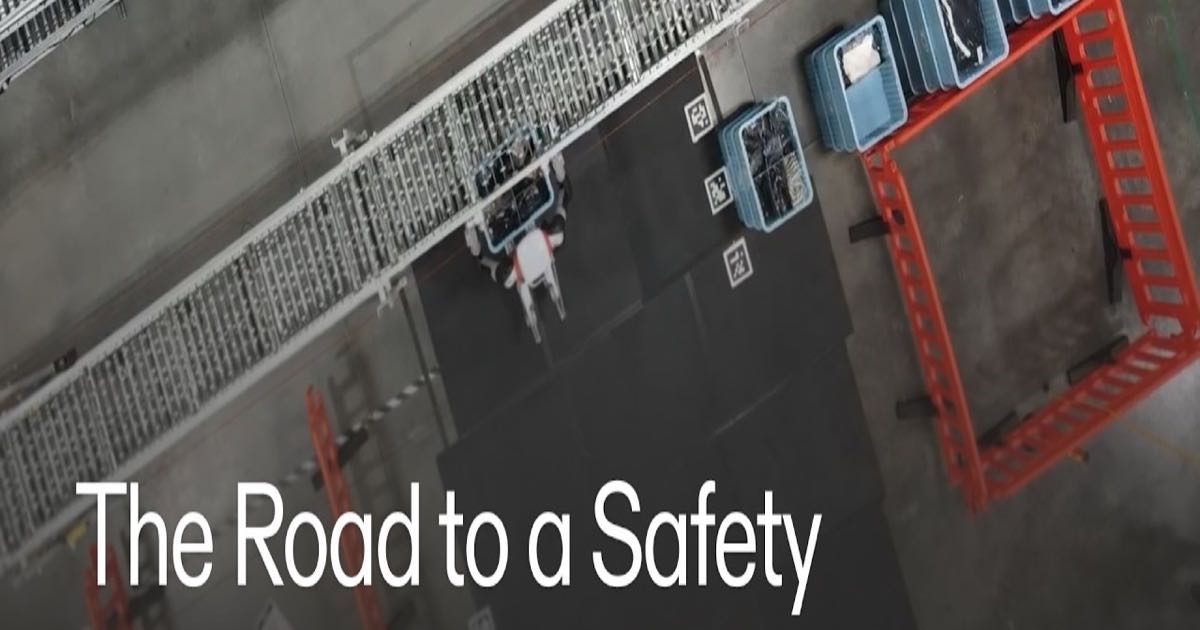
The most interesting thing about Agility Robotics’ Digit 5 is not the new legs, the bigger battery, or the $300 million order book. It is what the robot does when a person walks straight at it: it lowers itself to the ground and shuts off its motors before they arrive.
Agility unveiled Digit 5 on September 15 as its first humanoid built from the ground up for uncaged work — no physical safety barriers between machine and human. The company is calling the approach “cooperatively safe” operation, and it is the pitch investors and factory managers have been waiting for since humanoids started appearing on real production floors.
How the robot decides to stop
Digit 5 uses onboard sensing and collision-avoidance software to track people nearby. According to Business Insider’s early look, the behaviour is layered: the robot slows down or stops when someone gets too close, gives visual and audio warnings, and — if the person keeps approaching — kneels and powers down its motors before contact.
The claim matters because safety cages have been the quiet ceiling on humanoid deployments. A machine that only works behind a fence cannot share a warehouse aisle built for people. Agility chief robot officer Jonathan Hurst told Business Insider that Digit 5 is “the first machine that is the full, formal product that has come from customer requirements and solves a couple of the major, absolute blockers that we didn’t really know about until we actually engaged.”
What is new under the skin
The upgrades are practical rather than flashy. Digit 5 lifts up to 22.7 kilograms, roughly 40 percent more than Digit 4, and runs on a battery that charges in nine minutes for 90 minutes of runtime — enough, Agility says, for more than 20 hours of work per day. The robot stands 1.81 metres and weighs 129 kilograms, with swappable grippers for different jobs.
Agility is also the first partner for Nvidia’s Halos, a safety platform for robotics, and Nvidia robotics vice president Deepu Talla framed the milestone in exactly the terms Agility needs: “Safely operating around people and assets is what moves humanoid robots from pilots to industrial deployments at scale.”
The business case, and the gap behind it
The commercial story is real but young. Agility says it holds more than $300 million in multiyear orders for Digit 5 across manufacturing, warehousing and logistics, and Digit 4 units have logged more than 65,000 customer hours with deployments at Amazon, GXO and Schaeffler — at GXO, moving around 100,000 bins at about 98 percent accuracy.
Against that sits a company still losing money. According to SEC filings tied to Agility’s planned SPAC merger with Churchill Capital Corp. XI at a $2.5 billion valuation, the company generated $1.8 million in net sales in 2025 against a $140 million operating loss. Orders are not revenue yet, and the gap between the two is where this story will be won or lost.
What happens next
Digit 5 reaches early-access customers in the first half of 2027, with general availability for manufacturers and warehouse operators by the end of 2027. It is Agility’s first robot cleared for deployment outside North America, starting with the European Union and United Kingdom under CE marking, built at a Salem, Oregon factory with capacity for up to 10,000 units per year.
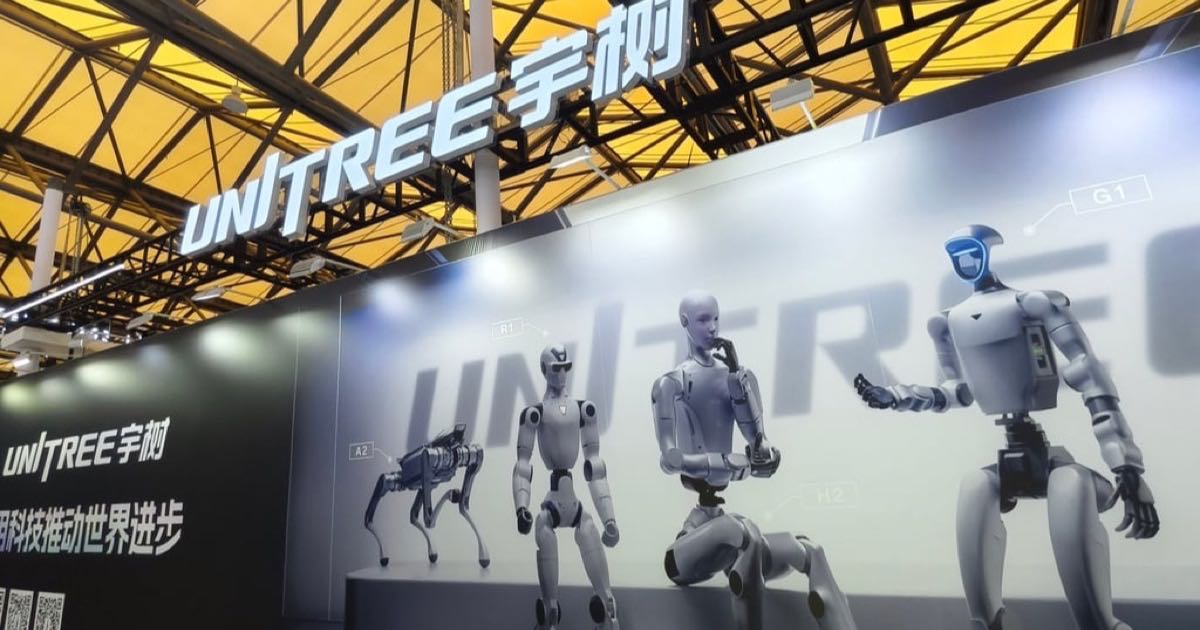
The bet is that safety certification, not dexterity, is what turns humanoids from demos into infrastructure. That argument is now being tested against better-funded rivals like Figure, whose latest humanoid has been climbing ladders autonomously, and a Chinese cohort that has already overtaken Unitree in humanoid market share. Agility’s earlier cageless push and its production-floor deployments across manufacturing laid the groundwork; Digit 5 is the first model designed as the end state rather than the experiment.
If the uncaged operation holds up under independent review the way Digit 4’s OSHA review did, the $300 million order book will look conservative. If it does not, Agility will have shipped a very expensive barrier-seeking robot — and its rivals will not need a cage to pass it.