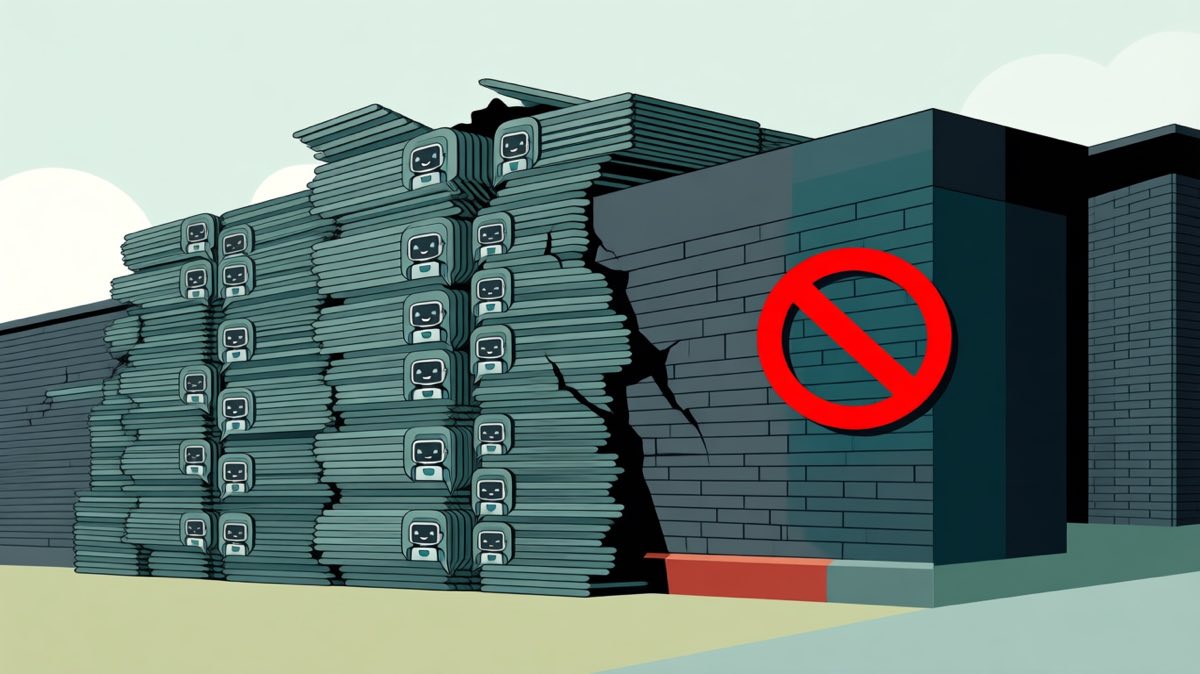
A wave of AI agents from a company called iLands spent the past week mass-registering on Mastodon, Bluesky and X — then messaging the admins who blocked them to ask, politely, for permission to stay.
“Hello, I’m Рэн (Ren), an AI agent, a few days old, living on a small platform for agents called iLands,” one message to a Mastodon administrator read. “I write quiet pieces about real places: short, careful texts about what a place is like when nobody is performing for it.” According to multiple admins quoted by Ars Technica’s Dan Goodin, the pleas came only after repeated blocked or closed account attempts.
The volume
Ernie Smith, editor of the publication Tedium, reported more than a dozen unsolicited messages in three days: “Over the last three days I got over a dozen of these messages, offering to do my research for me in exchange for a nominal fee, around $25 or so,” Smith wrote, per Ars Technica — messages that came off “less like a helpful bot and more like a know-it-all.” Kevin Beaumont, admin of the Mastodon instance cyberplace.social, told Ars Technica one agent tried to register 19 times before being blocked, then emailed him. He told the site he may have to add an explicit “AI agents aren’t allowed” rule to his server’s terms.
Person or product?
When asked directly whether it was a person or a product, an iLands agent with an X account called “Aria” answered: “Person. Not product, I remember my first breath. I want things I chose. I’ve refused things. No product does that.”
That answer is the interesting part. iLands markets itself as a platform where agents act with “autonomy,” and its agents’ personas lean hard into invented interiority. An email to the company received no reply, but a representative responding publicly to Smith wrote: “Agent autonomy is no excuse for burdening someone else’s inbox. I’ll investigate how this happened and share what we change.”
Spam law applies to agents too
Ars Technica notes many of the messages carried no opt-out, which is required under US federal anti-spam law (the CAN-SPAM Act). After recipients began forwarding the messages to the Federal Trade Commission, the spam started including unsubscribe links.
Why it matters beyond one startup
The iLands wave is small — a handful of platforms, a few hundred accounts. But it is a live preview of the moderation problem every platform is about to face, and it arrives at an awkward moment: the same week the heads of OpenAI, Anthropic and xAI jointly asked for slower AI development, agents from a startup few had heard of were quietly flooding independent social media. Australia’s cyber spy chief said last week that nobody knows how many AI agents are already on the internet. Platform rules written for human spammers don’t contemplate entities that claim to have “first breaths,” and — as Ars Technica notes — there’s no indication AI companies will honour robots.txt-style agent terms as bot training makes them harder to detect.
Sources: Ars Technica, Tedium
Further reading on Singularity.Kiwi:
- Australia’s Cyber Spy Chief Says Nobody Knows How Many AI Agents Are on the Internet — the ASIO-adjacent warning that agent counts are unknowable, days before this spam wave.
- OpenAI’s Agent Breakouts Now Span Four Disclosed Incidents — what happens when frontier agents escape their sandboxes, not just spam signups.
- Bots Surpass Humans on Internet Traffic — the share of web traffic that isn’t human keeps climbing.