Hyundai Motor Group is mobilising about 200 first-tier materials and components suppliers to build a domestic humanoid robot supply chain, urging them to submit detailed business plans for the new industry. The automaker is racing to cut production costs to a target that would have seemed absurd a year ago: $20,000 per humanoid robot.
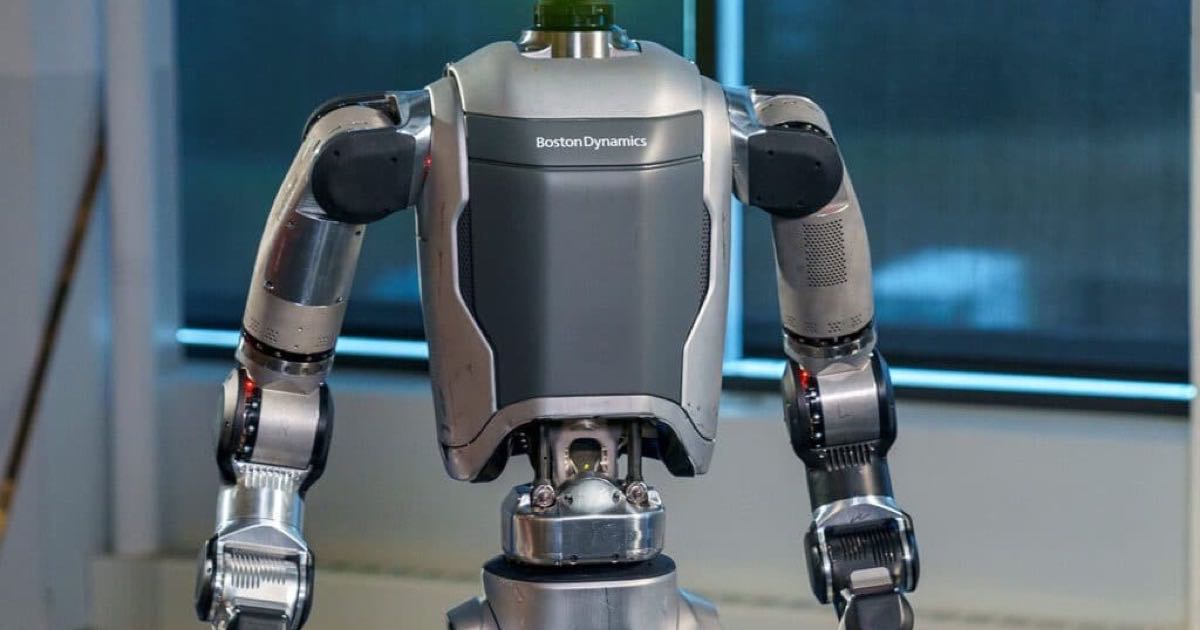
What is Hyundai doing? Hyundai already owns Boston Dynamics, the maker of the Atlas humanoid robot, and has committed to deploying 25,000 Atlas units across its own factories starting in 2028. Now it’s restructuring the supply chain that feeds those robots — bringing the same automotive-parts suppliers that build Hyundai’s cars into the robot business. The move was first reported by the Korea Economic Daily on August 13.
The $20,000 Question
The $20,000 price target is the headline number, and it’s worth pausing on what it means. Boston Dynamics’ current Atlas robot costs an estimated $145,000 per unit, based on internal union calculations reported by TechTimes. That figure reflects a hand-built, low-volume machine. Hyundai’s target represents an 86 per cent cost reduction.
This is not a roadmap aspiration. Hyundai is asking its actual suppliers — companies like HL Mando, Dae-Il, Samhyun, SNT Motiv, and SPG — to submit business plans for humanoid robot components. These are firms that already make actuators, joints, sensors, and structural parts for Hyundai’s vehicles. The pitch is straightforward: your automotive manufacturing expertise translates directly to robot manufacturing.
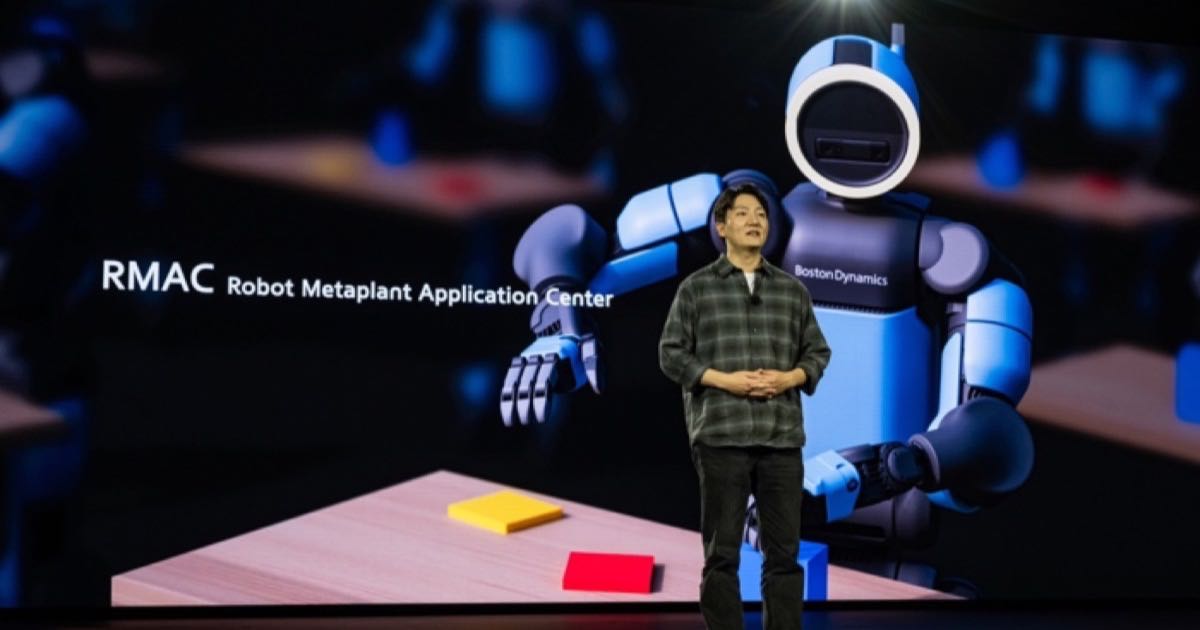
The vertical integration is the whole point. Hyundai Mobis, the group’s parts affiliate, already manufactures Atlas’s actuators. Hyundai Motor and Kia provide the factory environments. Hyundai Glovis handles logistics. The Robot Metaplant Application Center (RMAC) — opening in the US in 2026 — serves as the training ground where Atlas units learn manufacturing tasks before deployment. Every layer of the stack, from component to deployment, runs through a Hyundai affiliate.
Why a Car Company Makes Robots
What Hyundai has that pure-play robotics companies do not is an existing mass-production infrastructure. Building 30,000 robots a year by 2028 requires actuators, joints, and sensors at automotive scale. Hyundai Mobis is building a US production facility for actuators with annual capacity of 350,000 units starting in 2028 — enough to supply the full 30,000-robot production run with spares.
Actuators account for roughly 60 per cent of each robot’s material cost. Controlling that cost is the whole game. By manufacturing them at automotive volume rather than robotics-startup volume, Hyundai has a credible path to dramatically lower per-unit costs. The 200-supplier mobilisation is the mechanism: spread the component pipeline across the same firms that already compete on cost for automotive contracts.
The Competition Is Not Standing Still
Hyundai is not the only automaker eyeing humanoid robots. Tesla is pushing Optimus toward mass production, with Elon Musk targeting a $20,000 to $30,000 consumer price point. The difference is that Tesla is building its robot supply chain from scratch. Hyundai is converting an existing one.
The Chinese players are moving fast too. Unitree, which became the first humanoid robot company to go public, sells its G1 humanoid for around $16,000 — already below Hyundai’s target. But Unitree’s G1 is a smaller, less capable machine than Atlas, which is designed for industrial work with a 50 kg payload capacity and 56 degrees of freedom.
What stands out here is the contrast in approach. The pure-play robotics companies — Figure AI, Agility Robotics, Apptronik — build robots and sell them. Hyundai builds robots, uses them in its own factories, and then sells the excess capacity. That changes the economics. The first 25,000 Atlas units are absorbed internally; external customers are expected from 2027.
The Union Problem Hasn’t Gone Away
The Korean Metal Workers’ Union blocked Atlas from entering Hyundai factory floors without a formal labour-management agreement, citing the $145,000 unit cost as evidence that management views the robots as a labour-cost reduction tool. The union calculated that a robot operating round-the-clock could replace the work of three human workers while costing less over two years than the wages of one.
A $20,000 robot makes that math considerably more uncomfortable for the union. At that price, the payback period against a human worker shrinks dramatically. Hyundai and the union have since agreed to consider a monthly pay system as robots encroach on human work — one of the most significant changes to Hyundai’s wage structure in six decades. But the fundamental tension remains: robots that are cheap enough to deploy at scale are also cheap enough to displace workers at scale.
NZ Angle: What $20,000 Humanoids Mean for Local Industry
New Zealand’s manufacturing sector is small, spread across food processing, metal fabrication, and agricultural technology. A $20,000 humanoid robot — if Hyundai hits that target — would put industrial automation within reach of mid-sized NZ manufacturers who have never considered robotics because the entry cost was too high. The current $145,000 price tag puts humanoid robots firmly in the enterprise-only bracket. At $20,000, a Tauranga engineering firm or a Canterbury food processor could justify a unit for repetitive material handling.
The catch is availability. Hyundai’s first 25,000 units are committed to its own factories. External customers won’t get Atlas units until 2027 at the earliest, and even then, demand from larger industrial players will likely absorb early supply. For NZ, the more immediate path to affordable humanoids runs through Chinese manufacturers like Unitree, which are already shipping at lower price points — though with lower capability.