Boston Dynamics’ Atlas humanoid robot can now autonomously swap its own battery in under three minutes, return to work, and keep going. No human technician required. The feature, detailed in the production Atlas specification sheet, is part of a broader engineering push to turn Atlas from a viral video star into something factories can actually deploy on shift rotations.
The numbers tell the story. Atlas gets roughly four hours of battery life during typical use, around two hours during heavy lifting. A conventional recharge takes about 90 minutes. A three-minute autonomous swap means a fleet of Atlas robots could theoretically operate around the clock with a modest stock of spare batteries — pausing only for the time it takes to walk to a docking station, swap, and walk back.
From Dancing to Shift Work
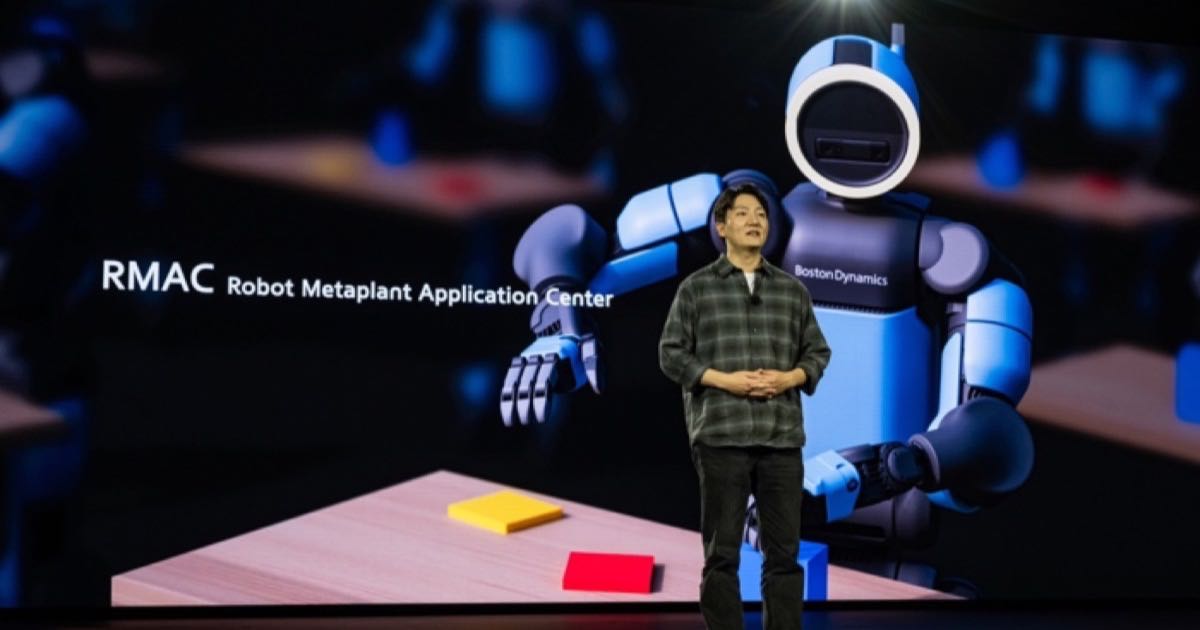
For years, Atlas was the robot that backflipped. The parkour videos racked up millions of views, but they were demonstrations of capability, not products. Boston Dynamics unveiled the production version at CES 2026 and committed to initial deployments at Hyundai Motor Group’s Robot Metaplant Application Center and Google DeepMind.
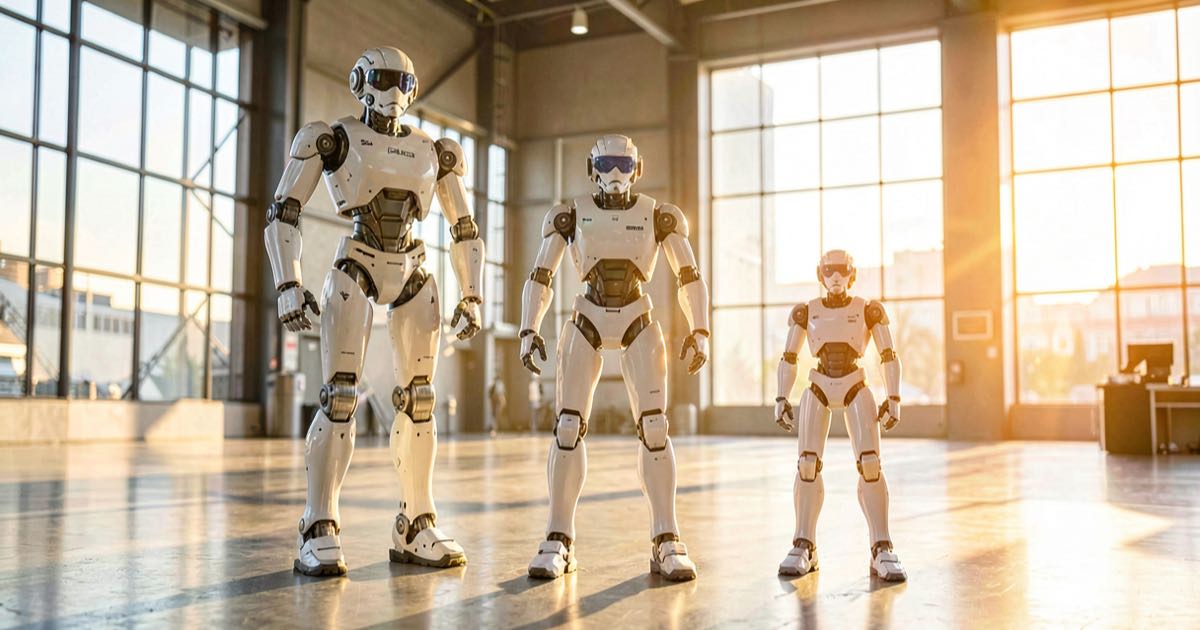
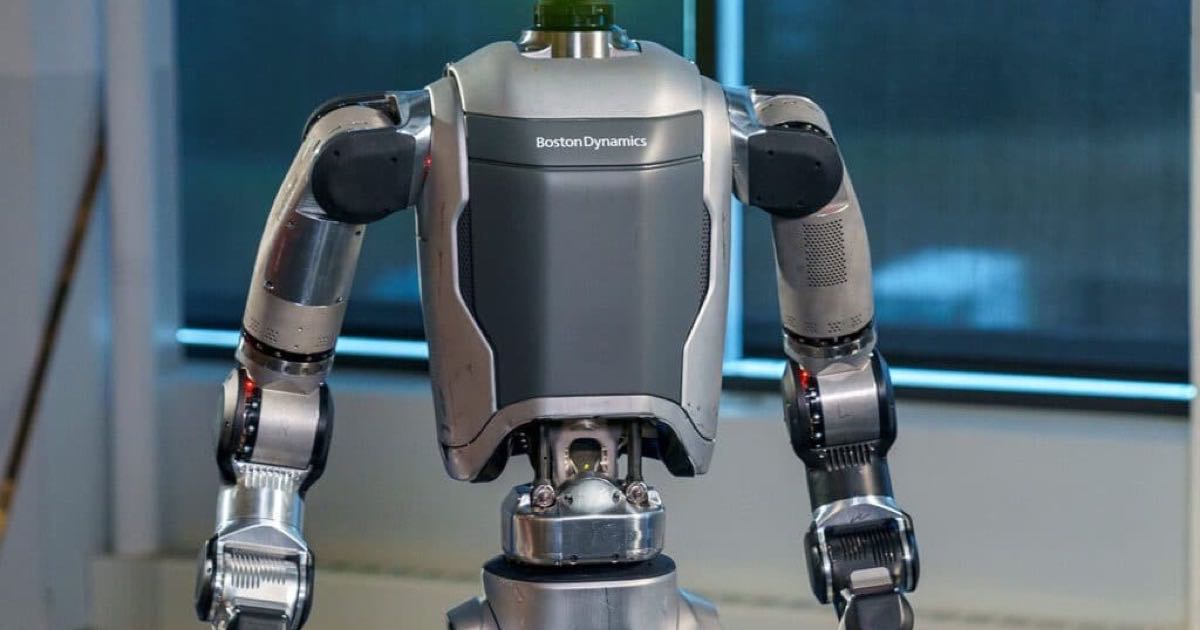
The production Atlas is built for the opposite of viral moments. It stands about 6 feet 2 inches tall, weighs roughly 198 pounds, and handles sustained loads of about 66 pounds — briefly up to 110. Its hands have tactile sensing. Its camera system provides a 360-degree view. These are specifications for repetitive lifting, moving, and material-handling in industrial environments, not acrobatics.
Hyundai’s robotics roadmap calls for Atlas to begin validated manufacturing tasks at its Georgia Metaplant in 2028, starting with parts sequencing. More complex assembly work is targeted for 2030. The company has also laid out plans for production capacity of up to 30,000 robots annually by 2028. That timeline tells you Hyundai is not rushing — but the battery-swap feature tells you they are designing for the day when thousands of these machines share factory floors.
Why Self-Maintenance Matters More Than Backflips
A robot changing its own battery sounds mundane. It is not. The economics of humanoid deployment depend on uptime, and uptime depends on how often a human has to intervene.
Every minute a robot sits idle waiting for a technician is a minute it is not earning its keep. A 90-minute recharge cycle means a four-hour robot spends nearly a third of its shift plugged into a wall. A three-minute swap collapses that to a coffee break. The difference between 72 per cent and 98 per cent availability is the difference between a capital expense that pays for itself and one that does not.
Boston Dynamics is designing other parts of Atlas around the same principle. The company says the robot’s limbs can be replaced in the field in under five minutes, and onsite maintenance teams can be trained to service fleets. The goal is a machine that operates for long periods without constant supervision — not just doing useful work, but handling the mundane logistics of keeping itself on the job.
The Fleet Learning Angle
There is a second, less obvious piece. According to the Atlas specifications, once one robot learns a new task, that functionality can be deployed across the fleet. Skills learned by a single Atlas become software that ships to every Atlas.
This is where the Google DeepMind partnership matters. The two companies are working to integrate Gemini Robotics foundation models with Atlas, expanding the robot’s ability to perform industrial tasks through AI rather than hand-coded programming. If one Atlas learns to sequence parts at Hyundai’s Georgia plant, every Atlas in the fleet could eventually inherit that capability through an update.
That begins to make robotic behaviour look less like hardware and more like software — with all the speed and scalability that implies.
The Competition Is Not Sleeping
Atlas is not the only humanoid being engineered for industrial uptime. Tesla’s Optimus is targeting production deployment at scale. Unitree just went public at a $9 billion valuation on the strength of its consumer and industrial humanoid lineup. Mitsubishi has committed to building 1,000 humanoids per month at a repurposed engine plant in Kyoto.
What separates Atlas right now is not the hardware — several companies are building capable bipedal platforms. It is the self-maintenance infrastructure. Autonomous battery swapping, five-minute limb replacement, and fleet-wide skill sharing are features aimed at the operational layer, not the demo layer. They answer the question that matters to a plant manager: not “can it do a backflip?” but “can I keep it running across three shifts without a dedicated technician on standby?”
What This Means for New Zealand
New Zealand’s manufacturing sector is small but automation-hungry. Companies like Rofco and INFACT already deploy traditional industrial robotics. The question for humanoid adoption is whether the total cost of ownership — purchase price, maintenance, downtime, training — falls low enough to justify replacing or augmenting existing fixed-arm systems.
Self-swapping batteries do not answer that question yet. But they push the curve in the right direction. Every engineering decision that reduces human intervention brings humanoid deployment closer to economically viable for mid-sized operations, not just automotive mega-plants.
🔍 THE BOTTOM LINE
Boston Dynamics has stopped optimising Atlas for YouTube and started optimising it for shift schedules. The three-minute battery swap is not glamorous, but it is the kind of unsexy engineering detail that determines whether humanoid robots become industrial infrastructure or remain lab demos. Hyundai’s 2028 deployment timeline is conservative. The battery swap suggests the hardware is further along than the timeline implies.
❓ FAQ
How long does Atlas’s battery last? Approximately four hours during typical use and around two hours during heavy lifting. The battery can be recharged conventionally in about 90 minutes or autonomously swapped in under three minutes.
Does the robot swap batteries by itself? Yes. The production Atlas can return to a battery station, replace a depleted battery, and resume working without a human performing the swap.
When will Atlas robots be deployed in factories? Hyundai’s roadmap targets validated manufacturing tasks at its Georgia Metaplant in 2028, beginning with parts sequencing. More complex assembly work is planned for 2030. Early Atlas fleets are already at Hyundai’s Robot Metaplant Application Center and Google DeepMind for development and training.
How does Atlas compare to Tesla Optimus or Unitree? All three are capable bipedal humanoid platforms. Atlas’s current differentiator is its self-maintenance infrastructure — autonomous battery swapping, five-minute field-replaceable limbs, and fleet-wide skill sharing. The competition is catching up fast, with Unitree now publicly traded and Tesla scaling Optimus production.
Can skills learned by one Atlas be shared with others? Yes. According to Boston Dynamics’ specifications, once one Atlas learns a new task, that capability can be deployed across the fleet. This is being developed in partnership with Google DeepMind’s Gemini Robotics models.