A humanoid robot that costs $20,000 was not supposed to happen this decade. Yet Hyundai Motor Group is now mobilising 200 suppliers to hit exactly that price for its Boston Dynamics Atlas robot, and the number is forcing everyone in the industry to reconsider their math.
The humanoid robot market has split into two tiers. Industrial robots — designed for factory work, with heavy payload capacities and industrial-grade durability — sit at $50,000 to $150,000. Consumer and light-duty robots, smaller and less capable, are already available for under $20,000. The gap between those tiers is closing, and fast.
The Price Landscape Right Now
| Robot | Company | Price (USD) | Payload | Target Market |
|---|---|---|---|---|
| Atlas (current) | Boston Dynamics / Hyundai | ~$145,000 | 50 kg | Industrial |
| Atlas (target) | Boston Dynamics / Hyundai | ~$20,000 | 50 kg | Industrial |
| Optimus Gen 3 | Tesla | $20,000–$30,000 (target) | ~10 kg | Consumer / Light industrial |
| G1 | Unitree | ~$16,000 | 3 kg | Research / Consumer |
| R1 | Unitree | ~$30,000 | 5 kg | Consumer / Research |
| NEO Beta | 1X Technologies | ~$20,000 (target) | ~3 kg | Household |
| Digit | Agility Robotics | Lease (RaaS) | 18 kg | Warehouse logistics |
| Figure 03 | Figure AI | Undisclosed | ~20 kg | Industrial |
Two things jump out from this table. First, the range is enormous: from $16,000 to $145,000 for machines that are all classified as “humanoid robots.” Second, the targets — not the current prices — cluster around $20,000. Hyundai, Tesla, and 1X are all aiming at roughly the same number from very different starting points.
What $20,000 Actually Buys You
The $20,000 figure is not arbitrary. It sits at a psychological threshold where a robot becomes a capital purchase rather than a research budget item. For a mid-sized manufacturer, a $20,000 machine that handles repetitive material handling tasks could pay for itself in months rather than years.
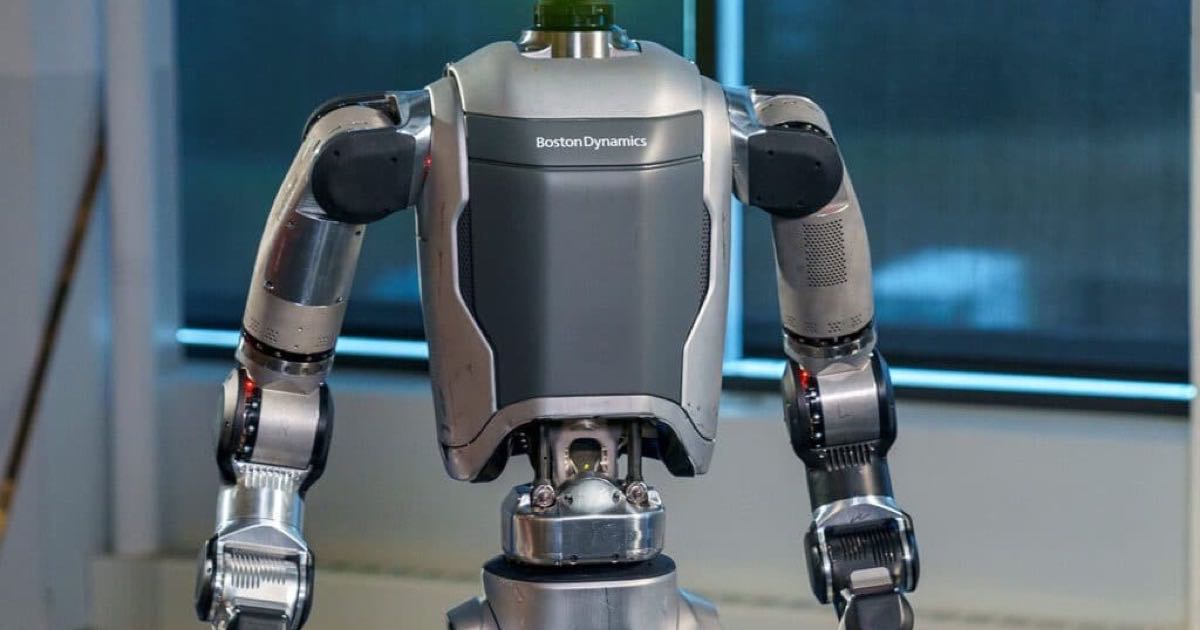
But the price tells you nothing about capability. Hyundai’s Atlas is a 56-degree-of-freedom industrial machine that can lift 50 kg, operate between -4°F and 104°F, and swap its own batteries in under three minutes. Unitree’s G1 is a 1.3-metre research platform with a 3 kg payload. Both might cost $20,000. They are not the same product.
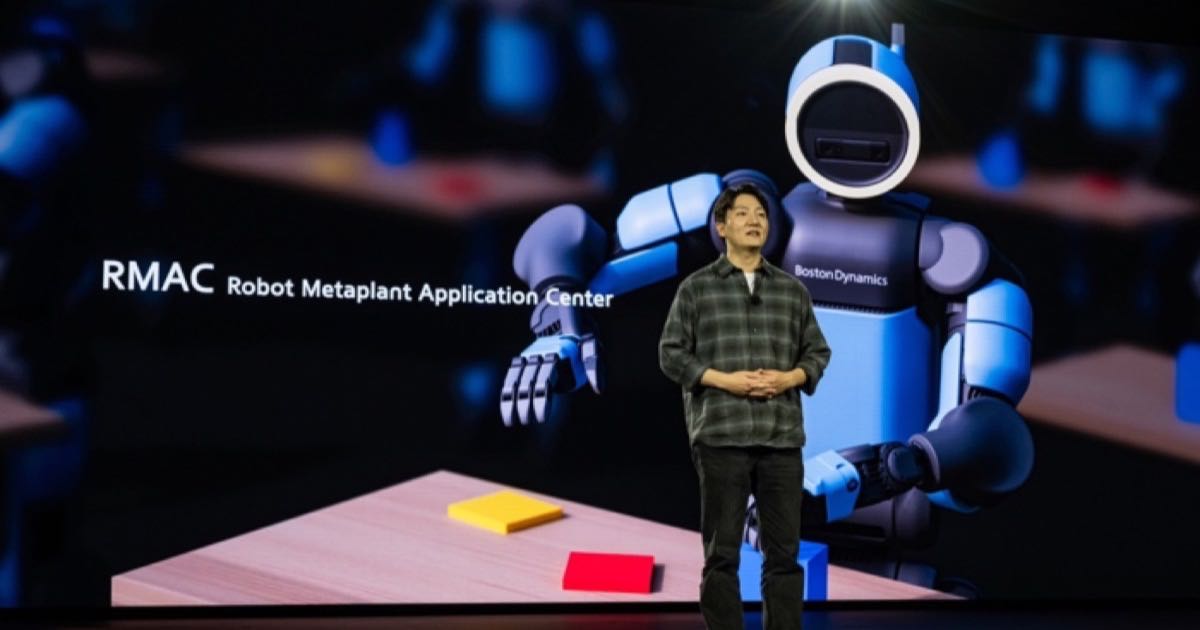
The real question is whether Hyundai can hit $20,000 for an industrial-grade robot. The current Atlas costs $145,000. An 86 per cent cost reduction is not a gradual improvement — it requires a fundamentally different manufacturing approach. Hyundai’s bet is that automotive-scale production, using the same supply chain that builds car parts, can achieve what hand-built robotics cannot. The 200-supplier mobilisation is the mechanism.
The Chinese Price Pressure
Unitree is the elephant in the room. The Chinese company went public in 2026 and is already shipping humanoids at prices that undercut every Western competitor. The G1 at $16,000 is not a target — it is a shipping price. The newer R1, a larger and more capable machine, lists around $30,000.
This is the same dynamic that played out in electric vehicles. Chinese manufacturers leveraged cheaper labour, government subsidies, and a mature domestic supply chain to undercut Western prices by 40-60 per cent. Western automakers responded with tariffs. The humanoid robot market has no tariffs yet, and the Chinese players are moving faster than anyone expected.
Tesla’s Consumer Ambition
Tesla’s Optimus occupies a different niche. Musk has targeted 1 million humanoid robots annually, with a consumer price of $20,000 to $30,000. Over 1,000 Gen 3 units are already deployed in Tesla’s own factories for internal testing.
The Optimus is lighter-duty than Atlas — roughly 10 kg payload versus 50 kg — but Tesla’s advantage is the same as Hyundai’s: an existing mass-production infrastructure. Tesla builds its own actuators, its own battery packs, and its own AI inference hardware. The question is whether Tesla can translate that into a consumer product that actually works in homes, not just in controlled factory environments.
The Real Bottleneck: Software, Not Hardware
Prices are falling because hardware is getting cheaper. The harder problem is making the robots useful enough to justify any price. A $20,000 robot that can only pick up boxes in a fixed sequence is a niche product. A $20,000 robot that can be taught a new task in minutes and adapt to a changing environment is a general-purpose tool.
That is where the Google DeepMind partnership with Boston Dynamics matters. Gemini Robotics models are being integrated with Atlas to give it cognitive capabilities — the ability to perceive, reason, and plan actions. The hardware price war is happening now. The software capability war is just beginning.
❓ FAQ
Can I buy a humanoid robot for $20,000 today? Not an industrial-grade one. Unitree’s G1 ships at around $16,000 but is a research platform with a 3 kg payload. Hyundai’s $20,000 Atlas target is a future goal, not a current price. The cheapest shipping industrial humanoid is likely still above $50,000.
When will Hyundai’s $20,000 Atlas be available? Hyundai targets 2028 for the 30,000-unit annual production run. External customers may get Atlas units from 2027, but early supply will be absorbed by Hyundai’s internal factory deployments (25,000 units committed).
Is a $20,000 humanoid robot actually useful? That depends entirely on software. At $20,000, the hardware is affordable for mid-sized businesses. But a robot that needs weeks of programming for each new task is not worth the price. The value unlocks when a robot can be shown a task and learn it in under a day — which is where Gemini Robotics and similar VLA models come in.
How does this affect NZ manufacturers? A $20,000 industrial humanoid would be accessible to mid-sized NZ firms that currently can’t justify automation. The barrier is availability — Hyundai’s first units go to its own factories. NZ firms may see Chinese alternatives first, at lower prices but with lower industrial capability.