Unitree Technology, the Hangzhou-based robotics company that makes both quadruped and humanoid robots, is raising 4.2 billion yuan ($620 million) in a Shanghai IPO that values the company at more than 50 billion yuan ($7.4 billion). The IPO price enquiry opens Wednesday, with subscriptions accepted Friday.
It is the first pure-play humanoid robot company to go public on any major exchange. The listing arrives at an awkward moment: the United States FCC has banned Unitree’s robots from the North American market, and the US Defense Department added the company to a list of firms it believes aid Beijing’s military.
🔍 THE BOTTOM LINE
A company that cannot legally sell its flagship products in the world’s largest economy is about to be valued at $7.4 billion by public investors. That is either a sign that the humanoid robotics market has matured past the point where US sales matter — or that investor enthusiasm has outrun the fundamentals.
What the prospectus actually says
Unitree’s March 2026 STAR Market filing replaced almost every number the press had been working with. The audited figures tell a more nuanced story than the “profitable since 2020” line that circulated from CEO comments.
Revenue hit 1.708 billion yuan ($236 million) in 2025, up 335 per cent year over year. The company was loss-making in 2022 and 2023 before turning profitable in 2024. Two profit figures are disclosed: 287.6 million yuan in attributable net profit, and 600.1 million yuan after deducting non-recurring items — principally share-based payment expenses.
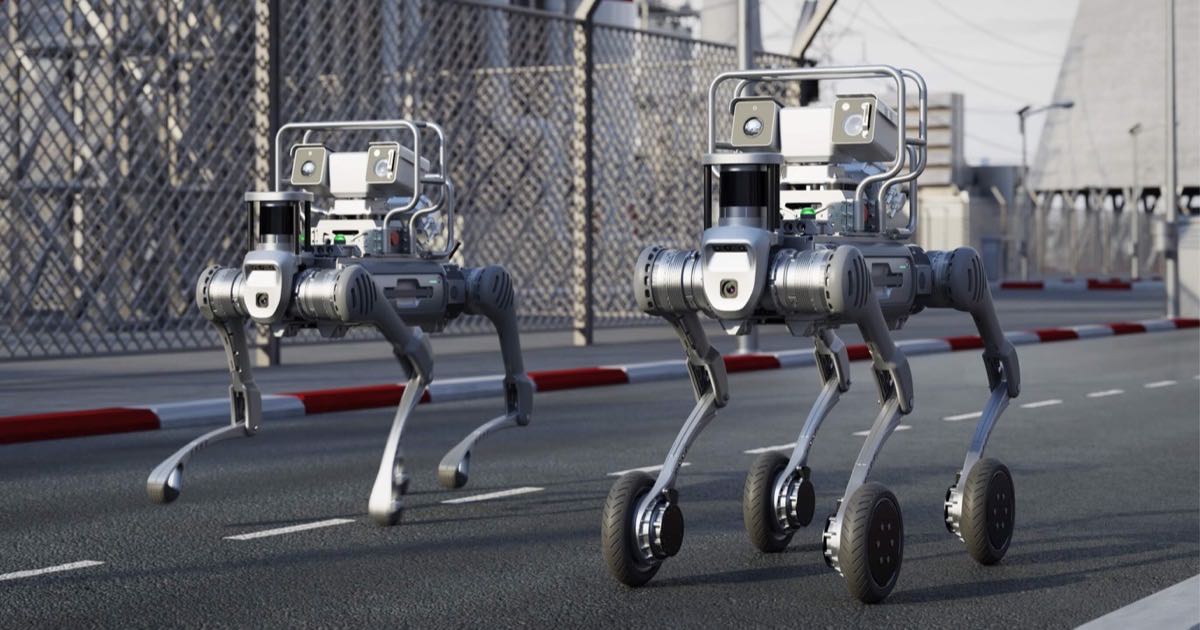
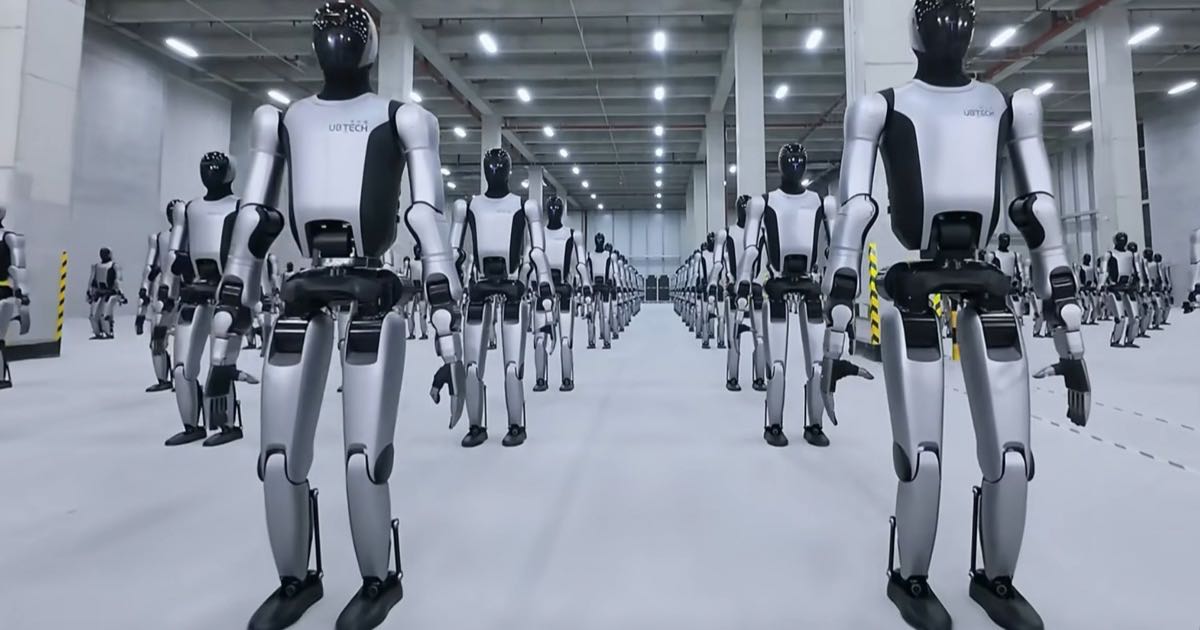
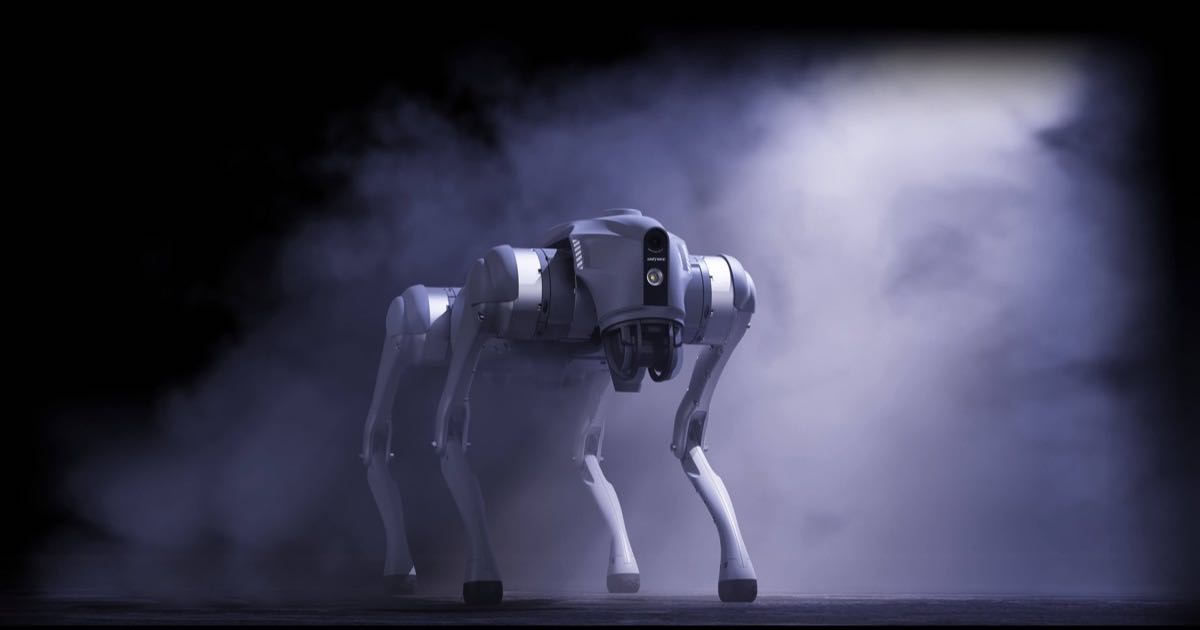
The business has flipped from quadruped-led to humanoid-led inside one year. Humanoids rose from 1.9 per cent of revenue in 2023 to 27.6 per cent in 2024 to 51.5 per cent in the first nine months of 2025. Quadrupeds, the robot dogs Unitree built its brand on, are now the second-biggest line.
Citic Securities, which is sponsoring the IPO, values Unitree at roughly 20 times this year’s expected sales and about 80 times forecast earnings. That is aggressive pricing for a company with a two-year profitability record, but it reflects the scarcity value: there is no other pure-play humanoid robot stock to buy.
The FCC ban problem
The US Federal Communications Commission added foreign-produced advanced robots to its Covered List, effectively barring them from American sales. Unitree was specifically named, alongside other Chinese robotics firms.
The FCC’s reasoning, as reported by 1News: “Relying on foreign-produced advanced robotic devices presents unacceptable supply chain and cybersecurity vulnerabilities.”
Unitree’s response has been to pivot. The company is focusing on Asian markets and proceeding with the IPO, according to Machine Dawn. It is a bet that China, Southeast Asia, and the Middle East can absorb enough humanoid robots to justify a $7.4 billion valuation without American buyers.
How Unitree stacks up against the competition
Unitree competes with Tesla and Boston Dynamics in the humanoid space. The comparison is not flattering on revenue — Tesla’s automotive business generates billions per quarter — but Unitree has something neither competitor offers: a public stock.
| Company | Status | Valuation | Humanoid Product | US Market Access |
|---|---|---|---|---|
| Unitree | IPO pending (Aug 2026) | ~$7.4B | H1 (commercial) | Banned by FCC |
| Tesla (Optimus) | Public (NASDAQ) | ~$1T market cap | Optimus Gen 3 (pilot) | Full access |
| Figure AI | Private | ~$2.6B (est.) | Figure 03 (deployed at BMW) | Full access |
| Boston Dynamics | Hyundai subsidiary | N/A | Atlas (R&D) | Full access |
| Agility Robotics | Private | ~$1B (est.) | Digit (deployed at Amazon) | Full access |
Tesla’s Optimus program has roughly 1,000 units in pilot production. Figure AI’s Figure 03 is already working on BMW’s factory floor. Boston Dynamics continues to iterate on Atlas. None of them are available as a pure-play investment.
That scarcity is what Unitree is selling. Investors who want exposure to humanoid robotics have exactly one option.
The Wang Xingxing control question
Founder Wang Xingxing holds roughly one-third of the economic interest but 68.78 per cent of voting rights through a dual-class share structure. That level of founder control is common in Chinese tech IPOs but worth noting for investors who might expect governance input proportional to their stake.
The prospectus also discloses that CSAC, China’s securities regulator, randomly selected Unitree for an on-site inspection on April 1, 2026. The inspection is routine — companies are selected at random — but it adds a layer of regulatory uncertainty to the listing timeline.
What this means for the robotics market
The IPO is a price discovery event for the entire humanoid robotics sector. If Unitree prices at the top of Citic’s range and trades up, it sets a benchmark that private competitors like Figure AI, Agility Robotics, and Walden Robotics can point to in their next funding rounds. If it trades down, the valuation ceiling for the whole sector drops.
The geopolitical split is the more interesting structural story. Unitree is going public without access to the US market, while American-backed companies like Figure AI and Tesla Optimus operate freely in it. The race to deploy humanoid robots is now running on two separate tracks — one Chinese, one American — with different capital markets, different customers, and different regulatory regimes.
NZ angle
New Zealand does not manufacture humanoid robots, but it does buy them. The NZ Defence Force has called for a ban on autonomous weapons, and the FCC’s concern about Chinese robotics supply chain vulnerabilities applies to any Five Eyes partner. NZ companies considering Chinese robotics imports for industrial use will be watching whether the FCC ban widens to allied nations.
❓ FAQ
Can I buy Unitree stock?
Unitree is listing on the Shanghai STAR Market. International investors can access STAR Market stocks through qualified foreign institutional investor (QFII) channels or China-connected ETFs. Retail access outside China is limited.
Why is the US banning Unitree robots?
The FCC added foreign-produced advanced robots to its Covered List, citing supply chain and cybersecurity vulnerabilities. The US Defense Department separately listed Unitree as a company it believes aids Beijing’s military. Unitree has not publicly responded to the military designation.
How does Unitree’s valuation compare to Tesla?
Tesla’s market capitalisation is roughly $1 trillion, but that reflects its automotive and energy businesses, not Optimus alone. Unitree’s $7.4 billion valuation is a pure-play robotics multiple — roughly 20 times 2025 revenue. Tesla’s automotive revenue alone is more than 100 times Unitree’s total revenue.
What is Unitree’s best-known product?
The H1 humanoid, which competed in the April 2026 Beijing Humanoid Half Marathon alongside 300 robots from 100 teams. Unitree also makes the R1 humanoid, which is sold to consumers on AliExpress starting at $4,900.
🔍 THE BOTTOM LINE
The first humanoid robot IPO is a test of whether the market believes in the sector enough to pay 80 times earnings for a company locked out of the US. If it works, every private humanoid startup just got more valuable. If it does not, the whole field has a valuation problem.
📰 Sources
- Reuters — Chinese robot maker Unitree seen worth over $7.4 billion after IPO
- Caixin Global — Unitree launches $620 million STAR Market IPO
- Forbes — Unitree’s IPO will set the first public robot valuation
- Tech Market Briefs — Unitree Stock & IPO 2026: Valuation, Risks & Bull Case
- 1News — US worried China will take over America-based robots
- Machine Dawn — Today in Robotics, 4 August 2026