The US Federal Communications Commission has banned imports of new Chinese-made humanoid and quadruped robots, citing national security risks — a move that takes direct aim at China’s dominance of the global robotics market and could reshape who builds the physical workforce of the next decade.
The restrictions, which went into effect immediately upon publication, bar new models of humanoid robots and four-legged robot dogs from Chinese manufacturers. They also cover connected power inverters used in renewable energy systems and data centres. The FCC said it expects to exempt non-Chinese suppliers, following a pattern established in earlier bans on foreign drones and routers.
🔍 THE BOTTOM LINE
China accounts for roughly 85% of the global humanoid robot market. The FCC’s ban doesn’t touch existing approved models — it targets future ones. But the signal is unmistakable: Washington views Chinese humanoid robots the same way it viewed Huawei telecoms gear and DJI drones. The question isn’t whether the robots work. It’s who controls the data they collect.
What the Ban Actually Covers
The FCC’s restrictions bar Chinese imports of new humanoid robots, quadruped robots, and connected power inverters. FCC chairman Brendan Carr said the measures “secure America’s critical supply chains” by blocking devices that “could create supply chain vulnerabilities that could disrupt US economic and national security.”
The ban applies only to robot and inverter models that have not yet been released in the US. The FCC retains authority to revoke authorisations for models already approved for sale, though no such revocations have been announced.
The FCC said robots “collect data that could be leveraged by malign actors to surveil Americans, enhance the capabilities of foreign intelligence services, or to remotely commandeer the robots.” The agency compared the risk to the Volt Typhoon hacking campaign revealed in 2023, where Chinese state-linked actors compromised US infrastructure through privately owned routers.
Why Unitree Is in the Crosshairs
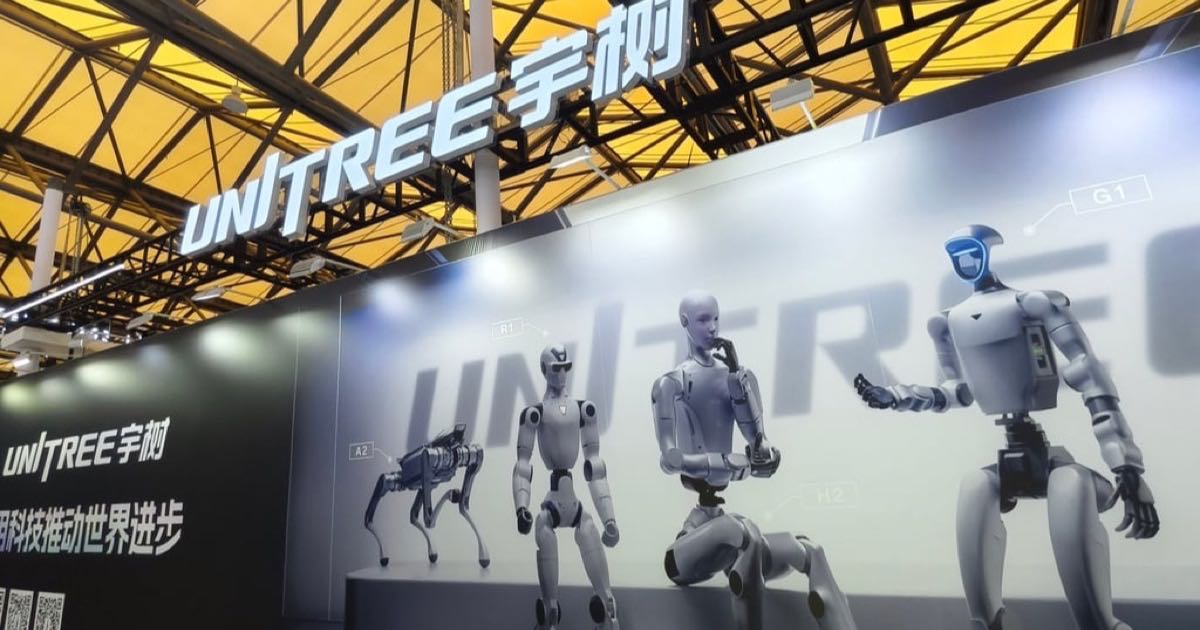
The ban is expected to hit Unitree hardest. The Hangzhou-based company holds just under a fifth of global humanoid market share, according to Counterpoint Research, and was recently added to the Pentagon’s list of alleged Chinese military-backed companies.
Unitree formed a partnership with Nvidia in June to use the chipmaker’s cutting-edge Blackwell chip to power its robot brains. Nvidia has stated that data from the robots will remain in the US and that Unitree’s biggest American customers are academic and research institutions. The Pentagon listing and now the FCC ban cast a shadow over that collaboration.
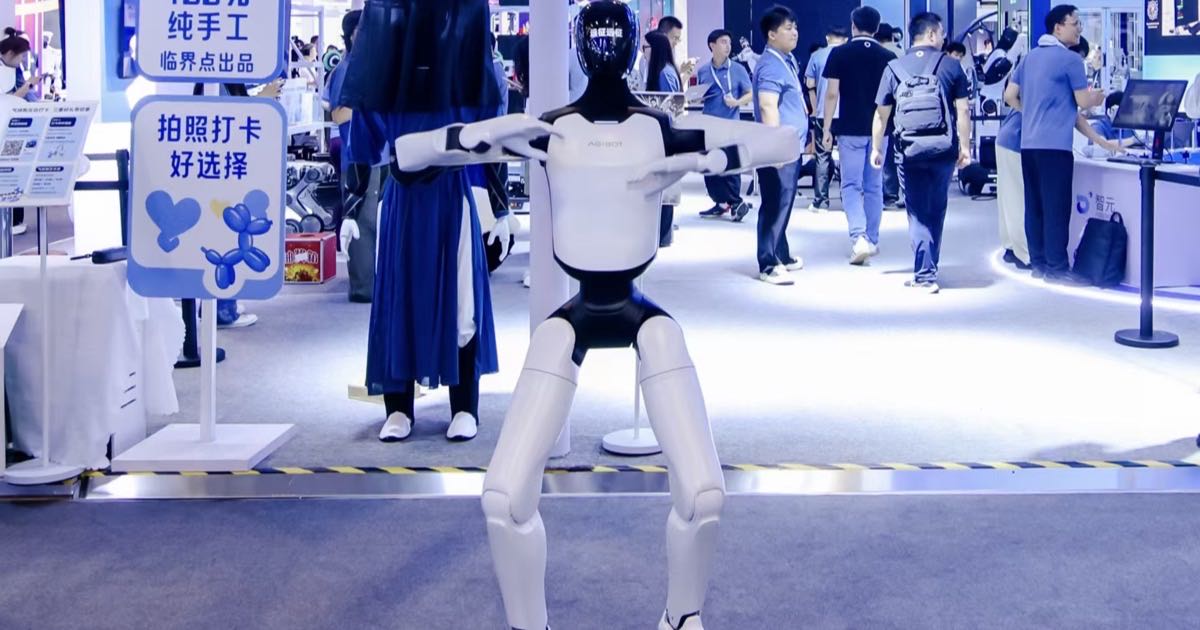
Of the roughly 15,000 humanoid robots shipped globally in 2025, Unitree and AGIBOT — China’s two largest makers — each shipped more than 5,000. Their US counterparts, Tesla and Figure AI, each shipped a few hundred or less, according to Omdia.
China Calls It Protectionism
Beijing’s response was swift. Foreign Ministry spokesperson Mao Ning accused the US of “broadening the concept of national security to suppress Chinese enterprises,” 1News reported.
“Such protectionist measures will not enhance America’s competitiveness; instead, it only harms the interests of American businesses and consumers,” Mao said.
Morningstar analyst Kangyuxiao Li offered a more measured assessment: restricting Chinese access to the US market “removes an important future market and protects US developers from potential price competition. However, it will not materially slow China’s overall humanoid development, given the size of its domestic manufacturing base and opportunities in other export markets.”
The Bigger Picture: Robots as Infrastructure
The FCC’s move treats humanoid robots not as consumer gadgets but as critical infrastructure — the same regulatory category as telecoms equipment and power grid components. That framing matters because it means future Chinese robot imports will face the same scrutiny that Huawei faced: a presumption of risk rather than a presumption of innocence.
Jonathan Fritz, a former US State Department official now at the Centre for American Progress, told 1News that China “do not recognise privacy in the same way that a democratic government or society like either of ours would.” He said the concern extends beyond espionage to “kill switches” — the theoretical ability to remotely disable robots en masse.
US Representative John Moolenaar, who chairs the House Select Committee on China, said the FCC move “protects our country and strengthens our nation’s robotics industry.” The ban aligns with broader US efforts to onshore advanced manufacturing, including the push to build Tesla’s Optimus and Figure AI’s robots domestically.
What This Means for the Global Robotics Race
China dominates global humanoid robot installations, accounting for more than 80% of the 16,000 units installed worldwide in 2025, according to Counterpoint Research. The US ban doesn’t change that — China’s domestic market alone is large enough to sustain its manufacturers. Morgan Stanley forecasts China’s humanoid market could reach US$15 billion by 2030.
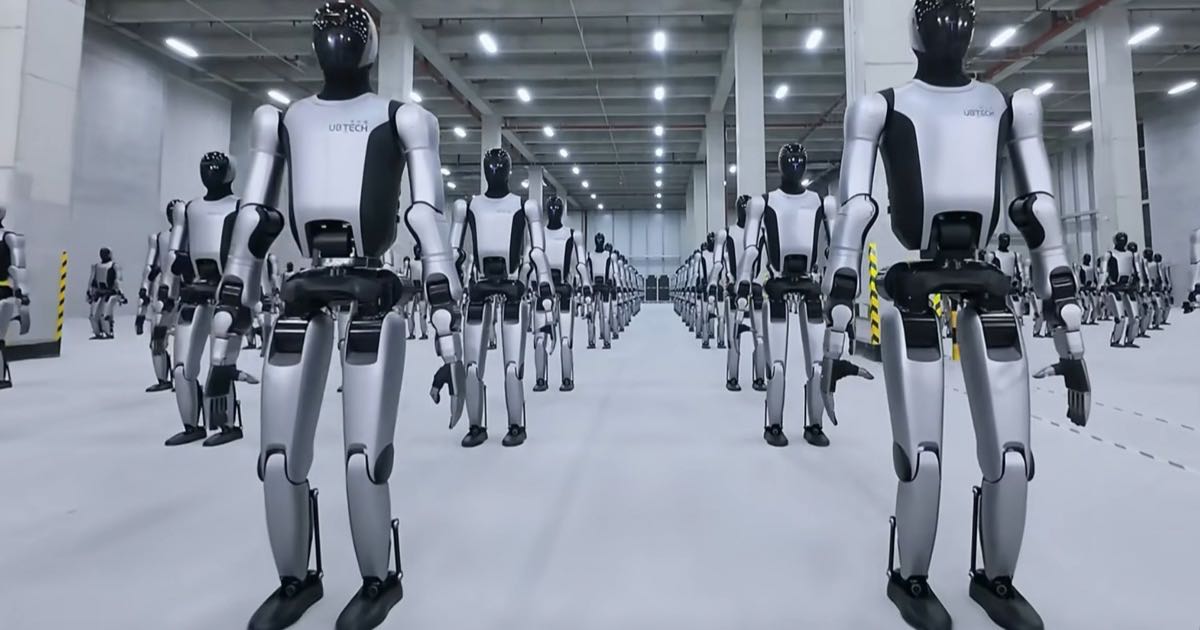
But the ban does fragment the market. Chinese makers like Unitree, AGIBOT, and UBTech now face a closed US door, while US companies like Tesla, Figure AI, and Agility Robotics gain breathing room to scale without price competition from cheaper Chinese imports.
The timing is delicate. A Trump-Xi summit is planned for September, and the robot ban adds to a “steady drumbeat of potential flashpoints,” as Samm Sacks of the New America think tank put it. The measures also arrive as Chinese automakers like BYD prepare to enter the humanoid robot market, widening the field of Chinese competitors just as the US closes its border to them.
NZ Angle
New Zealand has no equivalent restrictions on Chinese robots. The country’s AI Blueprint for Aotearoa, published by the AI Forum in May 2026, makes no mention of robotics supply chain security. New Zealand farms and factories are already adopting robotic technology from multiple sources, and MPI’s chief insights officer has publicly predicted humanoid robots on NZ farms within a decade.
The US ban creates a split market: countries that follow Washington’s lead will source robots from US and allied makers, while the rest of the world may have access to cheaper Chinese alternatives. New Zealand, as always, sits between the two.
❓ FAQ
Will existing Chinese robots in the US be confiscated? No. The ban applies only to new models that have not yet been authorised. The FCC retains the authority to revoke existing approvals, but no such action has been announced.
Does the ban affect all Chinese robots or just humanoids? The ban covers new humanoid robots and quadruped (four-legged) robots from Chinese manufacturers, plus connected power inverters. Traditional industrial arms and non-connected robots are not included.
How much of the robotics market does China actually control? China accounts for roughly 85% of the global humanoid robot market. Unitree and AGIBOT each shipped more than 5,000 units in 2025, while Tesla and Figure AI each shipped a few hundred or less.
Could New Zealand face similar security concerns? The AI Forum’s NZ AI Blueprint does not address robotics supply chain security. As humanoid robots become more common in NZ agriculture and industry, the question of data sovereignty and remote control risks may surface — but no policy response exists yet.
🔍 THE BOTTOM LINE
The US has decided that Chinese robots are a national security threat, not a trade matter. Whether that framing is justified or protectionist depends on who you ask — but the effect is the same. The global robotics market is splitting along geopolitical lines, and the robots themselves haven’t even reached mass deployment yet.
📰 Sources
- RNZ / Reuters
- 1News
- Stuff (AP)
- Counterpoint Research
- Omdia
- Morningstar
- FCC press release